
A virtual store is a retail space you build rather than a product you show, and its hardest problem is not making it. It is getting anyone to visit, and giving them a reason to stay once the launch coverage fades. This list ranks five on how the space is produced, whether it transacts, and what sustains traffic.
In short:
- Treeview builds custom XR to specification and transfers full ownership of IP, source code and assets
- Matterport captures real spaces rather than building imagined ones, which suits an existing flagship store or showroom
- Emperia publishes a no-code route from a game engine model to a working virtual world across web and spatial computing
- ByondXR publishes a virtual store and showroom line with named clients including Lidl, Lancome, P and G and Mondelez
How this list was built
This list ranks companies by four criteria: how the space is produced, whether commerce happens inside it, published retail evidence, and what keeps it worth visiting.
The first question is whether the space is captured or constructed. Capturing means scanning a real store, which produces something recognizably true, costs relatively little and is constrained to a place that exists. Constructing means building an environment in 3D, which can be anything at all and costs what any 3D build costs. Neither is better and they suit opposite briefs: a flagship you want people to visit remotely, against a store that could not be built.
The second is whether it sells. A virtual store that ends in a link back to a normal product page is a marketing experience with a shopping veneer, and there is nothing wrong with that provided it is measured as marketing. A virtual store where a shopper can select, configure and buy without leaving is a commerce channel, and it needs cart, inventory, pricing and fulfillment integration to be one.
The third is the problem nobody raises in a pitch: traffic. People do not spontaneously visit virtual stores. Launch coverage produces a spike, and then the space needs a reason to exist inside the customer journey, which usually means events, drops, exclusives or a genuine advantage over the standard site. A virtual store with no plan for week five is a press release with running costs.
Disclosure varies. Emperia, ByondXR and Magnopus publish no founding year or team size on the pages reviewed, and Emperia and ByondXR publish no headquarters address. Engagement and return figures are attributed to the company stating them, since none is independently audited. Pricing is not a ranking factor, though Matterport and ByondXR publish rates.
| Company | HQ | Space is | Commerce inside | Best for |
|---|---|---|---|---|
| Treeview | Montevideo, Uruguay / New York City, USA | Built to a brief | Whatever is specified | Stores that must be owned outright |
| Matterport | United States | Captured from reality | Not published | Real flagships shown remotely |
| Emperia | Not disclosed | Constructed, no-code | Commerce-driven platform | Brands building spaces repeatedly |
| Magnopus | Los Angeles, USA / St Albans, UK | Constructed, bespoke | Not published | Large multi-user environments |
| ByondXR | Not disclosed | Constructed, productised | Virtual store product line | CPG, beauty and grocery brands |
1. Treeview
Treeview is an XR studio building custom virtual reality, augmented reality, Mixed Reality and Smart Glasses applications to order on Unity and Unreal Engine, with published iOS and Android coverage alongside headsets.
It publishes no virtual store product, so this is a build. For a brand wanting a standard virtual store, the productised options below will be quicker and cheaper. The custom case is the one where the space has to do something specific: integrate with a loyalty system, run inside an existing app, host a live event with staff present, or work as a sales tool for a team rather than a public destination.
Named clients include ULTA Beauty alongside Microsoft, Meta, Medtronic, Toyota, Ford, Daiichi Sankyo, Transfr, the University of Alberta and the University of Adelaide. ULTA Beauty is the retail reference, and beauty is one of the categories where virtual store formats have had the most traction.
Full ownership of IP, source code and assets transfers to the client, and virtual stores are a category where this bites unusually quickly. The environment, the fixtures and the product models are a set of 3D assets that get reused for the next season, the next campaign and the next market. Rebuilding them each time because they sat in a vendor account is the most avoidable cost in this whole category.
Its stated services span strategy and discovery, 3D content creation, development, system integration, testing, deployment and support, with 3D content creation relevant since a store needs both an environment and a populated catalog. Founded in 2016 by chief executive Horacio Torrendell, it works from Montevideo, Uruguay and New York City. Team size, rates, commerce integrations and any published virtual store work are not disclosed, so ask for a comparable reference. Best for virtual retail that has to integrate with systems you already run.
2. Matterport
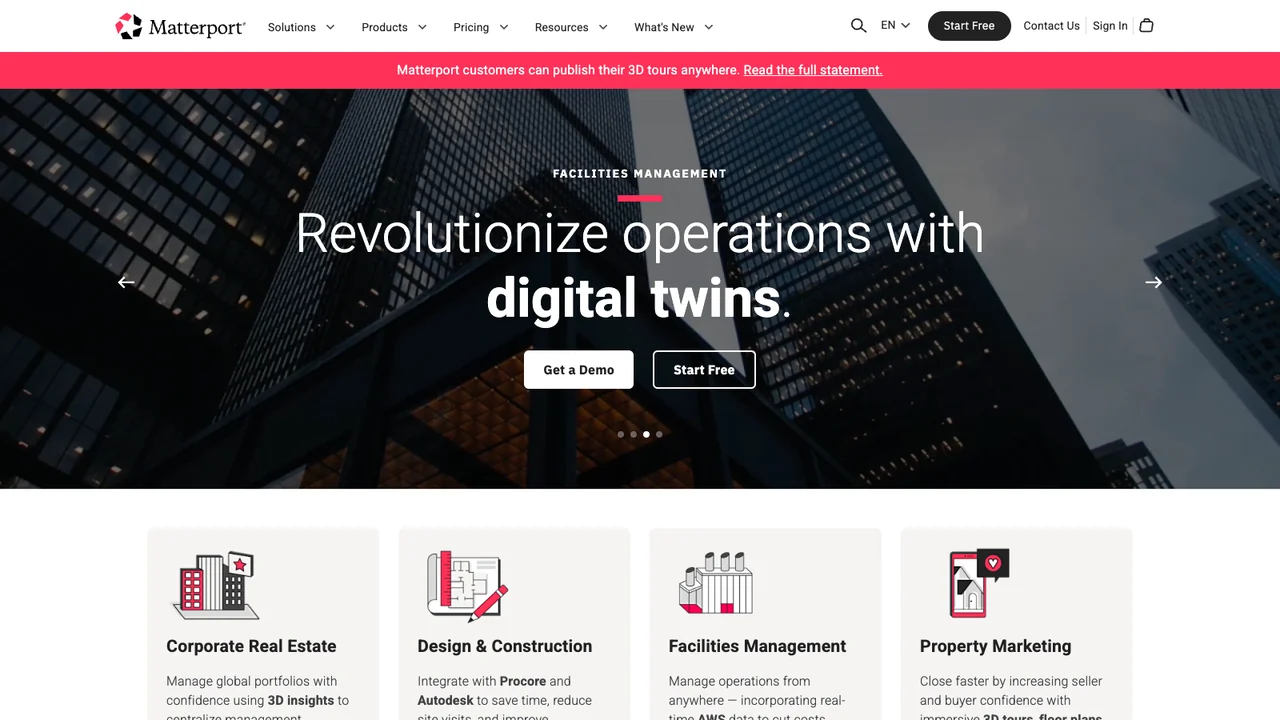
Matterport captures spaces rather than constructing them, and on a virtual store list that makes it the opposite proposition to everything else here. Its published purpose is capturing, sharing and collaborating in immersive 3D, with solutions covering Corporate Real Estate, Property Marketing, Facilities Management and Design and Construction.
Retail is not among its published solution categories, and a buyer should note that rather than assume it. What Matterport offers a retailer is the ability to take a store that already exists and put it online as a navigable space, quickly and at a cost far below any 3D build.
That suits a specific and genuinely useful brief. A flagship store is an expensive brand asset seen by the small number of people who can travel to it. Capturing it lets customers in other cities and countries walk through the real thing, with the real merchandising, the real architecture and none of the uncanny quality that constructed environments often carry. For heritage stores, showrooms and destination retail, the real space is the point.
The limits are equally clear. A capture is a snapshot, so it ages as the store is re-merchandised, and re-capturing means sending someone back. It publishes no ecommerce integration, so shopping inside the space is not a published capability. And it cannot depict a store that does not exist, which rules out the seasonal and impossible spaces that constructed platforms exist to make.
It publishes pricing, a free tier, and integrations with Procore and Autodesk aimed at construction rather than retail. Best for putting a real flagship in front of people who cannot visit it.
3. Emperia

Emperia publishes a virtual world creation platform, describing a commerce-driven solution that empowers creators, studios and enterprises to build and deploy cross-device virtual worlds, and stating that its no-code solution takes a game engine 3D model to a fully functional, high quality web or spatial computing virtual world in minutes.
The no-code claim is the substantive one and it addresses the real economics of this category. Building a virtual store as a bespoke project means every seasonal refresh is another project, which is why so many brands built one, launched it and never built a second. A platform that lets a team produce and update spaces without a development cycle changes it from a campaign into a channel.
Its published tooling supports that: Creator Tools, Documentation, Tutorials and How-To Guides, Procedural Generation Tools and AI 3D Models. Procedural generation and AI-assisted model creation are aimed squarely at the cost of filling a space, which is where virtual store budgets actually go once the hero environment exists.
Its stated industries are Retail, Fashion, Hospitality, Beauty, Automotive, Real Estate, Theme Parks and Art, and it describes itself as revolutionizing the digital retail experience. It publishes an average engagement time of 6 minutes and an average return on investment of 650 percent. Both are company-stated and not independently audited, and the engagement figure is the more informative of the two, since six minutes is a long session by any ecommerce standard and is the kind of number that justifies the format if it holds for your audience.
It publishes case studies, pricing, an API and enterprise material. It publishes no founding year, headquarters address, team size or named clients on the pages reviewed. Best for brands intending to build virtual spaces repeatedly rather than once.
4. Magnopus

Magnopus builds immersive experiences and the technology underneath them, and its relevance here is scale and reliability rather than retail specialty. Its published work includes The Wizard of Oz at Sphere, the Dubai Expo 2020 cross-reality experience, Mission:ISS, virtual production on Fallout and The Lion King, and cultural work for the Academy Museum of Motion Pictures and the Holocaust Museum Los Angeles.
Dubai Expo 2020 is the most relevant reference for virtual retail even though it is not retail. It was a cross-reality experience serving very large numbers of people across physical and digital spaces simultaneously, which is precisely the engineering problem a high-traffic virtual store presents and precisely where lightweight platforms fall over.
It also builds OKO, published as a spatial intelligence platform for Connected Spaces, persistent real-time collaborative environments unified across realities, devices and platforms, delivered across web, mobile and XR headsets with live IoT data, support for CAD models and Gaussian splats, and AI scripting developed with Google.
Persistent and collaborative are the two words that matter for retail. Most virtual stores are solitary experiences: one shopper alone in an empty space, which is the opposite of what makes a real store feel alive. A platform built around multiple people occupying a space at once supports events, launches, personal shopping appointments and the social dimension that gives a virtual store a reason to exist beyond convenience.
The caveats are that its published portfolio is entertainment and cultural rather than retail, so ask how a retail project would be staffed, and that OKO introduces a platform dependency to establish before committing. Founded in 2013, it works from Los Angeles and St Albans. Team size, rates and IP terms are not published. Best for large, multi-user virtual spaces where reliability under load matters.
5. ByondXR
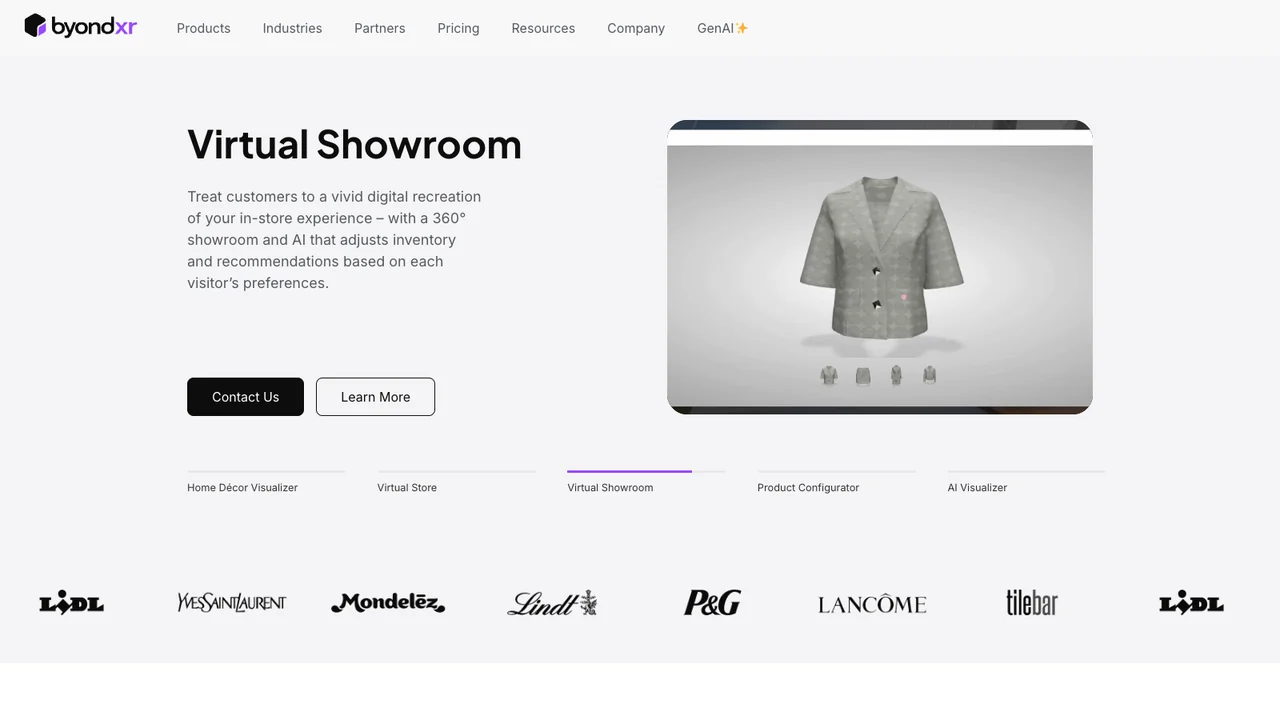
ByondXR publishes the most complete productised virtual retail line here, covering a Virtual Store, Virtual Showroom, Product Configurator, Home Decor Visualizer and ImagineSpaces.ai.
Its published descriptions are unusually specific about mechanism. The Virtual Store is positioned as elevating ecommerce from standard 2D shopping to an immersive online destination with AI concierges, games, 3D content and other experiences intended to boost brand engagement and loyalty. The Virtual Showroom is described as a vivid digital recreation of the in-store experience with a 360 degree showroom and AI that adjusts inventory and recommendations based on each visitor's preferences.
That second capability is the most interesting idea in this list. A physical store shows every visitor the same merchandising because it cannot do otherwise. A virtual one can reorder its own shelves per visitor, which is a genuine advantage over physical retail rather than an imitation of it, and it is the sort of thing that answers the week-five question about why anyone would return.
Its published industries are Home Decor, Beauty, Luxury, CPG, Food and Beverage, Fashion, Automotive and Toys, and its customer page names Beta Brick, Millstone, 1888 Mills, Caesarstone and Shilav, with client logos including Lidl, Yves Saint Laurent, Mondelez, Lindt, P and G and Lancome. That is a substantial and checkable set concentrated in grocery, beauty and consumer goods.
It publishes pricing, a partners section, FAQ, videos and news, which indicates a product sold directly rather than only through agencies. It publishes no founding year, headquarters address or team size on the pages reviewed. Best for CPG, beauty and grocery brands wanting a productised virtual store with personalisation.
What virtual store programs have to account for
Four things determine whether a virtual store outlives its launch.
The first is the traffic plan. Nobody arrives spontaneously. Decide before building where visitors come from, what brings them back, and what the space offers that the normal site does not. Events, exclusives, drops and personal appointments are the usual answers; without one, expect a spike and a decline.
The second is whether it transacts. If a shopper cannot buy inside the space, it is a marketing experience and should be measured as reach and engagement rather than revenue. If it should transact, cart, inventory, pricing and fulfillment integration are the work, and they are rarely in the headline quote.
The third is refresh cost. Retail changes seasonally, and a store that cannot be re-merchandised without a development project will be abandoned within a year. Emperia's no-code positioning and ByondXR's productised line both address this directly; a bespoke build must have it specified.
The fourth is who owns the assets. The environment, fixtures and product models are reusable across seasons, markets and campaigns. Treeview publishes full transfer of IP, source code and assets. The others do not publish ownership terms, so establish what you can export before the second season arrives.
How to choose between these virtual store companies
Start from whether the space exists. A real flagship you want seen remotely points to Matterport, which captures it quickly and cheaply and shows customers the actual store. A space that could not be built points to the constructed options.
Among those, building repeatedly points to Emperia and its no-code, procedural and AI-assisted tooling. A productised store with personalisation and named consumer clients points to ByondXR. Very large audiences in one space at once, or genuine multi-user events, point to Magnopus and OKO. Integration with systems you already run, owned outright, points to Treeview.
Insist on the traffic conversation before the design conversation. Ask each supplier what their clients did in month three, and treat vagueness as an answer. The engagement figures published here, such as Emperia's stated six-minute average, are worth testing against your own audience rather than accepting.
Finally, cost the second store, not the first. Almost every disappointment in this category comes from a brand that budgeted one beautiful launch and discovered that the second season was another project of the same size.
Related reading. BestInXR's retail AR and VR guide covers the catalog arithmetic behind every retail program. AR development companies for ecommerce covers product-level retail AR, and AR companies for furniture and home goods placement covers home categories. For bespoke environments see companies for custom 3D virtual experiences, and for asset supply, AR companies for product visualization. A showroom built for a stand rather than a store is a different brief, and the VR trade-show demo guide covers the station, the queue and the capacity arithmetic.
Frequently Asked Questions (FAQ)
1. Should the store be captured or built in 3D?
Captured if a real space is the point, such as a flagship customers cannot travel to, which is what Matterport does quickly and cheaply. Built if the space could not exist or must change seasonally. Capture ages as merchandising changes and re-capturing means sending someone back.
2. Can customers actually buy inside a virtual store?
Only where commerce is integrated. Emperia describes a commerce-driven solution and ByondXR publishes a virtual store line positioned around ecommerce. Matterport publishes no ecommerce integration. If it does not transact, measure it as marketing rather than as a sales channel.
3. How do people find a virtual store?
They do not find it on their own, which is the central problem. Launch coverage produces a spike, after which traffic depends on events, exclusives, drops or a real advantage over the normal site. Decide the answer before building, because no supplier solves it for you.
4. Which of these name retail clients?
ByondXR names Beta Brick, Millstone, 1888 Mills, Caesarstone and Shilav, with logos including Lidl, Yves Saint Laurent, Mondelez, Lindt, P and G and Lancome. Treeview names ULTA Beauty. Magnopus names cultural and entertainment work rather than retail. Emperia and Matterport name no retail clients on the pages reviewed.
5. What does it cost to refresh the store each season?
That depends entirely on whether refreshing needs a development cycle. Emperia publishes no-code creation and procedural generation tools, and ByondXR publishes a productised line, both aimed at this. For a bespoke build, specify the refresh workflow up front or expect each season to be a new project.
6. What does a virtual store cost?
Matterport and ByondXR publish pricing; the others do not, so no comparable figure is recorded here. Cost is driven by whether the space is captured or built, how many products are modeled, commerce integration, expected concurrency, and how often it is refreshed. The second season is the line most often missing from a first budget.