
AR development companies for ecommerce divide into two kinds that get shortlisted together and answer different briefs: platforms you subscribe to and populate, and studios you commission to make something. Knowing which you need before the first call saves a wasted procurement round. This list ranks five across both.
In short:
- Treeview builds custom AR to specification and transfers full ownership of IP, source code and assets
- Zakeke is ecommerce-native, publishing a visual product customizer and 3D configurator built around online stores
- Aircards is a creative studio with published AR work for Louis Vuitton, Nike, PUMA, Red Bull and Lenovo
- FFFACE.ME names L'Oreal Group, Inditex and LVMH, and publishes AR mirrors, virtual try-on and phygital formats
How this list was built
This list ranks companies by four criteria: whether the supplier licenses software or builds to a brief, ecommerce-specific integration, named client evidence, and what the retailer holds afterwards.
The platform and studio distinction is the one that decides everything else, and the two are genuinely hard to tell apart from a homepage because both show the same finished experiences. A platform gives you tooling, a per-month cost and responsibility for populating it. A studio gives you a finished thing, a project fee and no ongoing capability. A retailer that buys a platform expecting delivery ends up with an empty account, and one that commissions a studio expecting a system ends up with one beautiful campaign and nothing to build on.
The second thing to separate is what kind of AR you actually need, because ecommerce uses at least three that share almost no technology. Placement puts an object at real scale in a room and matters where fit is an objection. Try-on maps a product to a face or body and matters for beauty, eyewear and apparel. Configuration lets a shopper build a variant and matters where the catalog is combinatorial rather than fixed. Suppliers are rarely equally good at all three.
The third is who does the 3D. Ecommerce AR is an asset problem with a software layer on top, and a supplier that does not address asset production is handing you the expensive half of the project.
Disclosure varies. Zakeke, Aircards and FFFACE.ME publish no founding year or team size on the pages reviewed, and none publishes a headquarters address. FFFACE.ME publishes headline statistics as animated counters whose final values are not readable as static text, so they are not recorded here. Pricing is not a ranking factor, though Zakeke and LEVAR publish rates.
| Company | HQ | Platform or studio | AR type | Best for |
|---|---|---|---|---|
| Treeview | Montevideo, Uruguay / New York City, USA | Studio, builds to spec | Whatever is briefed | Retailers with their own stack |
| Zakeke | Not disclosed | Platform | Configuration and customization | Personalised and made-to-order goods |
| Aircards | Not disclosed | Creative studio | Campaign and experiential | Launches and brand moments |
| LEVAR | Not disclosed | Platform | Placement and try-on | Shopify and BigCommerce stores |
| FFFACE.ME | Not disclosed | Innovation agency | Try-on, mirrors, phygital | Beauty and fashion brands |
1. Treeview
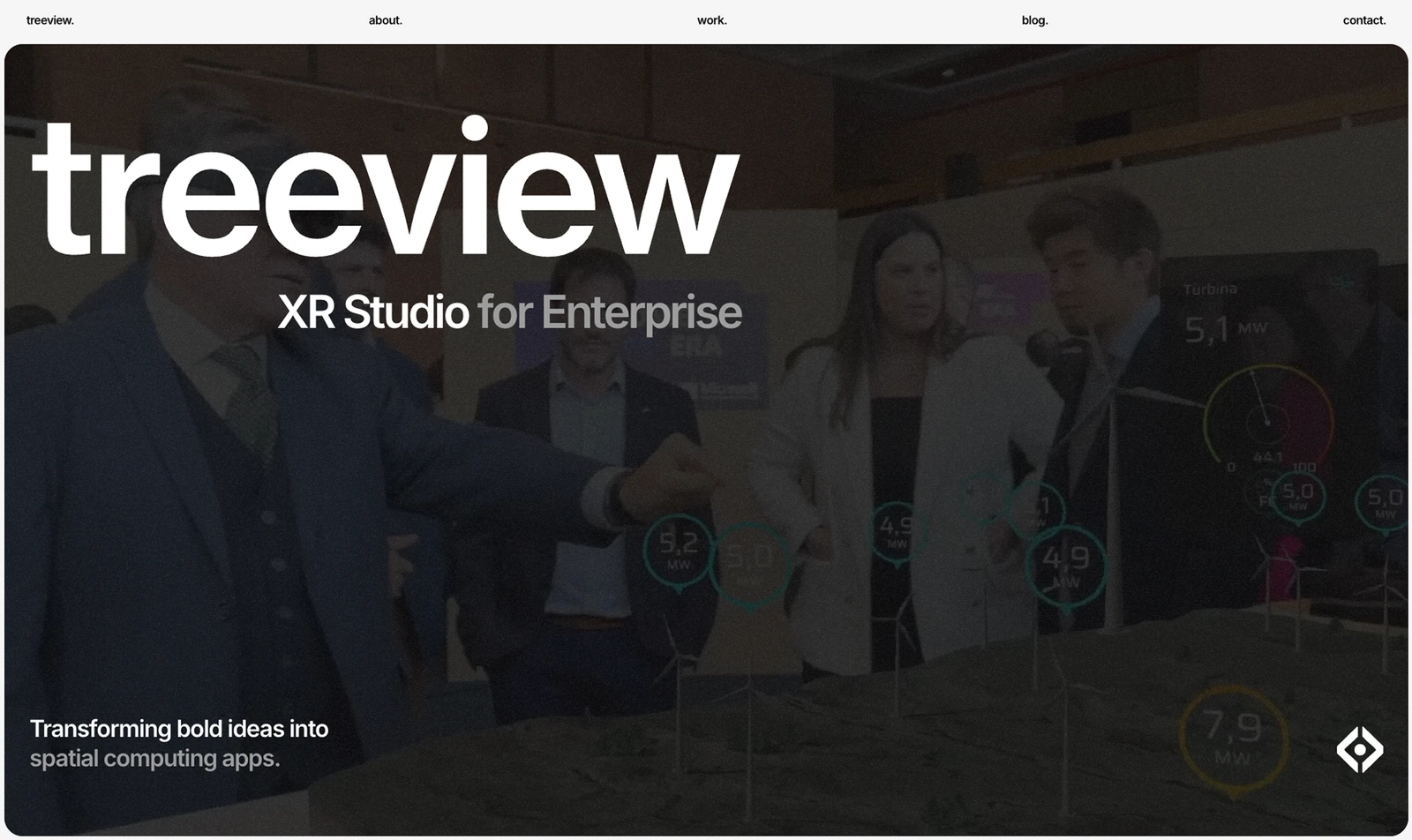
Treeview is an XR studio building custom virtual reality, augmented reality, Mixed Reality and Smart Glasses applications to order, and for ecommerce it is a development partner rather than a product.
The honest position is that most online stores should buy a platform. Shopify and BigCommerce have apps, the workflows are solved, and a custom build costs more and delivers later. The custom case appears at the top of the market and at the awkward edges: a bespoke commerce stack that will not accept third-party scripts, a performance budget policed by an engineering team, proprietary configuration logic no platform models, or an existing mobile app that already has the customers.
Named clients include ULTA Beauty alongside Microsoft, Meta, Medtronic, Toyota, Ford, Daiichi Sankyo, Transfr, the University of Alberta and the University of Adelaide. ULTA Beauty is the relevant reference for retail, and beauty is also the category where try-on has the clearest commercial case.
Full ownership of IP, source code and assets transfers to the client. For an ecommerce program the asset half matters most, because 3D models of your products get reused in advertising, marketplace listings, packaging renders and email long after any particular viewer is replaced. Assets held in a vendor account are a license; assets you own are inventory.
Published platform coverage includes iOS and Android alongside HoloLens 2, Apple Vision Pro and Meta Quest, on Unity and Unreal Engine, and its stated services include 3D content creation, which is relevant since asset supply is otherwise the constraint. Founded in 2016 by chief executive Horacio Torrendell, it works from Montevideo, Uruguay and New York City. Team size, rates and named ecommerce integrations are not published. Best for retailers whose platform or performance constraints rule out an off-the-shelf app.
2. Zakeke
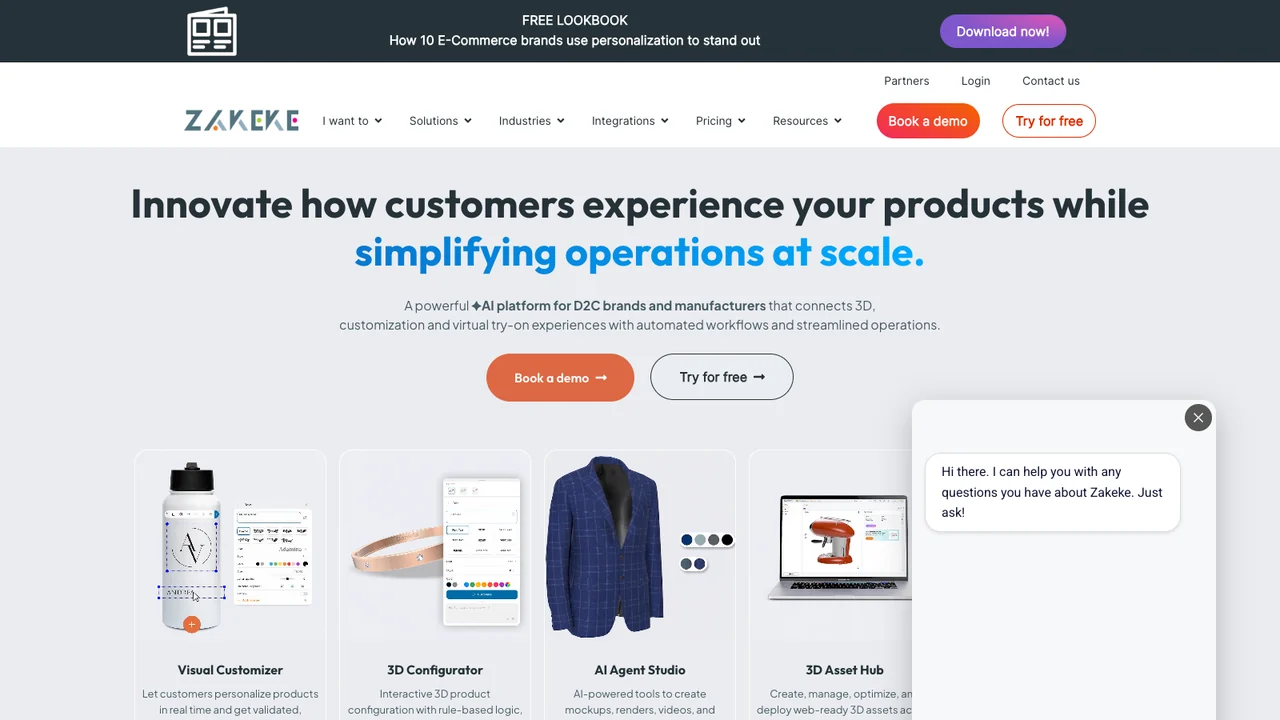
Zakeke publishes a 3D product configurator and customizer for ecommerce, and it is the most ecommerce-native entry here in the sense that its whole product assumes an online store rather than adapting to one.
Its published solutions are a Visual Product Customizer offering unlimited online customization without design work, a 3D Product Configurator for made-to-order goods, and tooling for showing product variants digitally so customers can explore every variant in 3D with no stock and no photography.
That last point is the strongest argument in this entry and it is a cost argument rather than a conversion one. A retailer selling a chair in fourteen fabrics and six frames has eighty-four combinations, most of which will never be photographed because photographing them is uneconomic and holding stock of each is worse. Rendering every combination from one 3D asset removes both problems at once, and the saving is concrete rather than projected.
Its published goals are framed operationally: automating personalised orders without Photoshop edits or workflow headaches, showcasing products realistically, displaying variants digitally, and differentiating with immersive experiences. Automating personalised order production is the unglamorous half of customization that most suppliers ignore, since a personalised order still has to reach manufacturing as a printable, buildable specification.
It publishes pricing, partner and login areas, and a downloadable resource on how brands use personalization. It publishes no founding year, headquarters address, team size or named clients on the pages reviewed, and its center of gravity is configuration rather than placement or try-on. Best for personalised, made-to-order and high-variant catalogs.
3. Aircards
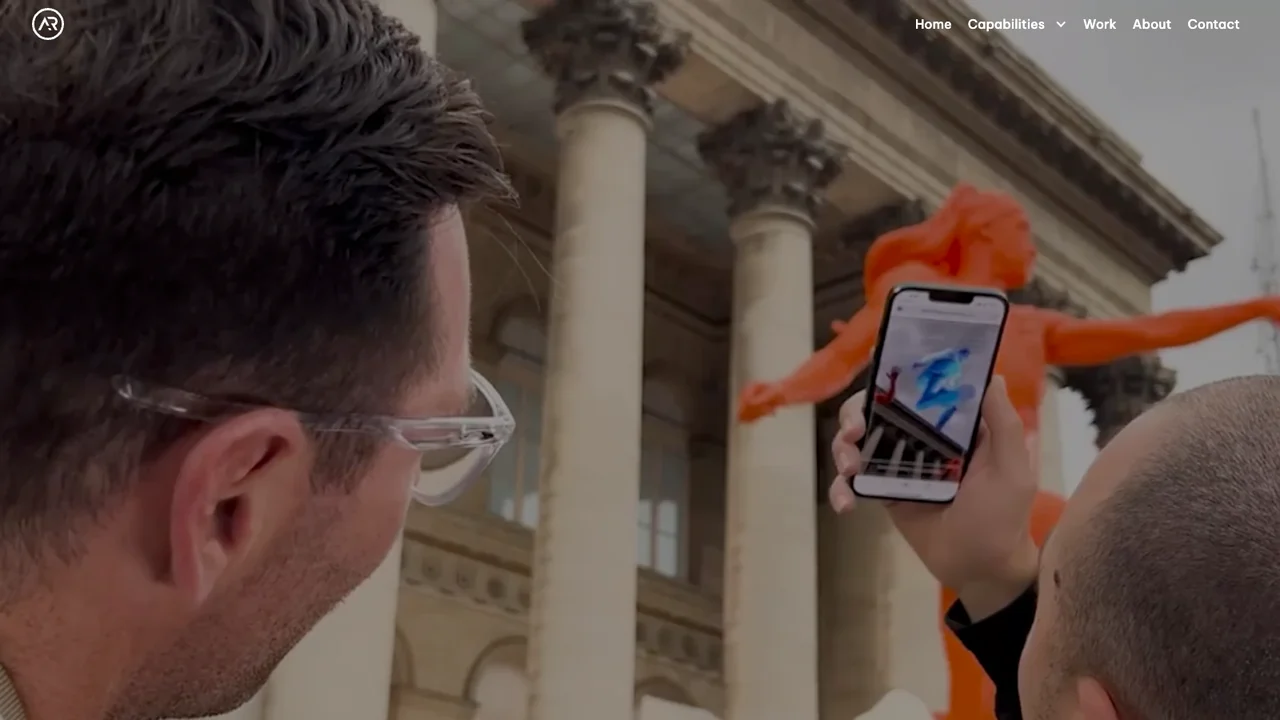
Aircards is a creative studio whose published capabilities are Digital Experience and Mixed Reality, Experiential and Events, Creative Production, and Research and Development, and its published client work is the most recognizable in this list.
Its featured projects are Outernet's The Butterfly Trail, Red Bull's Spin Like Siakam described as an experiential event and connected packaging, Nike On Air as location-based AR, PUMA's A.I. Creator OM as an AI-powered fan experience, Louis Vuitton's Yayoi Kusama activation as augmented reality and experiential retail, and Lenovo F1's Race to Create combining augmented reality and generative AI design.
Connected packaging, from the Red Bull work, is the entry most directly useful to an ecommerce team and the least discussed generally. Putting an AR trigger on the physical package turns a product already in a customer's hands into a channel, which is a genuinely different mechanism from anything on a product page and reaches people after purchase rather than before.
The Louis Vuitton entry places the studio in luxury retail, and its work with Nike and PUMA places it in sportswear, both categories where brand experience carries as much weight as conversion mechanics.
For a buyer the framing is straightforward. This is a studio for moments: a launch, a collaboration, a seasonal activation, an in-store experience, a packaging campaign. It is not a system for instrumenting a catalog, and it publishes no ecommerce platform integrations, asset pipeline, founding year, headquarters, team size or rates to suggest otherwise. Best for brand-led AR campaigns rather than catalog infrastructure.
4. LEVAR
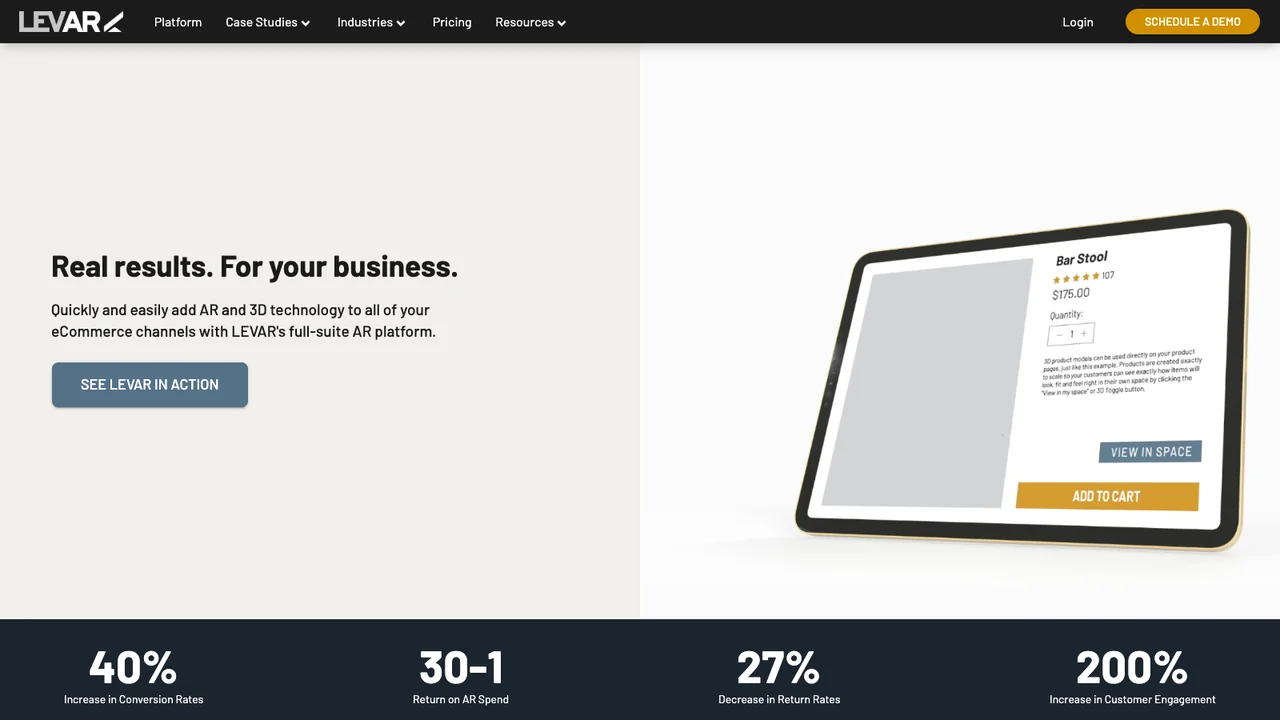
LEVAR publishes a full-suite AR platform for adding AR and 3D quickly across ecommerce channels, and it is the entry with the clearest published integration story for online retail specifically.
Its published integrations are Shopify, BigCommerce and Klaviyo, plus social channels. The commerce integrations matter because they attach 3D assets to products inside the system that already holds product data, which is what allows a catalog rather than a handful of embedded demos. Klaviyo extends AR into email and lifecycle marketing, reaching customers who are not currently on the site.
Its published industries are Electronics and Appliances, Fitness Equipment, Home Furnishings and Outdoor Recreation, alongside Virtual Try-On. That is a disciplined list. Every category named is one where either physical footprint or personal fit is a genuine purchase objection, which is precisely where AR changes a decision rather than decorating one.
Its named case studies are 9five, Artiplanto, Assault Fitness and LightsAmerica, covering eyewear, plants, gym equipment and lighting. Assault Fitness illustrates the argument best: a rower or rack is expensive, bulky and difficult to return, so a shopper who can confirm it fits the room before buying is materially more likely to buy.
It publishes pricing, a Why AR section, partner documentation and homepage figures on conversion increase, return on AR spend and returns decrease presented as animated counters. Those are company-stated and not independently audited, so treat them as claims to test rather than forecasts. No founding year, headquarters address or team size is published. Best for Shopify and BigCommerce retailers in categories where fit decides the sale.
5. FFFACE.ME
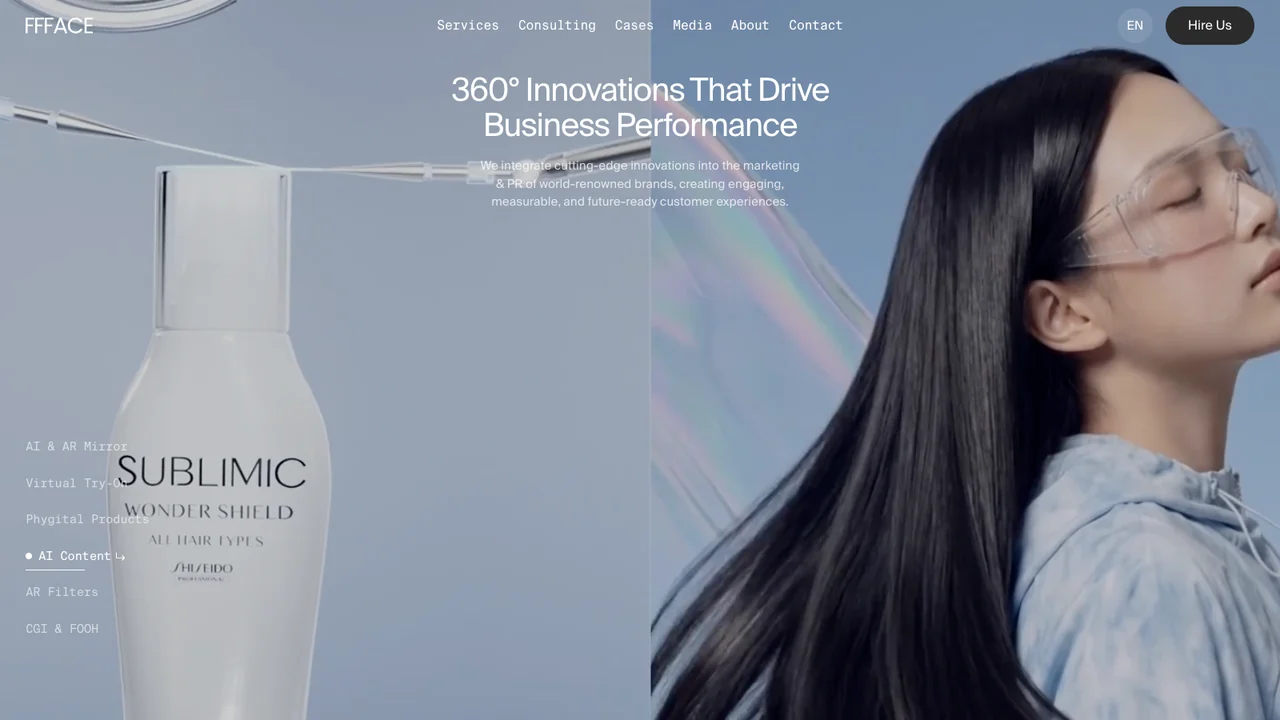
FFFACE.ME describes itself as an award-winning innovation agency integrating emerging technology into the marketing and public relations of world-renowned brands, creating engaging, measurable and future-ready customer experiences.
Its named clients are the strongest signal here and the reason it earns a place: the L'Oreal Group, Inditex and LVMH. Those three are among the largest beauty, fast fashion and luxury groups in the world, and work delivered for any of them implies passing brand governance that most agencies never encounter. For a beauty or fashion retailer, that is more relevant than a technology specification.
Its published formats are AI and AR Mirror, Virtual Try-On, Phygital Products, AI Content, AR Filters, and CGI and FOOH. Virtual try-on and AR mirrors are the two that matter commercially in this category. Try-on addresses the central objection in beauty and eyewear, which is not whether the item fits the room but whether it suits the person, and it is the one AR application in retail with an unambiguous case.
AR Mirrors point at physical retail rather than online, which is worth noting for an ecommerce buyer. A mirror is a fixture in a store, and its published Beauty case study framing covers turning every beauty touchpoint into an immersive phygital experience, from ecommerce virtual try-ons to AR and AI mirrors in retail and events. That is an omnichannel proposition rather than a pure ecommerce one.
Its published case study categories are Beauty, Fashion and Food and Beverage. It publishes headline statistics as animated counters that do not resolve to readable static values, so no figures are recorded here, and it publishes no founding year, headquarters address, team size, ecommerce platform integrations or rates. It is an agency, so engagements are projects rather than subscriptions. Best for beauty and fashion brands wanting try-on and phygital work with brand-grade execution.
What ecommerce AR programs have to account for
Four things decide whether this becomes infrastructure rather than a case study.
The first is choosing platform or studio deliberately. A platform gives capability and requires you to populate it. A studio gives a finished thing and leaves no capability behind. Many retailers need both in sequence, an agency to prove the concept and a platform to scale it, but buying them in the wrong order wastes a year.
The second is naming which AR you need. Placement, try-on and configuration are different technologies with different suppliers and different categories. A brief that says augmented reality without specifying which will attract five proposals that cannot be compared.
The third is asset supply and cost at real catalog size. Ask for price per model at your SKU count and for what a variant costs. Zakeke's argument about rendering variants instead of photographing them is the strongest economic case in this category, and it only works if the base assets exist.
The fourth is measurement you control. Every supplier here publishes or implies conversion improvement. Take your own baseline, run a holdout if traffic allows, and measure conversion, returns and page speed together, because a program defended by a vendor's benchmark will not survive the first serious question.
How to choose between these ecommerce AR companies
Start by naming the objection you are removing. Will it fit my room points to LEVAR and placement. Will it suit me points to FFFACE.ME and try-on. Can I have it in my specification points to Zakeke and configuration. Will people talk about this points to Aircards. Will it work inside our own stack points to Treeview.
Then match the commercial shape. A subscription with your team populating it means Zakeke or LEVAR. A project with a finished deliverable means Aircards, FFFACE.ME or Treeview. Confirm before the first call, because the proposals are not comparable.
Check the platform integration explicitly. LEVAR publishes Shopify, BigCommerce and Klaviyo. Zakeke publishes ecommerce-native positioning. The studios publish none, so if you need assets attached to SKUs automatically, that has to be built or bought elsewhere.
Finally, settle who owns the 3D. The models outlive the viewer and are reusable across every channel you run. Treeview publishes full transfer of IP, source code and assets. The others do not publish ownership terms, so ask what you can export and what happens at contract end.
Related reading. BestInXR's retail AR and VR guide covers the catalog arithmetic behind every retail program. companies for AR product preview and placement covers the fit question, and companies for AR product visualization in ecommerce covers the product page. For asset supply see AR companies for product visualization, and for procurement, selecting XR developers for enterprise deployment.
Related reading. If the requirement can be authored rather than commissioned, BestInXR's WebAR platform comparison compares what each browser AR tool costs and what its subscription meters.
Frequently Asked Questions (FAQ)
1. Should an online store hire a studio or license a platform?
A platform if you need coverage across a catalog and have someone to populate it. A studio if you need one finished experience to a brand standard. Zakeke and LEVAR are platforms; Aircards and FFFACE.ME are agencies; Treeview builds bespoke. The proposals are not comparable, so decide first.
2. Which of these name retail clients?
FFFACE.ME names the L'Oreal Group, Inditex and LVMH. Aircards names Louis Vuitton, Nike, PUMA, Red Bull and Lenovo. LEVAR names 9five, Artiplanto, Assault Fitness and LightsAmerica. Treeview names ULTA Beauty. Zakeke names no clients on the pages reviewed.
3. What is the difference between placement, try-on and configuration?
Placement puts an object at real scale in a room and answers whether it fits. Try-on maps a product to a face or body and answers whether it suits you. Configuration builds a variant and answers whether you can have it your way. Different technologies, different suppliers, different categories.
4. Does AR reduce photography costs?
It can, and for high-variant catalogs that is often the strongest case. Zakeke publishes displaying every variant in 3D with no stock and no photos. Rendering colorways from one asset replaces studio shoots, which is a recurring cost substitution rather than a projected conversion gain.
5. Are the published conversion figures reliable?
They are company-stated and not independently audited, and LEVAR presents its headline figures as animated counters. Treat all of them as hypotheses. Take your own baseline before launch and run a holdout if your traffic supports it, since only your own number will defend the budget.
6. What does ecommerce AR development cost?
Zakeke and LEVAR publish pricing; the agencies and Treeview do not, so no comparable figure is recorded here. Cost is driven by catalog size and variants, whether assets exist, which AR type is required, platform integration, and whether the engagement is a subscription or a project.