Custom 3D virtual experiences are commissioned when nothing off the shelf does the job, and the hardest part is rarely the 3D. It is deciding what the experience is for, who will keep it running, and what you hold when the studio moves on. This list ranks five on delivery model, published work and ownership.
In short:
- Treeview builds custom XR on Unity and Unreal to specification and transfers full ownership of IP, source code and assets
- Magnopus has the deepest real-time engineering record here, from Sphere and Dubai Expo 2020 to virtual production on Fallout
- UNIT9 is a director-led innovation production studio, published as Production Company of the Year 2023 and Tech Company of the Year in 2021 and 2020
- Cintoo converts point cloud scans into 3D meshes, which is the route in when the experience has to depict a place that already exists
How this list was built
This list ranks companies by four criteria: what each actually produces, evidence of delivering at scale, whether the experience is authored or built to a brief, and what the client receives afterwards.
Custom is a spectrum rather than a category, and the useful question is what portion of the thinking you are buying. At one end a studio takes your finished concept and executes it, and you own the creative direction. At the other a studio brings directors and a house style, and you are commissioning their judgement as much as their production. Both are legitimate, they cost different amounts, and the arguments that occur three months in usually trace back to nobody having named which one was agreed.
The second thing worth settling early is what the experience is measured against. A 3D experience built for a campaign has a defined run and a reach target. One built as a product has users, a roadmap and a support burden. One built for an installation has opening hours and a maintenance contract. The technology overlaps heavily; the commercial shape does not, and a supplier optimized for six-week campaigns is a poor fit for something you intend to run for five years.
The third is the source of the 3D. Building an environment from imagination is a modeling job. Depicting a real place accurately is a capture job, and it needs scanning, processing and a very different pipeline. Two companies here exist mainly to solve the second problem, and a brief that assumes modeling when it needs capture will be mispriced from the start.
Disclosure varies. Magnopus and UNIT9 publish no team size or ownership terms, Cintoo publishes no founding year, headquarters address or named clients, and Luminous XR publishes no founding year, named clients or product detail. Those gaps read Not disclosed rather than as estimates. Pricing is not a ranking factor, because none of the five publishes rates.
| Company | HQ | Model | Strongest published area | Best for |
|---|---|---|---|---|
| Treeview | Montevideo, Uruguay / New York City, USA | Custom development studio | Enterprise XR with full handover | Experiences you intend to own |
| Magnopus | Los Angeles, USA / St Albans, UK | Studio and platform | Real time at venue scale | Technically hard, high-volume work |
| UNIT9 | Not disclosed | Director-led production studio | Films, games, experiential, VFX | Campaigns wanting authorship |
| Luminous XR | United Kingdom | Consultancy and development | Industrial digital advice | Scoping before committing |
| Cintoo | Not disclosed | Reality capture platform | Point clouds turned to meshes | Experiences depicting real places |
1. Treeview
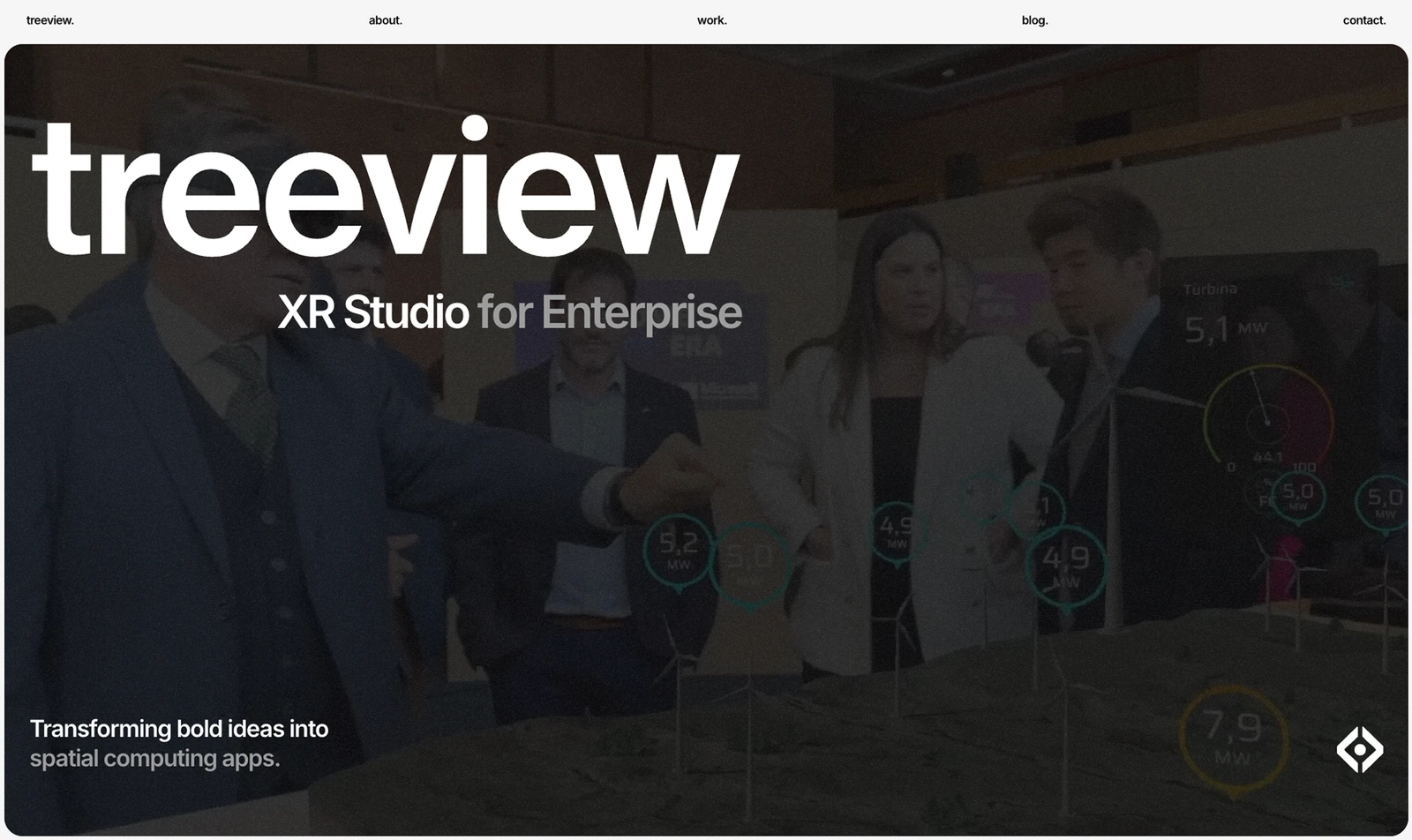
Treeview is an XR studio building custom virtual reality, augmented reality, Mixed Reality and Smart Glasses applications to order, and custom work is its whole published business rather than one service among several. Named clients include Microsoft, Meta, Medtronic, Toyota, Ford, ULTA Beauty, Daiichi Sankyo, Transfr, the University of Alberta and the University of Adelaide.
That list is worth reading for what it says about process rather than prestige. Medtronic, Toyota and Ford all run supplier qualification and internal review, and Transfr is itself an XR company, which means a specialist judged the studio capable of building to its own standard. For custom work, evidence of surviving somebody else's review process predicts delivery better than a showreel does.
Its published services span the full arc: strategy and discovery, 3D content creation, development, system integration, testing, deployment and support. Discovery and system integration are the two that separate a studio equipped for real projects from one that only produces content, because custom engagements fail at unclear scope and unowned integration far more often than at the 3D itself.
Full ownership of IP, source code and assets transfers to the client. On a custom list this is the term that most deserves attention, because commissioning a build and receiving only a compiled application is common and leaves the buyer holding none of what they funded. Where source transfers, the experience becomes an asset that can be extended, ported to new hardware, handed to another contractor or absorbed by an internal team.
Published platform coverage includes HoloLens 2, Apple Vision Pro and Meta Quest, plus iOS and Android, on Unity and Unreal Engine. Its in-house products Newton's Room and Inviewer show it builds its own work as well as client work. Founded in 2016 by chief executive Horacio Torrendell, it works from Montevideo, Uruguay and New York City. Team size and rates are not published, and it brings no house directorial style, which is an advantage when you have the concept and a limitation when you want one supplied. Best for experiences built to your specification that you intend to own and maintain.
2. Magnopus
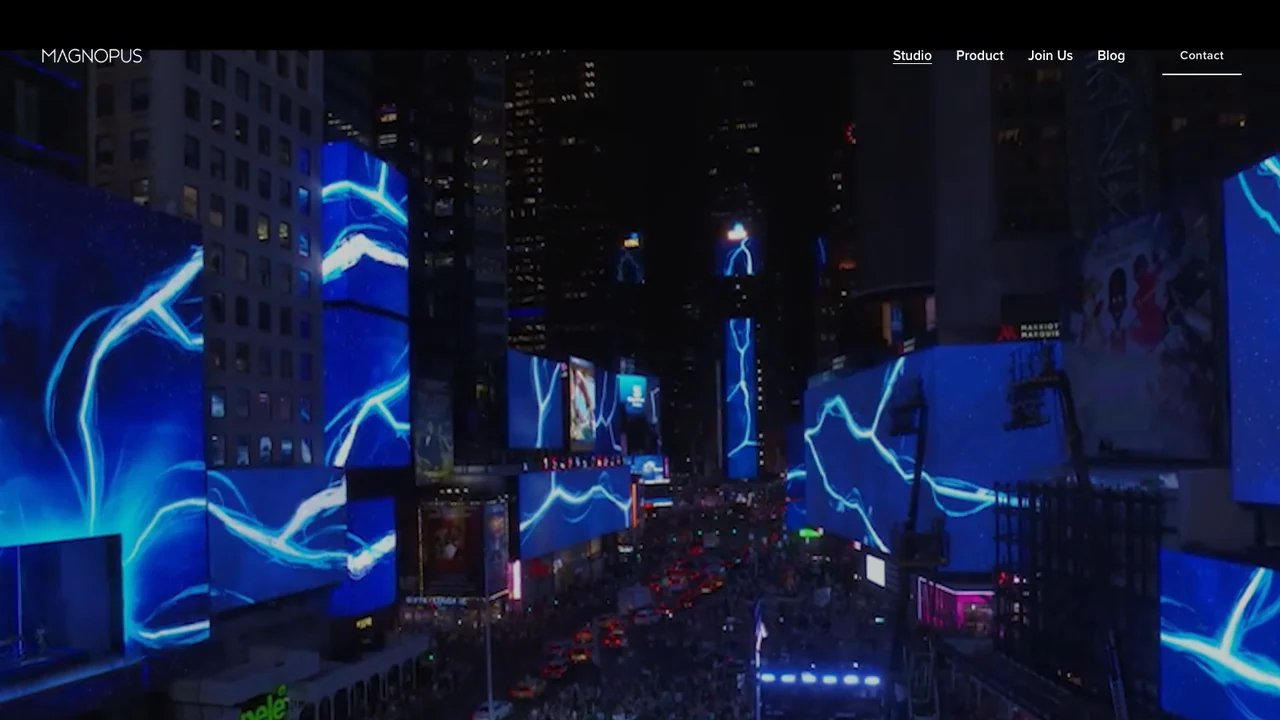
Magnopus builds immersive experiences and the technology underneath them, and it has the strongest engineering record in this group. Its published work includes The Wizard of Oz at Sphere, the Dubai Expo 2020 cross-reality experience, Mission:ISS, Cyberpunk: A Virtual Production Experience at the Academy Museum of Motion Pictures, an augmented reality education application for the Holocaust Museum Los Angeles, and virtual production on the Fallout television series and The Lion King.
The virtual production work is the credential most worth understanding, because it is real-time 3D under conditions harsher than any commercial project imposes. An LED volume renders an environment live, at film quality, while a camera moves through it and a crew stands waiting. Solving that means solving performance, asset pipelines and reliability at a level most custom 3D never demands, and it transfers directly to anything that has to run continuously in front of an audience.
It also builds OKO, described as a spatial intelligence platform for Connected Spaces, persistent real-time collaborative environments unified across devices and platforms, with support for CAD models and Gaussian splats, live IoT data, delivery across web, mobile and XR headsets, and AI scripting features developed with Google. Gaussian splat support matters for custom work specifically, because it offers a route from captured reality into a real-time environment without the full mesh conversion burden.
Two things to establish before commissioning. Its published portfolio is entertainment, live events and cultural work, so ask how a project outside that would be staffed. And an experience built on OKO carries a platform dependency, so confirm which parts of the deliverable you own and which you license.
Founded in 2013, it works from 523 W. 6th Street, Suite 330, Los Angeles and 20 High Street, St Albans in the United Kingdom. Team size, rates and IP terms are not published. Best for technically demanding experiences serving large audiences reliably.
3. UNIT9
UNIT9 describes itself as an innovation production studio, and its published structure is unusual in a way that determines who it suits. It represents directors, and its work is organized across Films, Digital, Games, VR and AR, Experiential, Real Time and VFX, alongside an Attractions practice.
Representing directors is the key fact. It means a commission is shaped by a named individual with a body of work and a point of view, which is closer to how an agency books a film director than to how a company procures software. For a brand wanting an experience with authorship and a recognizable creative signature, that is exactly the offer. For a client with a fixed internal concept who wants neutral execution, it is the wrong shape, and Treeview is the better fit.
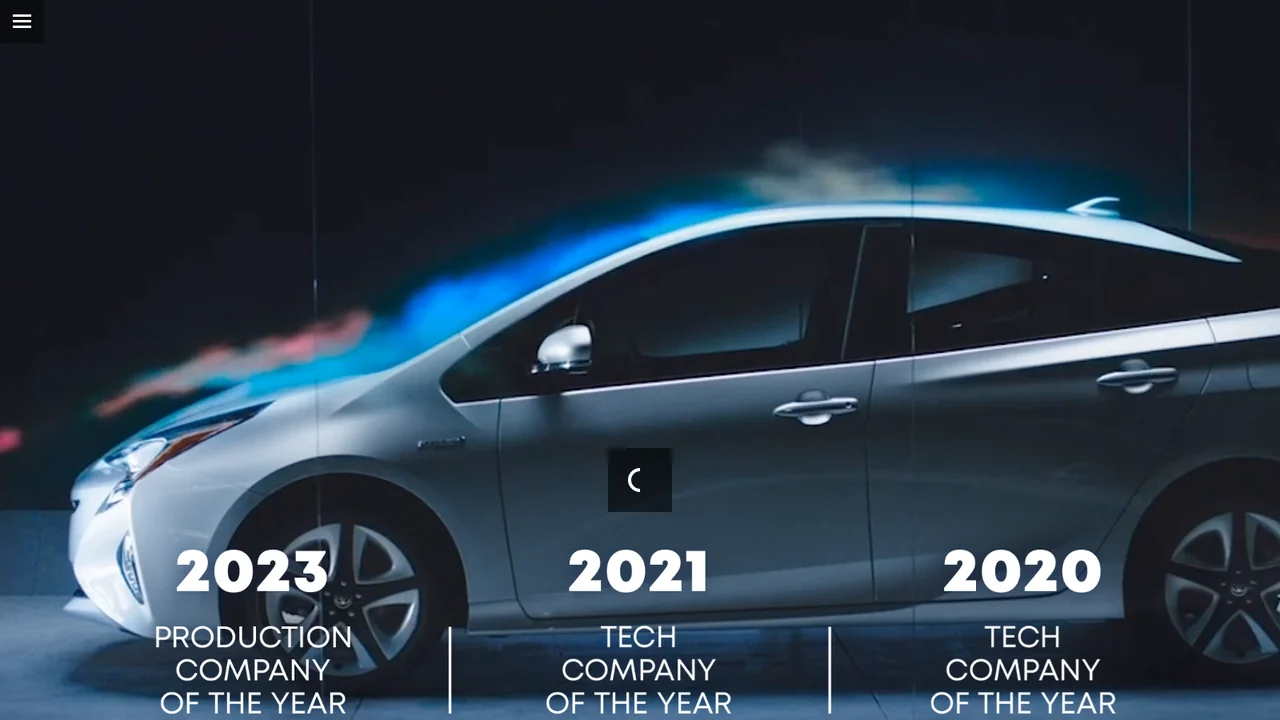
Its published recognition includes Production Company of the Year in 2023 and Tech Company of the Year in both 2021 and 2020, which is a useful signal for a category where quality is otherwise hard to assess from outside. Awards do not predict delivery on your specific brief, but sustained recognition across both production and technology categories suggests a studio that is neither purely creative nor purely technical.
The Attractions practice is worth noting for anyone whose experience will be installed somewhere permanent rather than run as a campaign, since that is a different discipline with different durability requirements.
What it does not publish on the pages reviewed is a headquarters address, founding year, team size, rates or ownership terms, and its commissioning rhythm is weighted toward campaigns and brand work rather than long-lived products. A client planning a five-year product should establish support and maintenance arrangements explicitly. Best for experiences where a named director's authorship is part of what you are buying.
4. Luminous XR

Luminous XR, part of Luminous Group in the United Kingdom, works across industrial digital technology including augmented and virtual reality, and it is the only consultancy in this list. On a custom experiences list that position is more useful than it first appears.
A significant share of custom 3D briefs are answers in search of a question. An organization decides it wants an immersive experience, commissions one, launches it, and then discovers nobody established what it was supposed to change. A supplier whose engagement starts with the problem, and which is willing to conclude that the answer is not a 3D experience at all, costs a fraction of a build and occasionally saves the entire budget.
Its practical value is also regional and physical. UK industrial and engineering organizations frequently want a supplier who can be on site, understands local standards and can be engaged before any technology decision. That kind of assessment work is difficult to do remotely and is not what an offshore production studio is set up to provide.
It is the entry with the least published detail here by a clear margin. Its site does not publish a founding year, team size, named clients, product names, device support or rates, so evaluation happens in conversation rather than from published material. A buyer should ask directly for named deployments in their sector, what is delivered at handover, who owns it and who supports it afterwards.
It ranks fourth on the value of the advisory route rather than on documented custom delivery, and that placement should be read that way rather than as a judgement on capability. Best for organizations that have not yet established whether a custom experience is the right intervention.
5. Cintoo
Cintoo is a digital twin platform and reality capture software company, and it belongs on this list for a specific reason: a large share of custom 3D experiences depict a place that already exists, and depicting it accurately is a capture problem rather than a modeling one.
Its central technical claim addresses exactly that. It converts point cloud data into 3D meshes with no compromise to accuracy, so teams can do more with scan data. A point cloud from a laser scanner is the most accurate record of a real space and also enormous, slow and awkward to work with outside specialist software. Turning it into a mesh that behaves like ordinary 3D geometry is what makes scan data usable inside an experience.
Its published products are BIM Edition, Twin Edition and 360 Edition, plus Workspace. The 360 Edition is the most relevant to lighter experience work, since panoramic capture is cheaper and faster than laser scanning and adequate for many purposes where survey-grade accuracy is not required.
It publishes cloud-based processing covering secure upload, processing, visualization and management of massive 3D scan datasets from anywhere, and states that it is agnostic across capture hardware. Both matter on real projects, since scan data outgrows local workstations quickly and a client rarely controls which scanner was used.
It is a platform rather than a service, so the scanning, the decisions and the experience-building all remain with you or another supplier. Its site is published in nine languages, which indicates genuine international deployment, but it publishes no founding year, headquarters address, team size, named clients or rates. It ranks fifth because it supplies an input rather than a finished experience. Best for experiences that must depict a real place accurately.
What custom 3D projects have to account for
Four things decide whether a commissioned experience is judged a success.
The first is naming what it changes. Write down the decision, behavior or number the experience exists to move, before any supplier is briefed. Experiences commissioned without that are evaluated on whether people liked them, which is unfalsifiable and therefore indefensible at the next budget round.
The second is who owns the creative direction. Establish whether you are buying execution of your concept or a studio's authorship, because the two produce very different working relationships and very different invoices. Treeview builds to specification; UNIT9 attaches directors. Neither is better, and disagreement about which was agreed is the most common source of friction.
The third is the second year. A campaign ends and a product does not. If the experience will still be running in eighteen months, establish who maintains it, what hosting and device support cost, and whether you can commission changes from anyone other than the original studio. Treeview publishes full transfer of IP, source code and assets; the other four do not publish ownership terms.
The fourth is where the 3D comes from. Modeling an imagined environment and capturing a real one are different disciplines with different costs. If your experience depicts somewhere real, budget capture explicitly rather than assuming a modeler will approximate it, and expect the capture to be reusable across future projects.
How to choose between these custom 3D companies
Start from what you are actually supplying. If you bring a finished concept and want it executed accurately and owned outright, Treeview builds to specification and transfers everything. If you want a named creative voice attached, UNIT9 represents directors. If the difficulty is engineering rather than concept, large audiences or continuous operation, Magnopus has the strongest real-time record.
Then check the input. If the experience depicts a real place, Cintoo turns scan data into usable geometry and should be in the pipeline early rather than bolted on. If you are not yet certain a custom experience is warranted, Luminous XR will tell you before you spend.
Settle ownership in the brief rather than the contract review. Source code, project files, 3D assets, third-party licenses and documentation are inexpensive to require at tender and expensive to obtain later.
Finally, be honest about the run. A six-week campaign and a five-year installation want different suppliers, different contracts and different budgets, and the most common expensive mistake in this category is commissioning the first while planning the second.
Related reading. companies for VR virtual prototyping covers design review rather than audience experiences, and companies building digital twins on Unity and Unreal covers the engine route. For cultural work see XR development companies for museums, and for procurement, selecting XR developers for enterprise deployment.
Frequently Asked Questions (FAQ)
1. What does custom actually mean here?
It ranges from executing your finished concept to a studio supplying the creative direction as well. Treeview builds to specification. UNIT9 attaches named directors. Establishing which you are buying before work starts prevents the most common disagreement in this category, and it materially changes the price.
2. Which of these name clients?
Treeview names Microsoft, Meta, Medtronic, Toyota, Ford and Transfr. Magnopus names the Academy Museum of Motion Pictures, Sphere, Dubai Expo 2020 and NASA's Mission:ISS. UNIT9 publishes awards rather than a named client list on the pages reviewed. Luminous XR and Cintoo name no clients.
3. Should the 3D be modeled or captured?
Modeled if the environment is imagined, captured if it is a real place that must be accurate. They are different disciplines with different pipelines and costs. Cintoo converts laser scan point clouds into usable meshes, and Magnopus publishes Gaussian splat support, which is a lighter route from reality into real time.
4. Who maintains the experience afterwards?
Whoever you contract to, and it should be named before launch. Campaign work assumes an end date; products do not. Treeview publishes full transfer of IP, source code and assets, which allows any competent developer to take over. The others do not publish ownership terms.
5. Do awards mean anything when choosing a studio?
They indicate peer recognition rather than fit for your brief. UNIT9 publishes Production Company of the Year 2023 and Tech Company of the Year in 2021 and 2020, which is a reasonable signal in a category where quality is hard to judge externally. Ask for a reference on work comparable to yours regardless.
6. Are game-engine virtual tours different from 360 tours?
Yes, and the difference is what the visitor can do. A 360 tour moves between fixed photographic viewpoints. A game-engine virtual tour is a real-time 3D scene built in Unreal Engine or Unity, so the visitor walks anywhere, materials and lighting can change live, and an unbuilt building can be toured before it exists. Epic Games publishes named examples of exactly this, including VR walkthroughs built by Groupe Legendre, whose preconstruction team of around 15 designers and engineers was producing client walkthroughs in 2019, and a real estate solutions page carrying its service partners and case studies. The trade is cost: a real-time scene is modeled and lit rather than photographed, so it is a commission rather than a capture session.
7. What does a custom 3D experience cost?
None of the five publishes rates, so no figure is recorded here. Cost is driven by whether creative direction is supplied, whether the 3D is modeled or captured, the audience volume and reliability required, the platforms supported, and how long it must run. Maintenance beyond launch is the line most often missing from a first budget.