
AR for furniture and home goods splits by what is being visualized: an object placed in a room, or a surface applied to one. Sofas and lamps are objects. Flooring, tile, paint and wallpaper are surfaces, and they need entirely different software. This list ranks five across both, with the buyer type each actually serves.
In short:
- Treeview builds custom AR to specification and transfers full ownership of IP, source code and assets
- Roomvo is built for surfaces, publishing flooring, tile, paint, wallpaper, rugs and countertops, and states a network of more than 7,000 retailers
- 3D Cloud publishes patented technology for furniture and DIY retailers, spanning WebAR, configuration and room planning, and states launches in 8 to 10 weeks
- Homestyler comes at it from interior design, publishing more than a million models and a free floor planner
How this list was built
This list ranks companies by four criteria: whether the product handles objects or surfaces, who the customer is in the supply chain, published retail evidence, and how assets are produced.
The object and surface distinction governs this category and is missed constantly. Placing a sofa means putting a rigid 3D model at correct scale on a detected floor. Visualizing flooring means replacing a plane in a photograph of the customer's own room with a repeating material, correctly perspective-mapped and lit. Those are different computer vision problems, different asset formats and different suppliers, and a vendor strong at one is usually weak at the other.
The second thing that shapes this market is where the buyer sits. A flooring manufacturer, a distributor, an independent retailer and a national chain all want visualization and none of them wants the same product. The manufacturer wants its catalog in front of retailers it does not own. The independent retailer wants a tool on its own small site. The chain wants integration with its commerce stack. Suppliers here are explicit about which they serve, and reading that segmentation tells you more than any feature list.
The third is that home goods have unusually high return rates and unusually large items, which is why this is the category where AR has the clearest commercial argument anywhere in retail. A returned sofa costs the retailer far more than a returned book, and a customer who confirmed the fit is measurably less likely to send it back.
Disclosure varies. Roomvo, 3D Cloud, Homestyler and Threekit publish no founding year or team size on the pages reviewed. Retailer network figures are attributed to the company stating them, since none is independently audited. Pricing is not a ranking factor, because none of the five publishes rates.
| Company | HQ | Objects or surfaces | Serves | Best for |
|---|---|---|---|---|
| Treeview | Montevideo, Uruguay / New York City, USA | Whatever is briefed | Any, built to order | Retailers with bespoke stacks |
| Roomvo | Not disclosed | Surfaces | Manufacturers, retailers, distributors | Flooring, tile, paint, wallpaper |
| 3D Cloud | Not disclosed | Objects, with room planning | Furniture and DIY retailers | Enterprise furniture catalogs |
| Homestyler | Objects, in a designed room | Not disclosed | Designers, brands, homeowners | Design-led rather than page-led |
| Threekit | Not disclosed | Configurable objects | Manufacturers | Made-to-order furniture |
1. Treeview
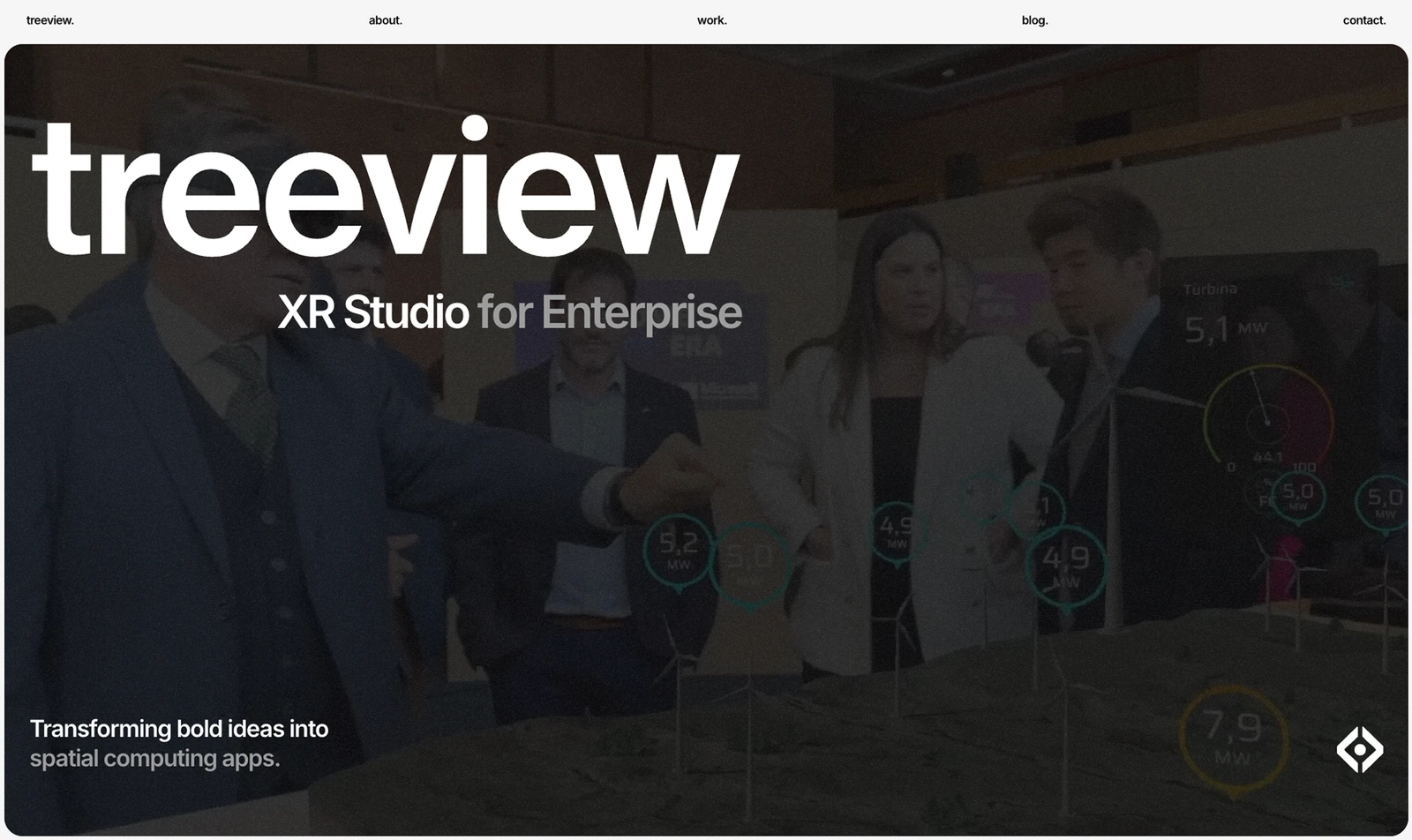
Treeview is an XR studio building custom virtual reality, augmented reality, Mixed Reality and Smart Glasses applications to order, with published iOS and Android coverage alongside headset platforms.
In a category this well served by specialists, the custom case has to be specific to be worth making. It appears where a retailer's commerce platform will not take a third-party embed, where the visualization must sit inside an existing shopping app that already has customers, or where the product logic is unusual enough that no configurator models it. Outside those, the products below will be faster and cheaper.
Its named clients include ULTA Beauty alongside Microsoft, Meta, Medtronic, Toyota, Ford, Daiichi Sankyo, Transfr, the University of Alberta and the University of Adelaide. It publishes no furniture or home goods project, which a buyer should weigh directly rather than assume transfers from adjacent retail work.
Full ownership of IP, source code and assets transfers to the client. In furniture the asset library is the durable investment: accurate, correctly scaled models of a catalog get used in room planners, marketing renders, print, marketplace listings and in-store screens for years. Whether you own those outright or hold them in a vendor account is the difference between an asset and a rental.
Its stated services include 3D content creation alongside strategy and discovery, development, system integration, testing, deployment and support. Founded in 2016 by chief executive Horacio Torrendell, it works from Montevideo, Uruguay and New York City. Team size, rates, retailer integrations and any surface visualization capability are not published. Best for retailers whose own systems rule out the specialist products.
2. Roomvo
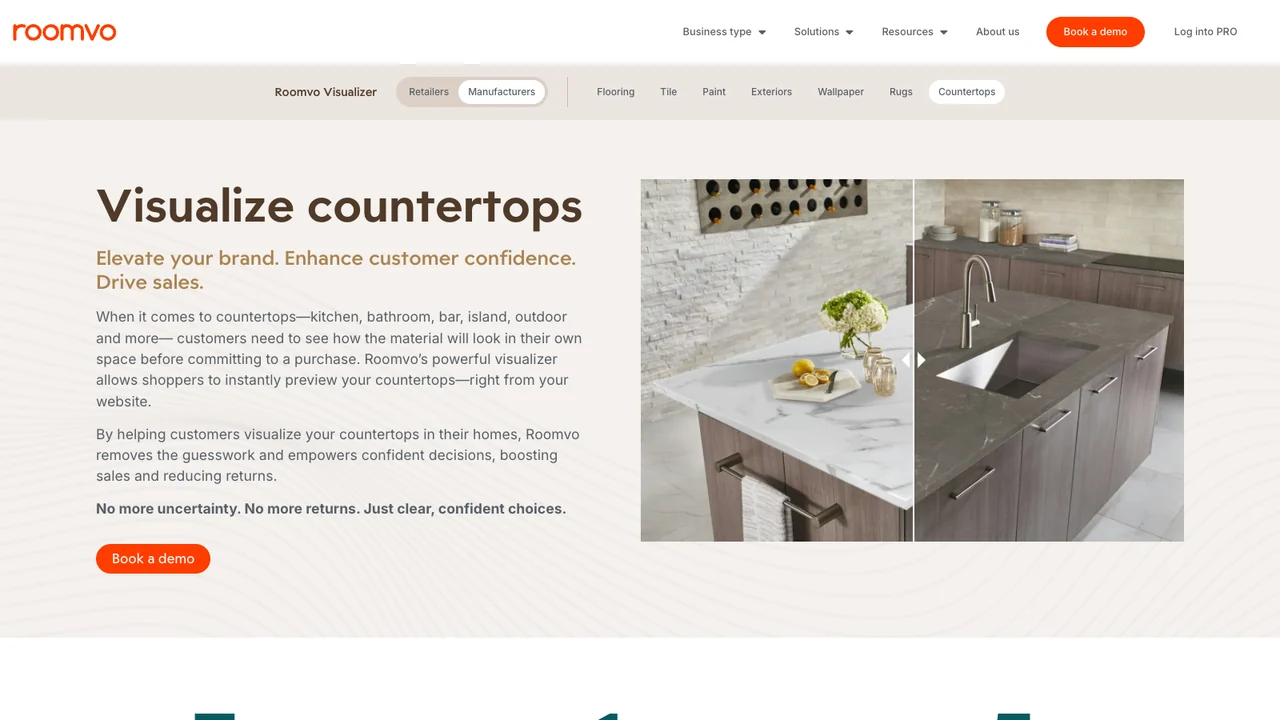
Roomvo publishes a house and home visualizer and is the clearest example in this list of a company built for surfaces rather than objects. Its published categories are flooring, tile, paint, exteriors, wallpaper, rugs and countertops.
Its published positioning on countertops explains the mechanism well: customers need to see how the material will look in their own space before committing, and the visualizer lets shoppers preview a surface instantly from a photo of their room. It states this removes guesswork, supports confident decisions, boosts sales and reduces returns, framed as no uncertainty, no more returns and clear confident choices.
What distinguishes it commercially is the distribution model rather than the technology. Its published segments are Manufacturer, Independent Retailer, Large Retailer, Distributor and Real Estate, and it states that manufacturers gain access to a network of more than 7,000 retailers. That is a two-sided proposition: a flooring manufacturer adopts the visualizer and its catalog then appears across a large network of dealers it does not own, which is a distribution benefit no purely technical tool provides.
Its published product line reflects that spread: Roomvo Visualizer, Virtual Samples, Roomvo Kiosk for showrooms, Roomvo Sites, Roomvo Assistant, Roomvo Catalog, Roomvo SiteAds, Roomvo Studio, a Partner Program and QFloors. The Kiosk and Sites entries show it serves physical showrooms and small independent retailers, not only ecommerce.
It publishes no founding year, headquarters address, team size or rates on the pages reviewed, and its focus on surfaces means furniture and freestanding objects are not its core. Best for flooring, tile, paint and surface manufacturers and the retailers who sell them.
3. 3D Cloud
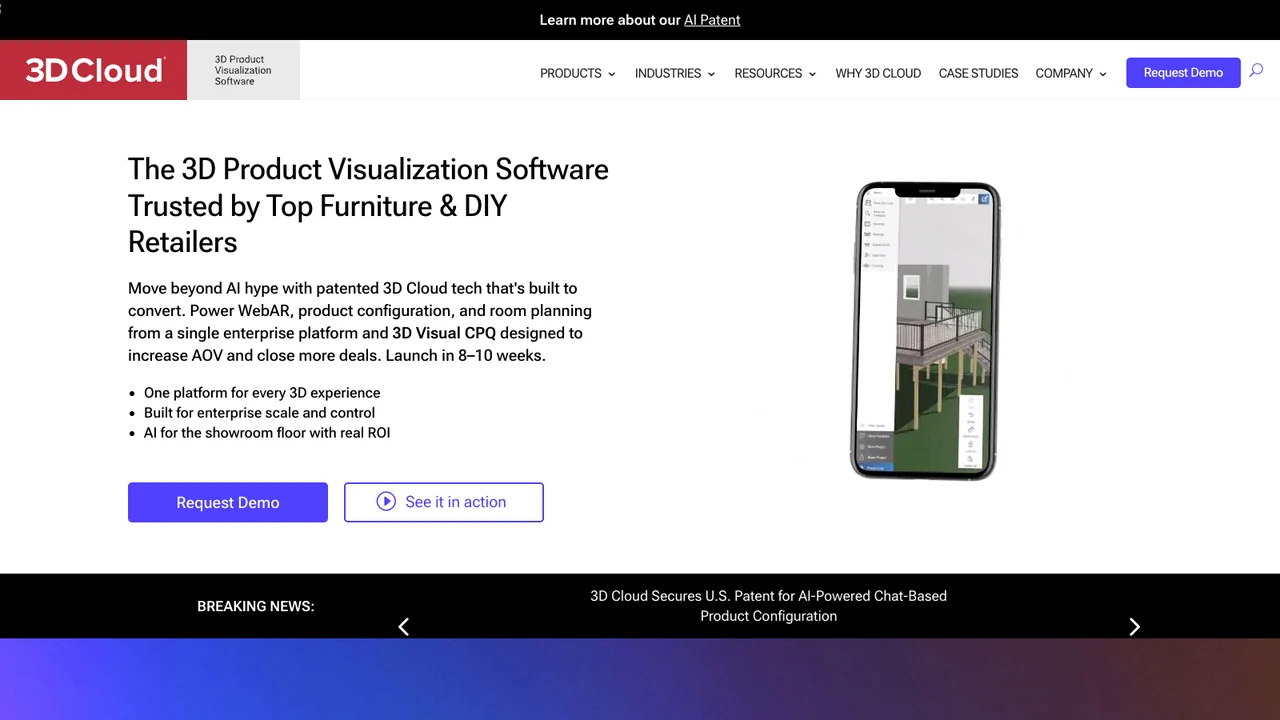
3D Cloud publishes 3D product visualization software stating it is trusted by top furniture and DIY retailers, and it is the most enterprise-oriented entry here for furniture specifically.
Its published breadth covers the whole problem rather than one feature: a 3D Cloud Platform, 3D Digital Asset Management, a 3D Product Configurator, modular and sectional sofa configurators, a 3D Room Planner, a Room Scanner, Visual Merchandising, 3D renders, WebAR and augmented reality, virtual reality and 360 panoramas, product renders, and 3D Modeling Services alongside a 3D Cloud Network for content.
The sectional sofa configurator is a telling inclusion. Modular seating is one of the hardest configuration problems in furniture, because the customer is assembling a shape from components with rules about which pieces connect, and both the geometry and the pricing have to stay valid. A vendor publishing that specifically has engaged with the difficult end of the category rather than the easy demonstrations.
Its published industries are Furniture, Office and Commercial, Kitchen, Bath, Outdoor and Deck, and Storage and Closets, all of which are considered purchases involving space. It states patented technology, including a third patent for AI-powered chat-based product configuration, and states a launch timeline of 8 to 10 weeks, which is a useful commitment in a market where implementations routinely run long.
Its inclusion of 3D Modeling Services and a content network matters because asset supply is the constraint in furniture, where catalogs are large and every finish is a variant. It publishes no founding year, headquarters address, team size, named clients or rates on the pages reviewed. Best for furniture and DIY retailers wanting configuration, room planning and AR from one enterprise platform.
4. Homestyler
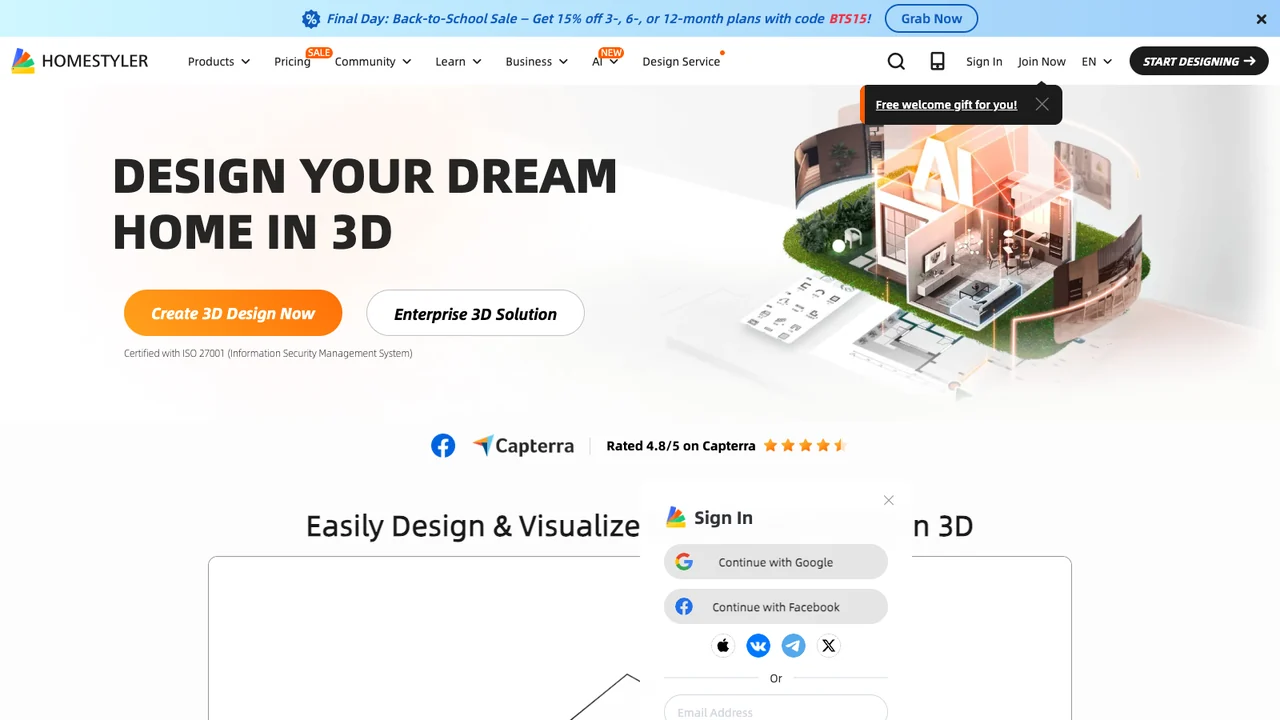
Homestyler publishes free 3D home design software and approaches this category from interior design rather than from retail, which changes both who uses it and what it is good for.
Its published audiences are Interior Designers, Brands and Retailers, Real Estate, Schools and Homeowners, and that list explains the product. Its features include a Floor Planner, Custom Furniture, Collaboration, a Mobile App, an Asset Market, Video Render, Virtual Studio, VR and AR, and a 3D Viewer, alongside 3D Modeling and 3D Content Creation services. It states more than a million models and cloud rendering.
The distinction from the retail-first tools above is that the user here is designing a room, not evaluating a product. Someone lays out a floor plan, furnishes it, renders it and shares it. Products appear inside that process as options rather than as the subject, which is a fundamentally different funnel: the customer arrives wanting a room and leaves having chosen items, rather than arriving at a product page.
For a brand or retailer the opportunity is placement inside that design workflow. Having your catalog available in the asset library where designers and homeowners are already building rooms puts products in front of people at the moment of specification, which is earlier and stickier than the product page.
Its community apparatus, covering challenges, an asset market, awards and bootcamps, indicates a large self-service user base rather than an enterprise sales motion. That is a strength for reach and a limitation if you need a supported enterprise integration. It publishes no founding year, headquarters address, team size or rates on the pages reviewed, and no named retail clients. Best for brands wanting presence inside a design tool rather than a product page widget.
5. Threekit
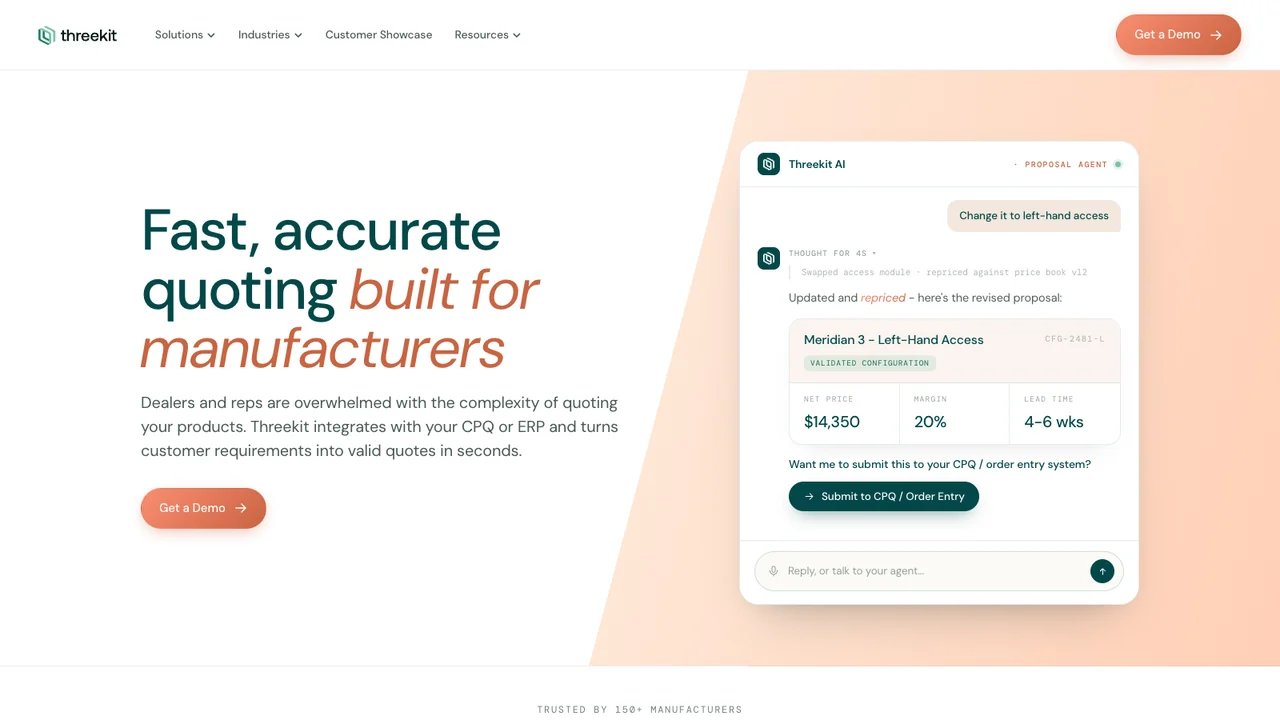
Threekit publishes fast, accurate quoting built for manufacturers, integrating with CPQ or ERP to turn customer requirements into valid quotes in seconds, with an AI Visual Configurator alongside Sales Agent and Web Leads Agent products.
Its published industries include Furniture alongside AV Equipment, Building Materials, Doors and Windows, Heavy Equipment and Manufacturing, and it is the entry here aimed at made-to-order rather than stocked goods. That distinction matters in furniture more than in most categories, because a great deal of furniture is built to order in a customer's chosen fabric, finish and dimension, and none of it exists to be photographed.
Its published value is that the configuration a customer builds resolves to a valid, priced quote through the connected CPQ or ERP. For a furniture manufacturer selling through dealers, that closes the gap that otherwise breaks the process: a dealer configures a piece with a customer, and the specification has to reach manufacturing as something buildable at a price both parties have agreed.
Building Materials and Doors and Windows are also placement categories in the strict sense, where the customer needs to see the item in the actual opening, and all are configurable, which is where the quoting link pays for itself.
The caveat is emphasis. Its published homepage leads with proposal generation, voice-note-to-quote and AI sales agents rather than shopper-facing visualization, so a retailer wanting a straightforward consumer room visualizer will find the product heavier than needed and should confirm the visual configurator and AR capabilities directly. It publishes no founding year, headquarters address, team size, named furniture clients or rates. Best for made-to-order furniture manufacturers selling through a dealer network.
What furniture AR programs have to account for
Four things decide whether this pays back in a category where returns are the largest cost.
The first is object against surface. Establish which you sell before shortlisting, because the technology and the suppliers do not overlap. Retailers selling both, such as a home improvement chain, will need two products or a platform that genuinely publishes both.
The second is asset economics at variant scale. Furniture catalogs multiply: a sofa in twenty fabrics across four configurations is eighty assets by naive counting, and the only sustainable answer is a configurable model driven by materials rather than eighty separate models. Ask specifically how variants are handled, since this is where per-asset pricing either works or ruins the business case.
The third is where the customer is in their journey. A product page visualizer catches someone already choosing an item. A room planner catches someone deciding what the room should be, which is earlier and more influential. Homestyler and 3D Cloud both publish room planning; the others are closer to the product page.
The fourth is measuring returns, not just conversion. In furniture the return is the expensive event, and it is where AR has its clearest effect. Instrument return rate for products with and without visualization, over a period long enough for returns to land, because that number will justify the program far better than time on page.
How to choose between these furniture and home goods companies
Start from what you sell. Flooring, tile, paint, wallpaper, rugs or countertops points to Roomvo, whose whole product is surfaces and whose retailer network is a distribution advantage in itself. Stocked furniture at enterprise catalog scale points to 3D Cloud, with configuration, room planning, AR and modeling services in one platform. Made-to-order furniture sold through dealers points to Threekit and its quoting integration.
Then consider where you want to appear. If the goal is presence inside the design process rather than on your own product page, Homestyler puts a catalog where designers and homeowners are already building rooms. If your own stack cannot accept any of these, Treeview builds to specification and transfers ownership.
Test variant handling during evaluation, not after. Bring your most heavily configured product and ask what it costs to represent completely. This single test predicts whether the program reaches your catalog or stops at the hero products.
Finally, set up return measurement before launch. It is the number this category exists to move, it takes months to accumulate, and it cannot be reconstructed retrospectively.
Related reading. BestInXR's product visualization guide covers where 3D assets come from and what each route costs. companies for AR product preview and placement covers placement across categories, and AR development companies for ecommerce covers the platform against studio decision. For asset supply see AR companies for product visualization, and for procurement, selecting XR developers for enterprise deployment.
Frequently Asked Questions (FAQ)
1. Why do surfaces and objects need different software?
Placing a sofa means putting a rigid model at true scale on a detected floor. Visualizing flooring means replacing a plane in a photo of the customer's room with a perspective-mapped material. Different computer vision, different assets, different vendors. Roomvo publishes surfaces; 3D Cloud and Threekit publish objects.
2. How are furniture variants handled without exploding the asset count?
Through configurable models driven by materials rather than one model per combination. 3D Cloud publishes modular and sectional sofa configurators, and Threekit publishes a visual configurator tied to CPQ. Ask what a fully variant-covered product costs, since naive per-asset pricing makes furniture catalogs unaffordable.
3. Which of these reach retailers beyond a manufacturer's own channels?
Roomvo states that manufacturers gain access to a network of more than 7,000 retailers, which is a distribution benefit rather than a technical one. Homestyler offers reach through a design community and asset market. The others are deployed by the retailer or manufacturer on its own channels.
4. Does this actually reduce returns?
Roomvo states its visualizer reduces returns, and the argument is strongest in this category because returned furniture is expensive to handle. No independently audited figure is published by any of the five, so instrument your own return rate with and without visualization over a period long enough for returns to land.
5. Is a room planner better than a product page viewer?
They catch different moments. A viewer helps someone already choosing an item; a planner helps someone deciding what the room should be, which is earlier and more influential over what gets bought. 3D Cloud and Homestyler publish room planning. Neither replaces the other.
6. What does furniture AR cost?
None of the five publishes rates, so no figure is recorded here. Cost is driven by catalog size and variant count, whether you need surfaces or objects, asset production, platform integration, and whether room planning is included. Variant coverage is the line most often missing from a first budget.