
AR product preview and placement answers one question a photograph cannot: will this fit, and how will it look here. That narrows where it earns its cost, because for products where size is not an objection it is decoration. This list ranks five on tracking quality, how the experience is reached, and category fit.
In short:
- Treeview builds custom AR to specification and transfers full ownership of IP, source code and assets
- Onirix publishes web AR with no app, stating 97.43 percent browser compatibility and naming LG, Durex, Telefonica and the Cleveland Cavaliers
- LEVAR is built for ecommerce placement, publishing Shopify, BigCommerce and Klaviyo integrations plus named case studies
- Threekit approaches placement from configuration, connecting to CPQ and ERP so what is previewed is a valid, quotable build
How this list was built
This list ranks companies by four criteria: how the experience is delivered to a shopper, tracking and scale accuracy, published integrations, and evidence of real deployment.
Placement is a narrower proposition than product visualization generally, and being honest about that improves the buying decision. It answers whether an object fits a space and how it looks there. That is decisive for furniture, appliances, flooring, fixtures, equipment and anything installed. It is close to irrelevant for a wristwatch, a bottle of shampoo or a pair of headphones, where AR is a novelty that photographs already handle.
The technical question that follows is scale accuracy. If the point is fit, the model must appear at true size and sit correctly on a floor or wall, which depends on surface detection and tracking rather than on visual quality. A beautifully rendered sofa at the wrong scale is worse than no sofa, because it produces a confident wrong answer and, eventually, a return.
The delivery question decides reach. An experience requiring an app download loses most of the audience at the download, and for a first-time shopper it loses effectively all of them. Web AR, running in the phone's browser from a link or QR code, is the only route that reaches people who have never heard of you, at the cost of some fidelity and some device inconsistency.
Disclosure varies. Onirix, LEVAR, Aircards and Threekit publish no founding year or team size on the pages reviewed, and none publishes a headquarters address. Compatibility and user figures are attributed to the company stating them, since none is independently audited. Pricing is not a ranking factor, though Onirix and LEVAR publish rates.
| Company | HQ | Delivery | Named clients | Best for |
|---|---|---|---|---|
| Treeview | Montevideo, Uruguay / New York City, USA | Whatever is specified | ULTA Beauty, Toyota, Ford | Placement inside your own app |
| Onirix | Not disclosed | Web AR, no app | LG, Durex, Telefonica, Salt | Maximum reach from a QR code |
| LEVAR | Not disclosed | Ecommerce channels | 9five, Artiplanto, Assault Fitness | Shopify and BigCommerce stores |
| Aircards | Not disclosed | Campaign and location-based | Nike, PUMA, Louis Vuitton | Brand moments, not catalogs |
| Threekit | Not disclosed | Configurator-led | Not published | Configurable products that must quote |
1. Treeview
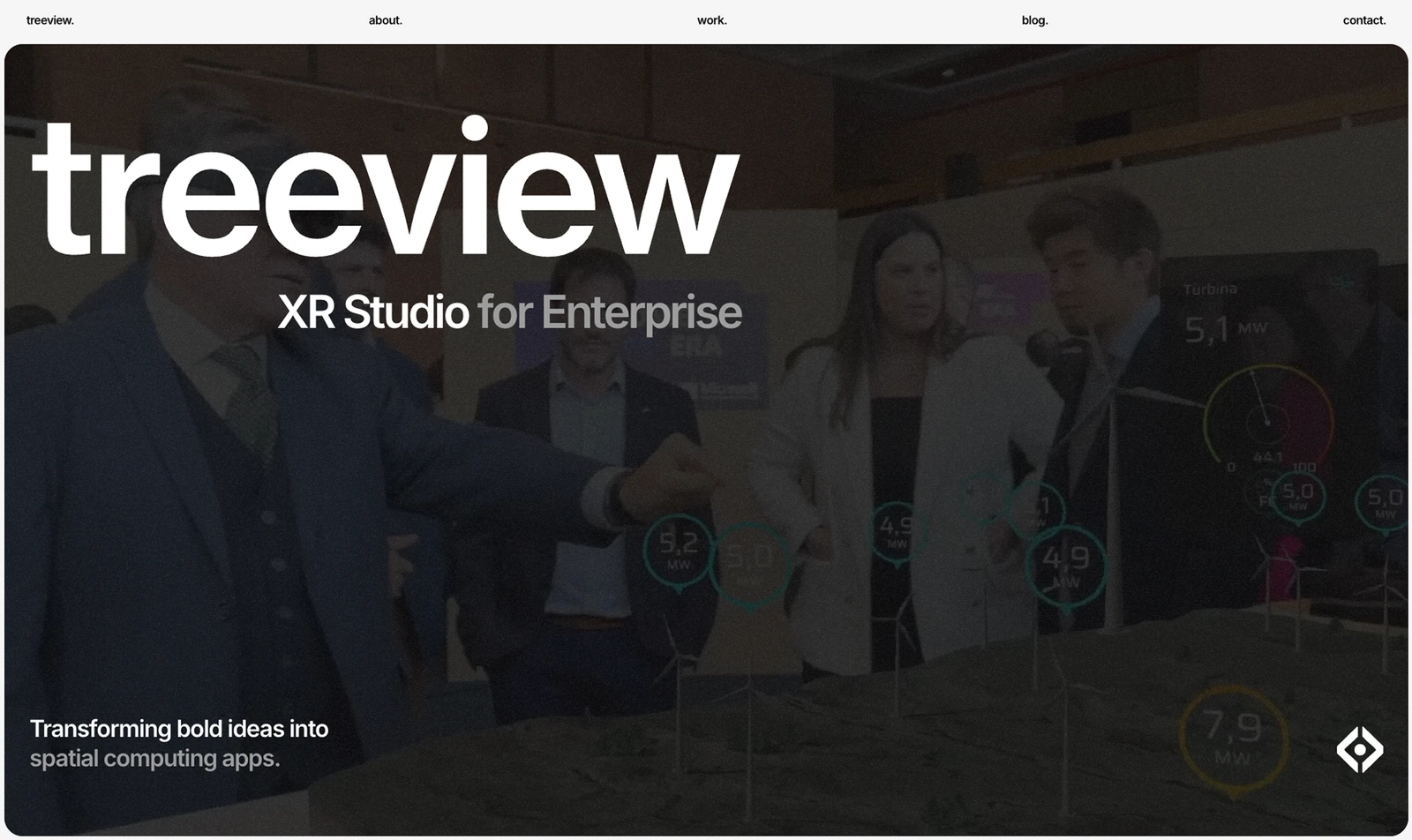
Treeview is an XR studio building custom virtual reality, augmented reality, Mixed Reality and Smart Glasses applications to order, with published coverage of iOS and Android alongside headset platforms, on Unity and Unreal Engine.
For placement specifically, the custom route matters in one recognizable situation: when the AR has to live inside an application you already own. A retailer with an established shopping app has a customer base that has already downloaded something, which removes the single biggest obstacle in this category. Adding placement to that app is a development project, not a platform subscription, and none of the platforms below will build it for you.
Its named clients include ULTA Beauty, Toyota and Ford alongside Microsoft, Meta, Medtronic, Daiichi Sankyo, Transfr, the University of Alberta and the University of Adelaide. ULTA Beauty is a large specialty retailer and Toyota and Ford are manufacturers whose products are the definition of a considered, space-constrained purchase.
Full ownership of IP, source code and assets transfers to the client. For placement work the asset clause is the substantive one, because accurate, correctly scaled 3D models of your products are reusable across every channel and are frequently the most expensive part of the program.
Its stated services run from strategy and discovery through 3D content creation, development, system integration, testing, deployment and support, and 3D content creation is worth noting here since asset supply is otherwise the constraint. Founded in 2016 by chief executive Horacio Torrendell, it works from Montevideo, Uruguay and New York City. Team size, rates, ecommerce integrations and published placement work are not disclosed, so a buyer should ask for a placement-specific reference. Best for adding placement to an app or storefront you already control.
2. Onirix
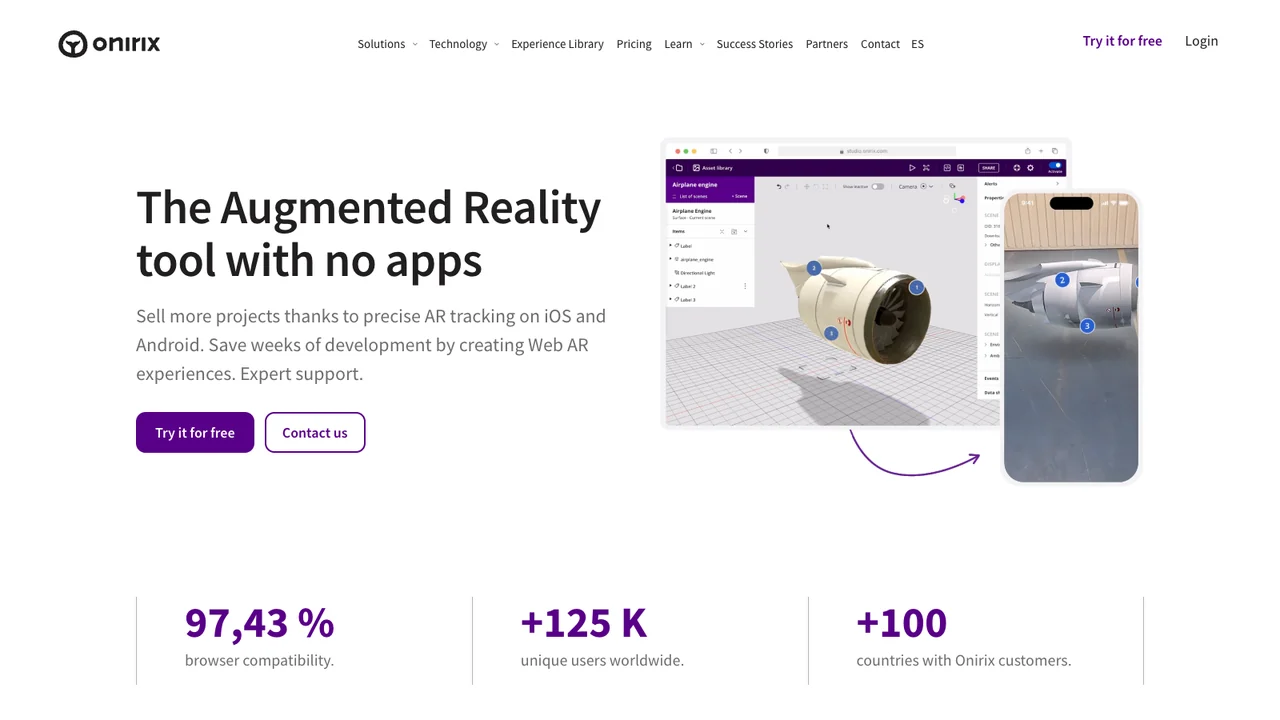
Onirix publishes an augmented reality tool with no apps, positioned around precise AR tracking on iOS and Android and saving weeks of development by creating web AR experiences, with expert support.
Its published figures are the most specific in this list and the most relevant to the delivery question: 97.43 percent browser compatibility, more than 125,000 unique users worldwide, and customers in more than 100 countries. The compatibility figure is the one that matters, because web AR's weakness has always been inconsistent device support, and a supplier publishing a precise number is inviting the comparison rather than avoiding it.
Its named clients are unusually strong for a platform of this size: LG, Durex, VMLY&R, Telefonica, Deusens, REE, the Cleveland Cavaliers and Salt. VMLY&R is an agency, which indicates the platform is used by creative shops delivering for their own clients, and that is a meaningful signal of workflow maturity.
Onirix Studio is published as a drag and drop builder for creating web AR experiences quickly, with an online code editor giving full control of scenes using HTML, CSS and JavaScript. That combination is the practical answer to a common tension: marketing wants to build things without engineering, and engineering wants an escape hatch when the builder runs out. Publishing both avoids the usual dead end.
It publishes pricing, a free trial, success stories and an accompaniment service. What it does not publish is a named ecommerce platform integration, a founding year, headquarters address or team size, so a retailer wanting a Shopify-native workflow should confirm that directly. Best for reaching the widest possible audience from a link or QR code with no download.
3. LEVAR
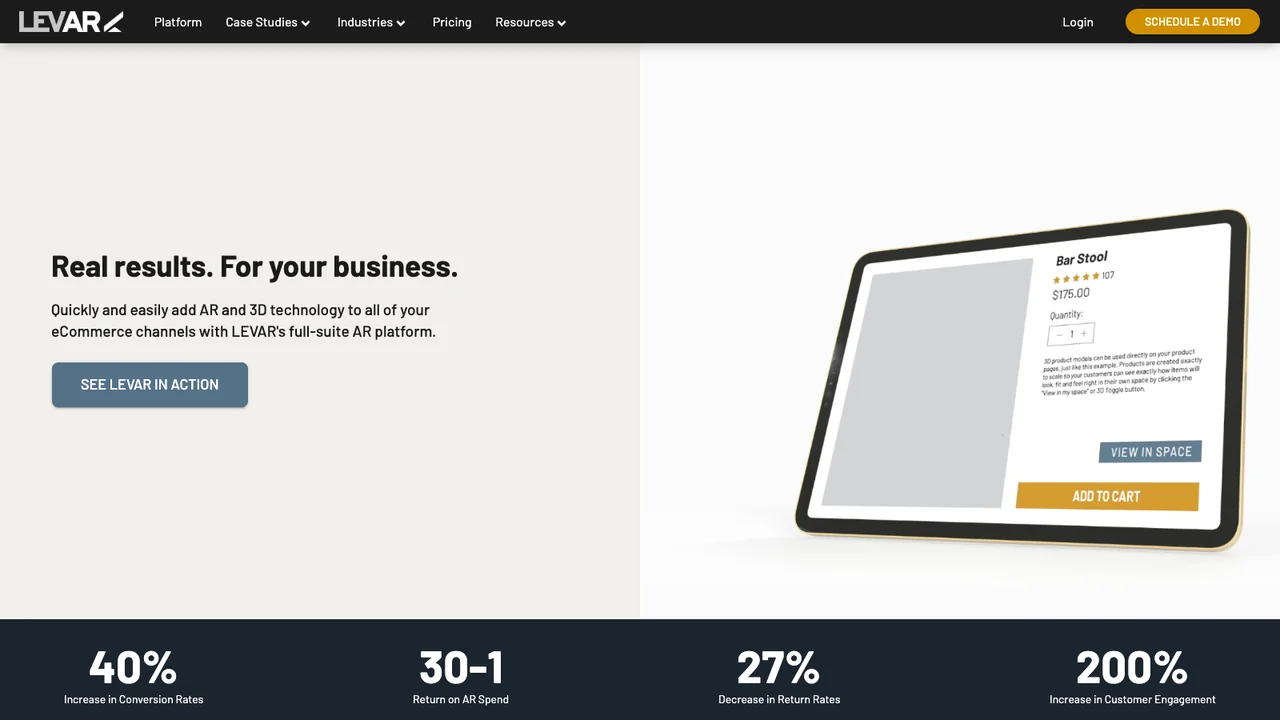
LEVAR publishes a full-suite AR platform for adding AR and 3D technology to ecommerce channels quickly, and it is the entry here built specifically for online retail rather than adapted to it.
Its published integrations are the practical differentiator: Shopify, BigCommerce and Klaviyo. Shopify and BigCommerce mean assets attach to products in the commerce system rather than being embedded by hand, which is the difference between a pilot and a catalog. Klaviyo is the interesting one, since it puts 3D and AR into email and lifecycle marketing rather than only the product page, reaching customers who are not currently browsing.
Its published industries are precisely the categories where placement earns its cost: Electronics and Appliances, Fitness Equipment, Home Furnishings and Outdoor Recreation, plus Virtual Try-On. Every one of those is a product where size, fit or spatial footprint is a real purchase objection, and the absence of categories where it is not is a sign of a company that understands its own value rather than claiming universal applicability.
Its named case studies are 9five, Artiplanto, Assault Fitness and LightsAmerica, which is eyewear, plants, gym equipment and lighting. Assault Fitness is the clearest illustration of the argument, since a squat rack or rower is exactly the purchase where a buyer needs to know whether it fits the room before committing.
It publishes pricing, a Why AR resource section, partner and integration documentation. It publishes conversion and return-on-spend figures on its homepage as animated counters, which are company-stated and not independently audited, so treat them as claims. No founding year, headquarters address or team size is published. Best for Shopify and BigCommerce retailers in space-constrained categories.
4. Aircards
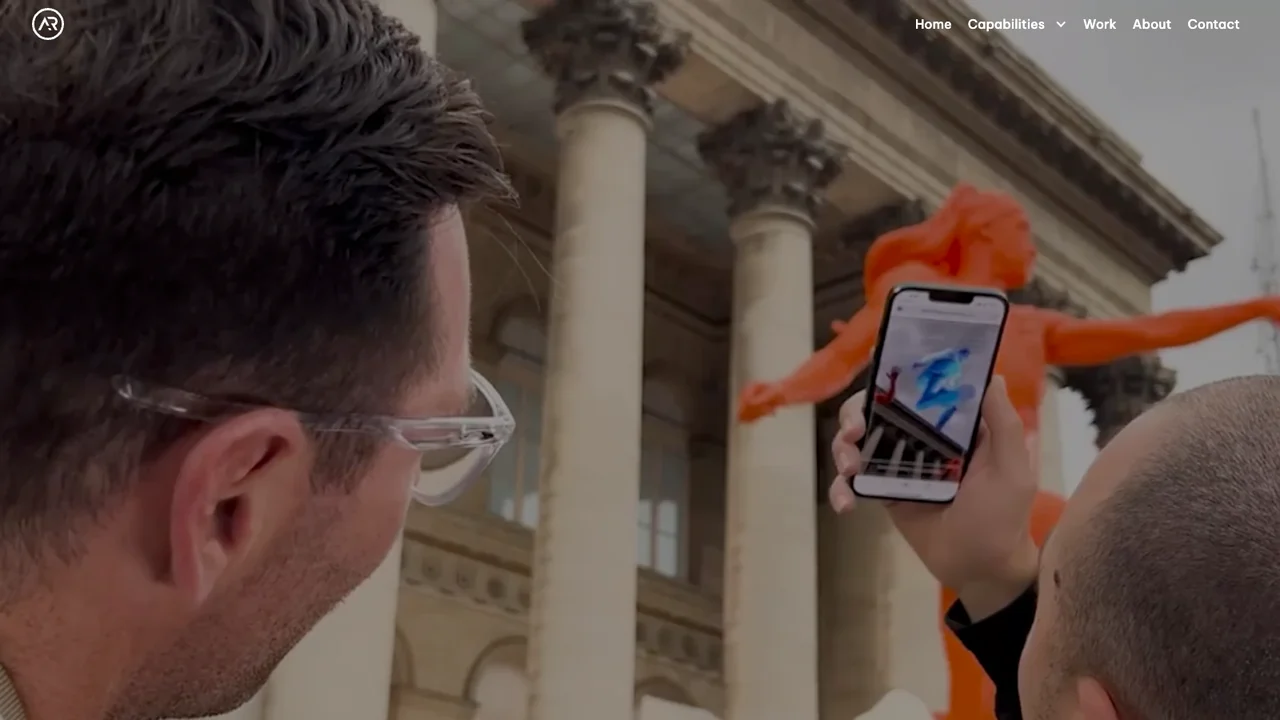
Aircards is a creative studio, and on a placement list that is the essential framing. Its published capabilities are Digital Experience and Mixed Reality, Experiential and Events, Creative Production, and Research and Development.
Its published work is brand-led and impressive: Outernet's The Butterfly Trail, Red Bull's Spin Like Siakam, Nike On Air described as location-based AR, PUMA's A.I. Creator OM, Louis Vuitton's Yayoi Kusama activation as augmented reality and experiential retail, and Lenovo F1's Race to Create using augmented reality and generative AI design.
Nike On Air as location-based AR is the entry most relevant to placement thinking, though it points somewhere different from ecommerce. Location-based AR anchors content to a physical place rather than to a product in the user's room, which is the retail store and event version of this technology rather than the shopping one.
The honest read for a buyer is that Aircards produces moments rather than infrastructure. If the goal is a launch, a flagship activation or an in-store experience that gets covered, this is the strongest brand portfolio in the list. If the goal is placement on every product page, it is the wrong shape and the studio does not claim otherwise.
It publishes no founding year, headquarters address, team size, ecommerce integrations, tracking specifications or rates on the pages reviewed, and no conversion evidence, which is consistent with campaign work measured on reach and attention. Best for brand activations where the AR is the campaign.
5. Threekit
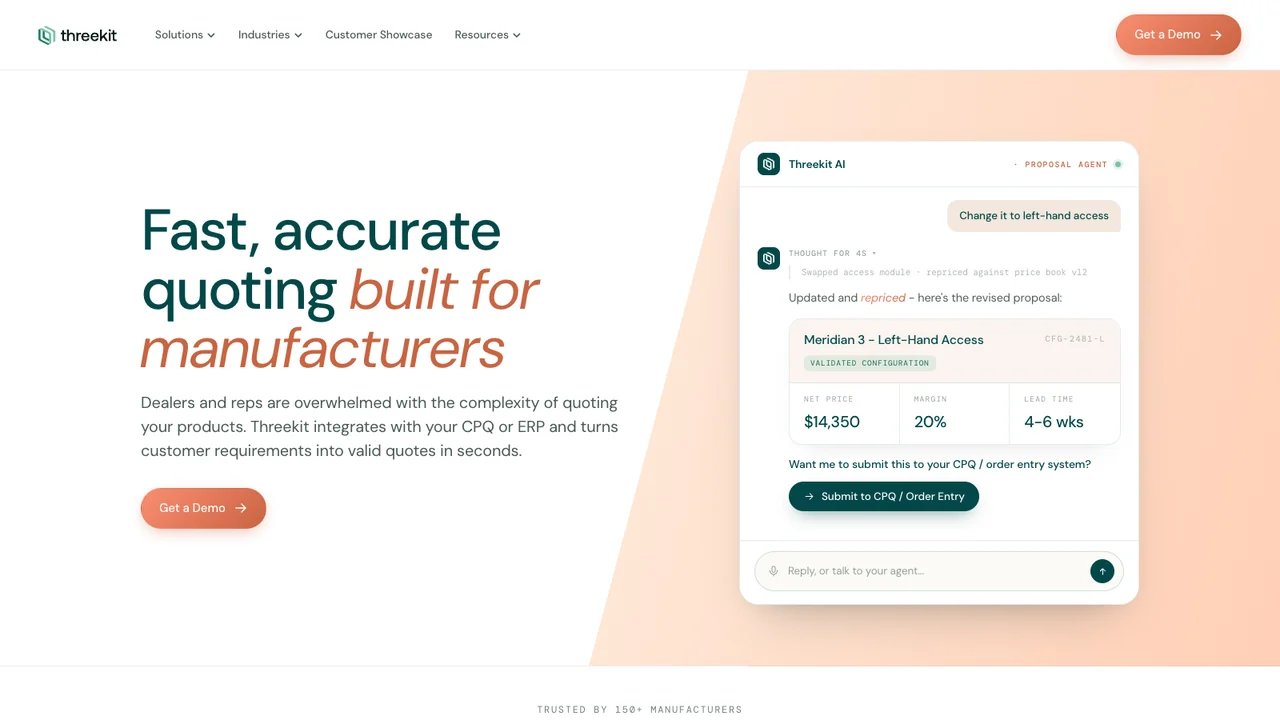
Threekit approaches placement from an unusual direction, and understanding that direction decides whether it fits. Its published positioning is fast, accurate quoting built for manufacturers, integrating with CPQ or ERP to turn customer requirements into valid quotes in seconds, with an AI Visual Configurator alongside a Sales Agent and Web Leads Agent.
The relevant idea is that placement is only useful if what is placed can actually be bought. For configurable products, showing a customer an arrangement they have assembled themselves is worthless if that combination is not manufacturable or priceable. Threekit's connection to CPQ and ERP means the configuration being visualized is a valid build with a price attached, which converts a preview into a quote.
Its stated industries are AV Equipment, Building Materials, Doors and Windows, Furniture, Heavy Equipment and Manufacturing. Doors and windows, building materials and furniture are all placement categories in the strict sense, where the buyer needs to see the item in the actual opening or room, and all three are configurable, which is where the CPQ link pays.
The caveat is that its published emphasis has moved toward quoting and AI sales agents rather than shopper-facing visualization, and its homepage leads with proposal generation rather than AR. A buyer wanting straightforward consumer placement will find the product heavier than needed, and should confirm the visual configurator and AR capability directly rather than inferring it.
It publishes case studies, a customer showcase, awards, documentation and industry pages, but no founding year, headquarters address, team size or rates on the pages reviewed. Best for configurable manufactured products where a preview must resolve to a real quote.
What placement projects have to account for
Four things determine whether placement changes behavior rather than impressing a stakeholder.
The first is category honesty. Placement earns its cost where fit is a genuine objection: furniture, appliances, fixtures, equipment, flooring. For small portable goods it is a novelty, and a program justified on universal rollout will underperform against one targeted at the categories where the question is real.
The second is scale accuracy. Ask how true size is established, how surfaces are detected, and what happens on a patterned rug or a dark floor where tracking struggles. Test with your largest and most awkward product rather than a demo cube, because a confident wrong scale creates returns.
The third is how the shopper arrives. Anything requiring a download loses most of the audience at that step. Web AR from a QR code or link reaches everyone, which is what Onirix publishes compatibility figures for. If you already have an installed app, that changes the maths entirely and makes a custom build viable.
The fourth is what happens after placement. A shopper who has placed a sofa correctly should be able to buy that exact configuration. Threekit's CPQ and ERP link addresses this for configurable goods; for everything else, confirm the previewed item maps to a purchasable SKU without the customer re-selecting options.
How to choose between these AR placement companies
Start from reach. If shoppers must arrive from a link, a QR code or a search result with nothing installed, Onirix publishes the specific browser compatibility figures and the no-app model. If you already have an app with an installed base, a custom build from Treeview uses an advantage the platforms cannot.
Then match the commerce reality. Shopify or BigCommerce stores in furniture, fitness, lighting or appliances point to LEVAR, whose integrations and case studies are exactly that. Configurable manufactured goods that must produce a valid quote point to Threekit. A brand moment rather than a catalog points to Aircards.
Test scale before anything else. Place your largest product in a real room, measure it against the physical item, and repeat on a dark floor and a patterned surface. This takes an afternoon and it is the difference between a feature that reduces returns and one that causes them.
Finally, close the loop to purchase. Establish that what was placed can be bought in one step, because a preview that ends in the shopper re-configuring the product from scratch has added friction rather than removed it.
Related reading. BestInXR's product visualization guide covers where 3D assets come from and what each route costs. companies for AR product visualization in ecommerce covers the product page itself, and AR companies for product visualization covers asset supply. For bespoke work see companies for custom 3D virtual experiences, and for procurement, selecting XR developers for enterprise deployment.
Frequently Asked Questions (FAQ)
1. Which product categories does AR placement actually help?
Those where size or fit is a real purchase objection: furniture, appliances, fitness equipment, lighting, flooring, doors and windows, and installed equipment. LEVAR's published industries are precisely that set. For small portable goods, placement is a novelty and photography already answers the question.
2. Does the customer need to download an app?
Not with web AR, which runs in the phone browser from a link or QR code. Onirix publishes 97.43 percent browser compatibility for its no-app approach. A download step loses most first-time shoppers, so an app-based experience only makes sense where you already have an installed base.
3. How accurate is the scale?
It depends on surface detection and tracking, and none of the five publishes a scale accuracy specification, so no figure is recorded here. Test with your largest product against the physical item, and repeat on dark and patterned floors where tracking commonly degrades.
4. Which of these integrate with ecommerce platforms?
LEVAR publishes Shopify, BigCommerce and Klaviyo integrations. Threekit publishes CPQ and ERP integration. Onirix publishes a studio and code editor but no named commerce platform. Aircards and Treeview publish no commerce integrations, so confirm your stack directly.
5. Can a shopper buy exactly what they placed?
Only if the experience is connected to product data. For configurable goods Threekit's CPQ and ERP link makes the previewed build a valid, priced quote. For everything else, confirm that the placed item maps to a purchasable SKU without the customer reselecting options.
6. What does AR placement cost?
Onirix and LEVAR publish pricing; the others do not, so no comparable figure is recorded here. Cost is driven by how many products need accurate scaled models, whether delivery is web or in-app, commerce integration work, and whether configuration logic is involved. Correctly scaled asset production is the line most often underestimated.