
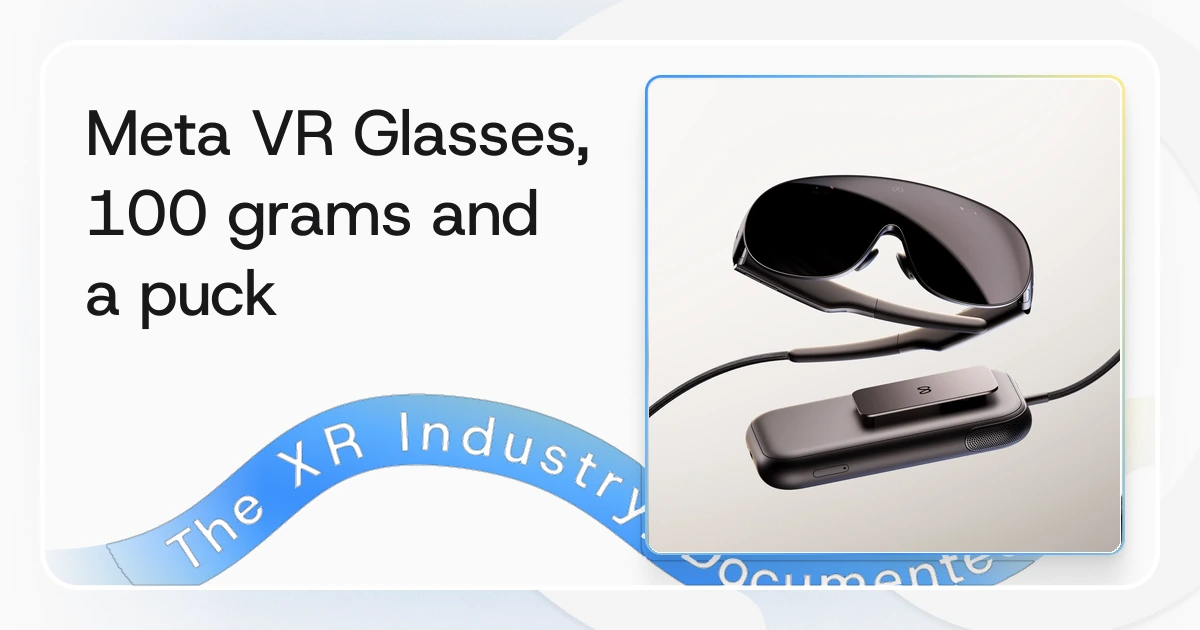
Meta announced Meta VR Glasses on September 23, 2026 at Connect, a 100 gram headset that moves the battery and the processor into a pocket puck on an optical tether. It ships Spring 2027 at $1,299.99. It is also the device that leaked out of Quest firmware two weeks ago, and it runs the Qualcomm platform that a competitor announced first.
In short:
- What it is: a two-part headset. The glasses carry the sensors and displays, the puck carries compute, battery and storage and clips to a pocket.
- What Meta published: about 100 grams, a 5K micro-OLED display at 37 pixels per degree, Snapdragon Reality Elite, up to three hours of media playback, 45W charging, no controllers required.
- Price and date: $1,299.99 in Spring 2027, which is two full quarters after the announcement.
- The leak resolves: the slim headset with a tethered puck that BestInXR covered on September 12 is this product.
- What is missing: per-eye resolution, field of view, puck weight, storage, memory, a ship date and any price outside the United States.
What Meta announced
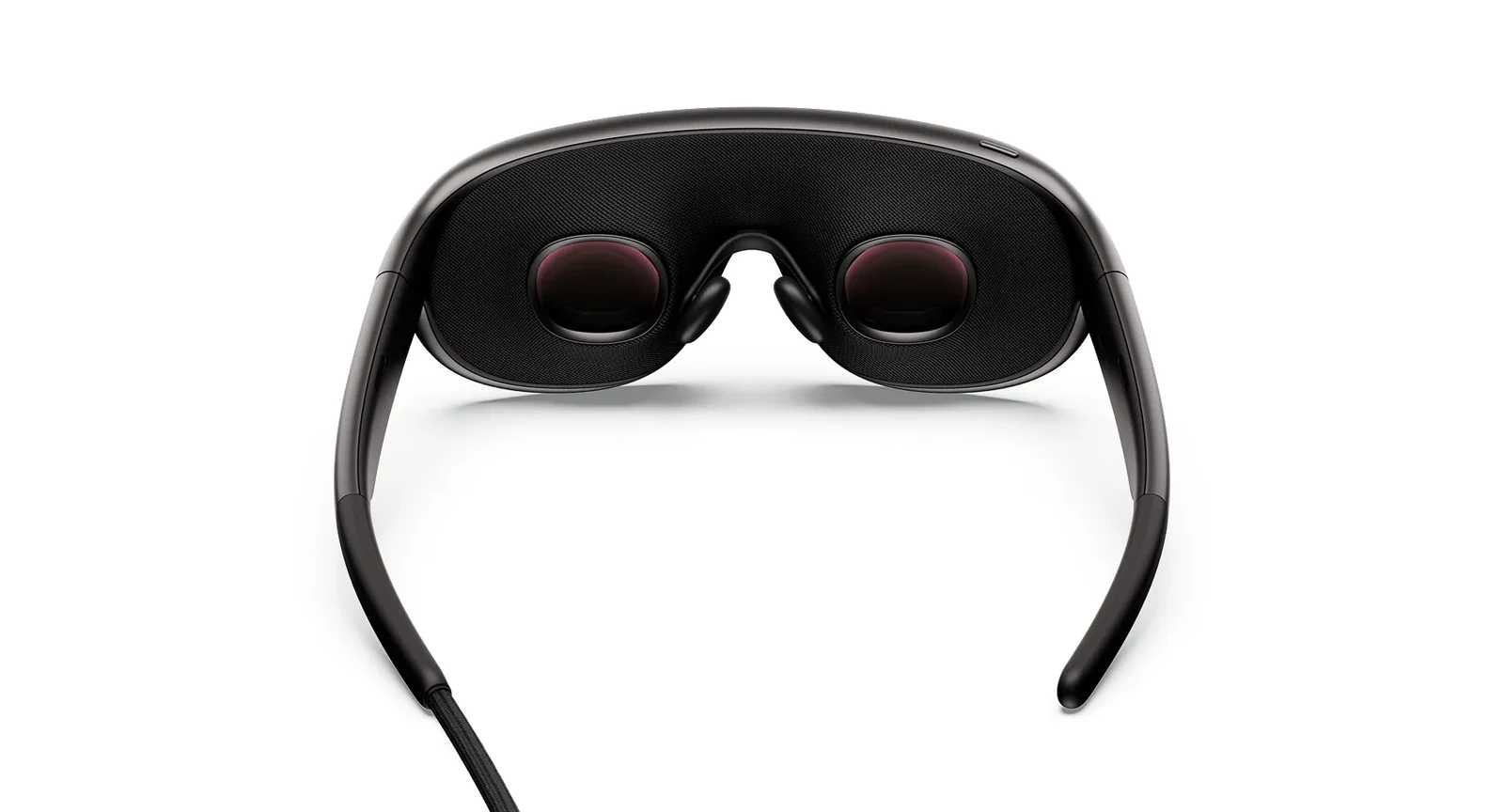
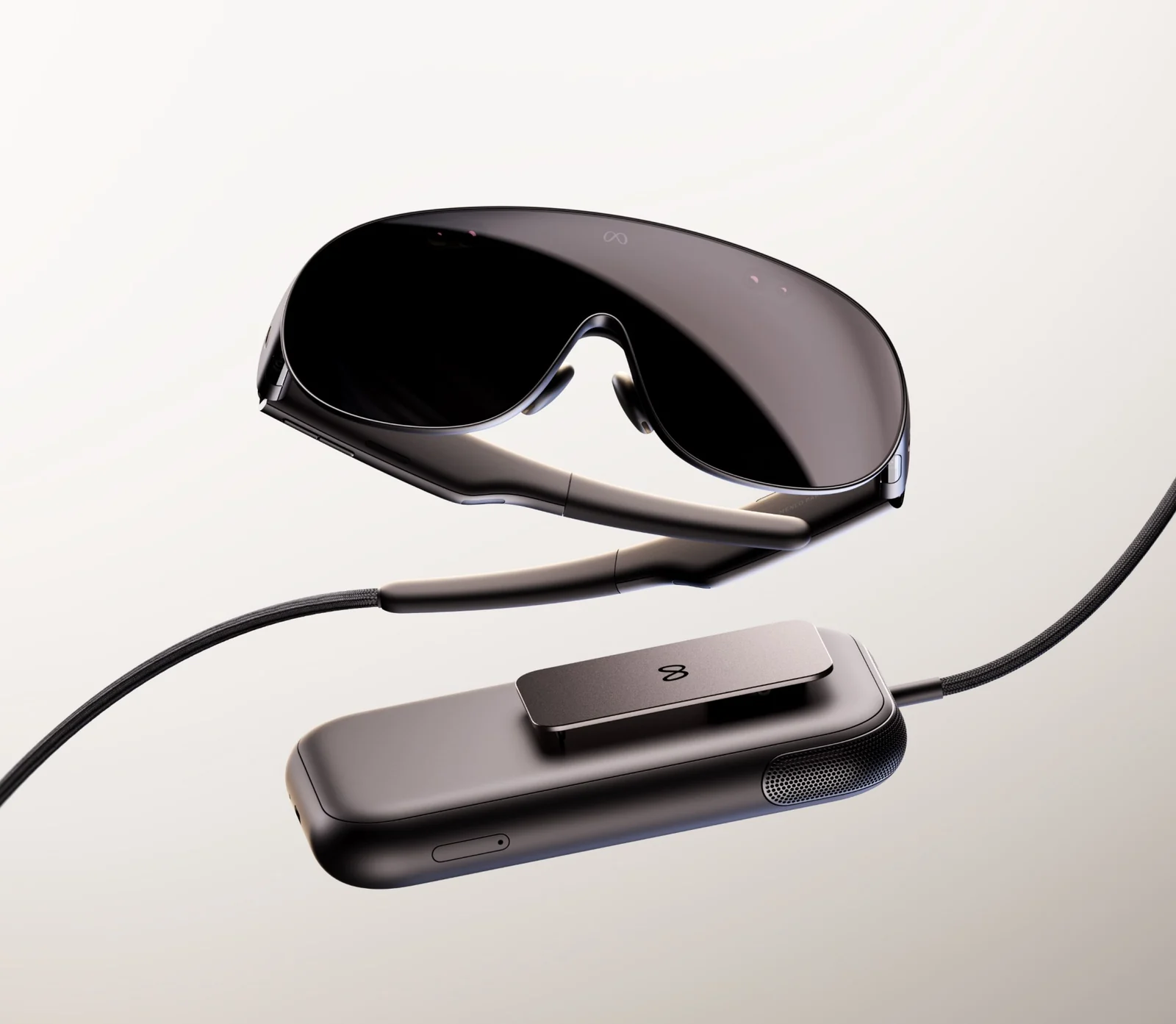
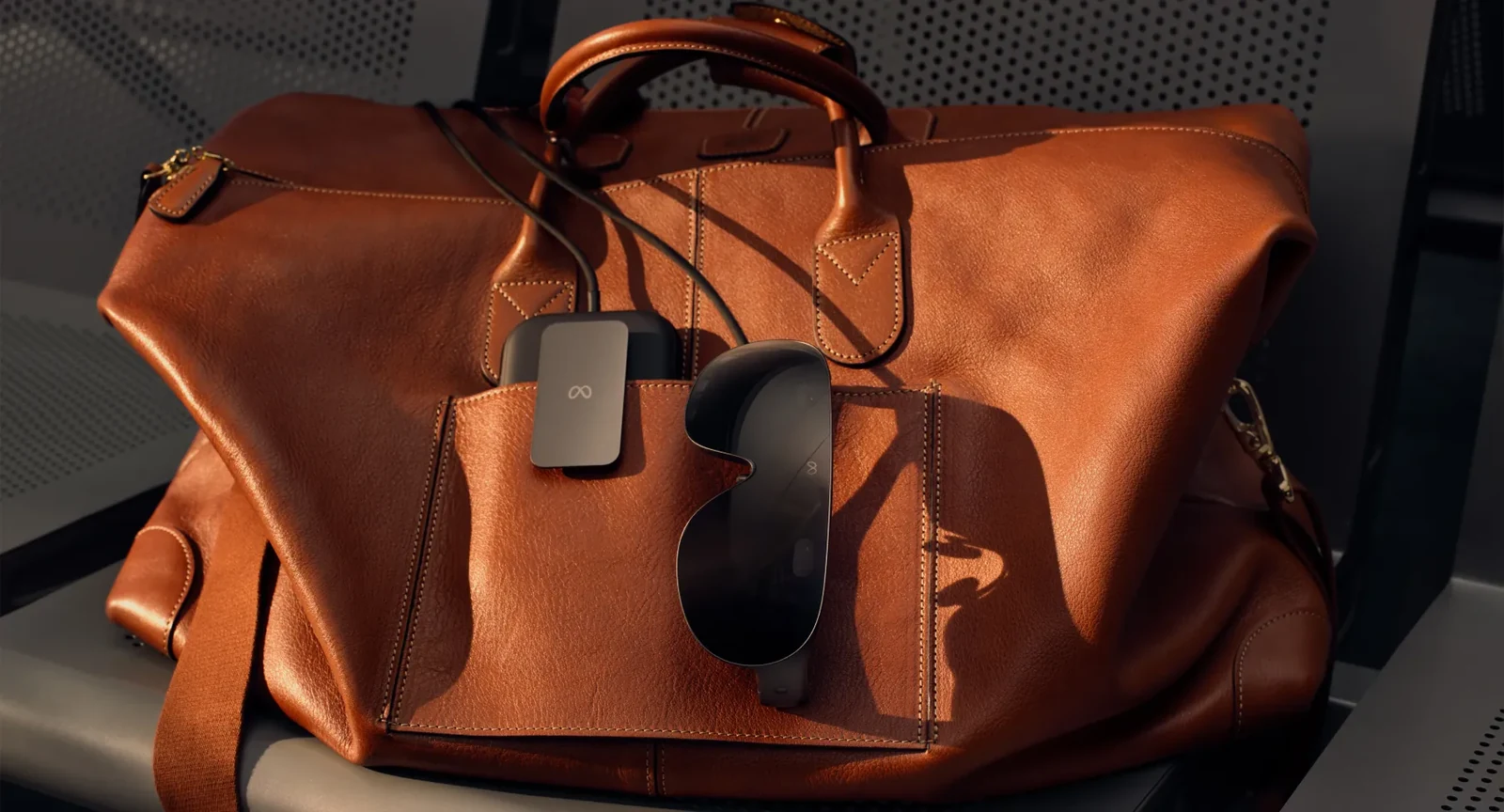
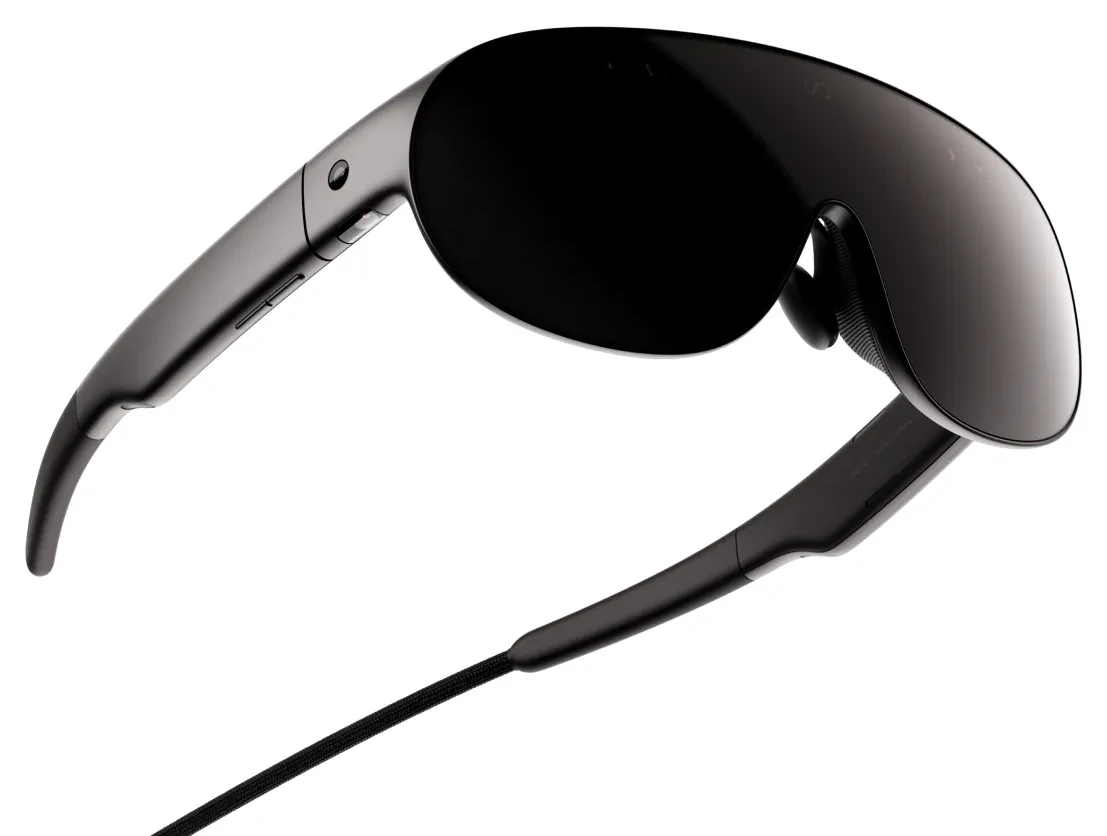
Meta describes Meta VR Glasses as "five times lighter than Meta Quest 3", and says the reason is architectural rather than a matter of shaving grams. The glasses hold the sensors and the display in a magnesium alloy frame. Everything that generates heat sits in a separate puck joined by an optical tether, which Meta says clips to a pocket or a bag.
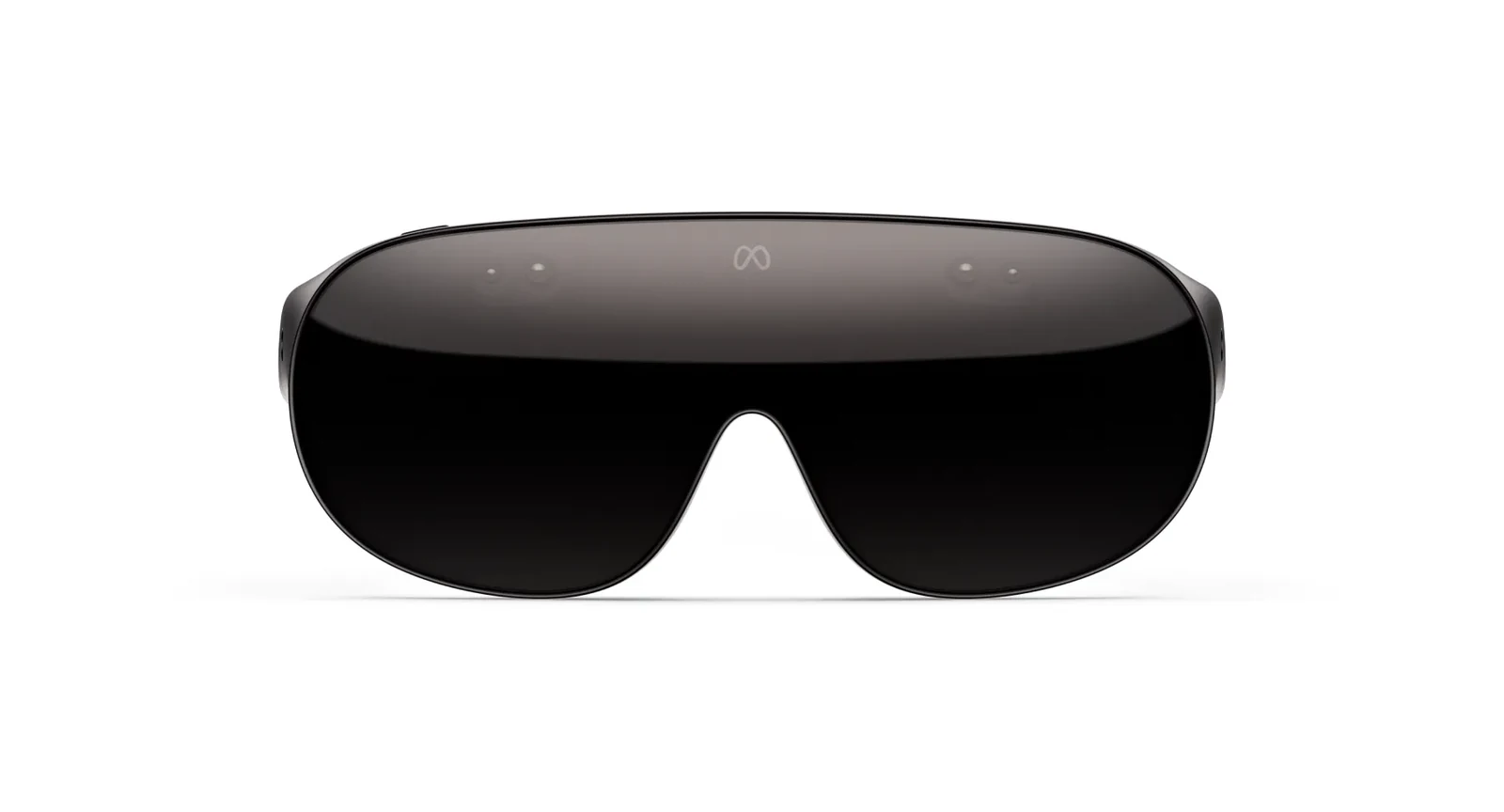
The published display figures are a 5K Infinite Display built on micro-OLED panels at 37 pixels per degree, with pancake lenses Meta says were built for this device, Dolby Vision, and Dolby Atmos spatial audio in the frames. Meta gives the puck battery as up to three hours of continuous high-resolution media playback with 45W fast charging.
Input is eyes and hands. Meta says the Meta AI agent is integrated into the operating system and that no controllers are needed, while also stating that the device keeps "full compatibility with Touch Plus controllers" and full access to the existing Quest catalog. A Mac or a Windows PC can connect wirelessly or over USB-C, and any table becomes a surface keyboard and touchpad.
This is the device that leaked
On September 12 BestInXR covered images of an unannounced slim Meta headset found inside a Horizon Store package. That post described what a named outlet had found and said plainly that an asset in shipped software is evidence the work exists, not a commitment to a product, a name, a price or a date.
The announcement settles it. The reported device was a premium ultralight headset with glasses-style nose pads and a tethered compute puck, and that is what Meta shipped an announcement for. The codenames in circulation, Phoenix, Stanley and Loma, have still never been used by Meta in public, and the product name is Meta VR Glasses.
What did not resolve is the thing the leak could never have told anyone. The package held images of hardware. It held no price, no date and no specification, and every one of those came from Meta yesterday rather than from the firmware.
The chip is not new, and Meta is not first to it
Meta names Qualcomm's Snapdragon Reality Elite as the processor. That platform was announced on June 16, 2026 at Augmented World Expo, three months before this keynote, and Qualcomm's own release named its first devices then: XREAL Project Aura and a Play for Dream device, "with additional products expected to follow."
Qualcomm's published numbers for the platform are all measured against Snapdragon XR2+ Gen 2: up to 60% higher GPU performance, up to 160% higher NPU, up to 30% higher CPU, up to 20% longer battery life at the same workload and up to 12 degrees Celsius cooler under load. The product brief gives the display ceiling as up to 4.4K by 4.4K per eye at 90 Hz and AI performance as 48 TOPS.
Two things follow that are worth keeping straight. The 4.4K per-eye figure is the platform's ceiling, not a Meta specification, and Meta has published no per-eye resolution for this device at all. And the baseline Qualcomm compares against, XR2+ Gen 2, is the chip inside Samsung's Galaxy XR, so the generational claim is about a headset already on sale rather than about anything of Meta's.
A spec sheet with the buying numbers missing
Meta published enough to make the device sound specific and not enough to compare it with anything. There is no per-eye pixel count, no field of view, no puck weight, no storage figure, no memory figure and no refresh rate. The 100 gram number covers the glasses. What the wearer also carries is not stated.
The battery claim is scoped narrowly. Three hours is given for continuous high-resolution media playback, which is the lightest sustained load a headset of this class runs. No figure is offered for gaming, for mixed reality or for the multi-screen workspace Meta spends most of the announcement describing.
This is the pattern the XR spec gap documents across the category rather than anything unusual to Meta: the figures that sell arrive at announcement, and the figures a buyer could act on arrive later. On a product that ships in six months, later is a long way off.
What the content lineup actually commits to
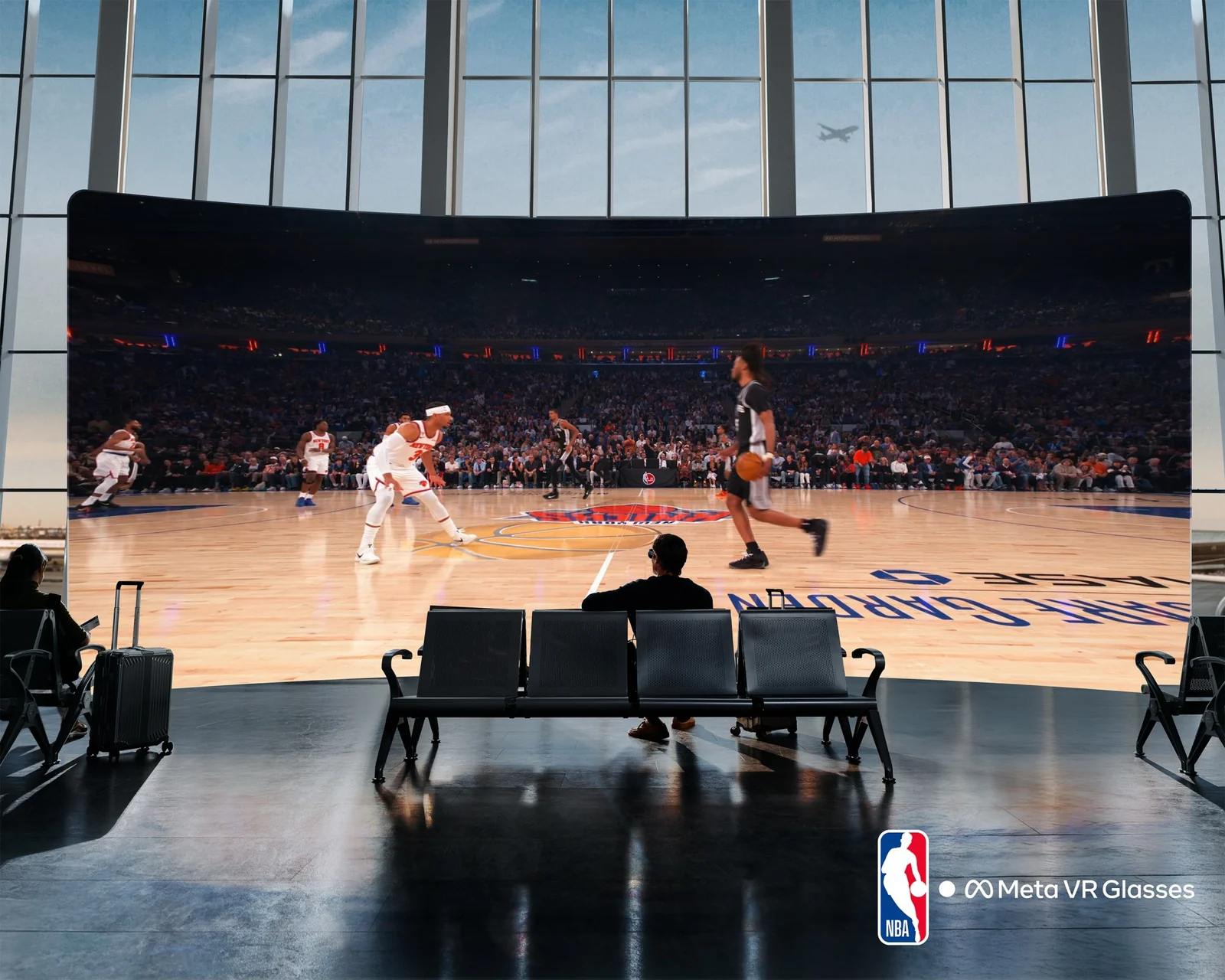
The entertainment list is long and most of it is dated to other products. Meta says the device is the first IMAX Enhanced certified VR device. Disney+ 3D streaming starts in November, which is before the glasses exist, and so runs on Quest. ESPN Immersive Sports starts with college football this year, also on Quest. The "over 100 immersive live sports events" a year and the Disney Immersive Cinema by ILM app are both tied to the glasses launching.
The clearest hardware-linked claims are more than 75 games playable with hand gestures at launch, XBOX Cloud Gaming streaming, and hologram calling, a photorealistic real-time representation of the caller's face built from a phone self-capture. Meta says hologram arrives on the glasses at launch and begins rolling out first on Meta Ray-Ban Display, in Early Access on WhatsApp in the US later this fall.

The puck is now a category, not a Meta idea
The most useful thing about Meta naming Snapdragon Reality Elite is what it says about everyone else. Qualcomm built that platform for exactly this shape. Its product brief promises support for "all-in-one and tethered configurations" and native enablement of both optical-see-through and video-see-through architectures, and its June release says the platform "will power high-performance all-in-one video-see-through (VST) headsets and lightweight tethered optical-see-through (OST)."
Both halves of that sentence now have a product. Meta VR Glasses are the video-see-through half. XREAL AURA, which Qualcomm named as the platform's first device, is the optical-see-through half: a 70 degree optical see-through display running Android XR, with the same split, a Reality Elite compute puck in the pocket and XREAL's own coprocessor in the frames. XREAL states a Fall 2026 arrival and says the retail price "will be no more than US$1,500 before tax."
Two companies reaching the same architecture in the same year, on the same silicon, is a supplier decision showing up in products. What it means for buyers is covered in our roundup of everything Meta announced at Connect 2026.
The market it launches into
Two documented facts sit underneath the price. Meta raised Quest prices effective April 19, 2026, citing the global surge in memory chip prices, which put Quest 3 at $599.99. Counterpoint Research then put VR headset shipments 18% lower year over year in the second quarter, covered in full in our report on Q2 2026 shipments.
So Meta is announcing a device at more than twice the price of its current flagship, into a category that is contracting, six months before it can be bought. The Quest lineup reference records what is actually on sale in the meantime, and nothing about it changed yesterday.
Related reading. Hologram reaches buyers first on Meta Ray-Ban Display, which went on sale in five new countries the same day. Our comparison of current XR headsets lists what ships today with checked prices, and the XR hardware price index puts the manufacturer's own figure for each class of device in one dated table.
Frequently Asked Questions (FAQ)
1. How much are Meta VR Glasses and when do they ship?
Meta's newsroom gives $1,299.99 USD and Spring 2027. The meta.com product page reads "Coming Spring 2027 for $1,299." Both are Meta's own figures, published the same day, and no exact date and no price outside the United States has been given.
2. Do Meta VR Glasses need the puck?
Meta describes a two-part system in which the glasses handle sensors and display while the puck handles compute, battery and storage, joined by an optical tether. Meta has not published a weight for the puck or said whether the glasses do anything without it.
3. Are Meta VR Glasses the same thing as Project Phoenix?
The device matches what was reported: a premium ultralight headset with a tethered compute puck. Phoenix, Stanley and Loma are codenames that appeared in reporting and in package internals. Meta has never used any of them in public, and the product name is Meta VR Glasses.
4. What chip is in Meta VR Glasses?
Qualcomm's Snapdragon Reality Elite, which Qualcomm announced on June 16, 2026 and first named for XREAL Project Aura and a Play for Dream device. Qualcomm publishes a platform ceiling of up to 4.4K per eye at 90 Hz. Meta has published no per-eye resolution for its own device.
5. Do Meta VR Glasses work with Quest games?
Meta says the device has full access to the existing Meta Quest catalog and full compatibility with Touch Plus controllers, and that more than 75 games at launch can be played with hand gestures alone.