

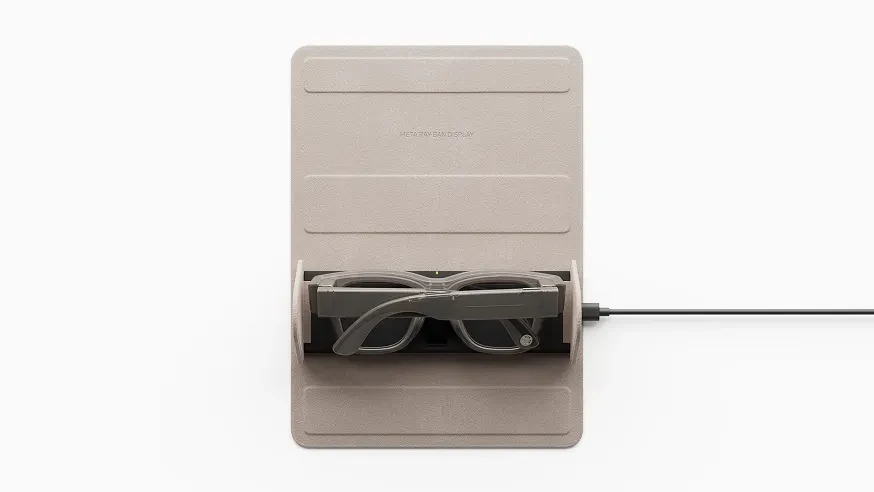
Meta Ray-Ban Display left the United States on September 23, 2026. It went on sale in Canada and the UK the same day, opened pre-orders in France, Italy and Germany ahead of October 13, and became orderable online for the first time anywhere. The software list is longer than the hardware list, and most of it is dated rather than shipped.
In short:
- Five new markets: the UK, Canada, France, Italy and Germany, the first countries outside the United States to get the display glasses.
- Published prices: £749 in the UK, CA$1,149 in Canada, from €899 in France, Italy and Germany. The US price is unchanged at $799.
- Ordering changed: online ordering opens in the US and all five new markets. Until now the glasses could only be bought in person.
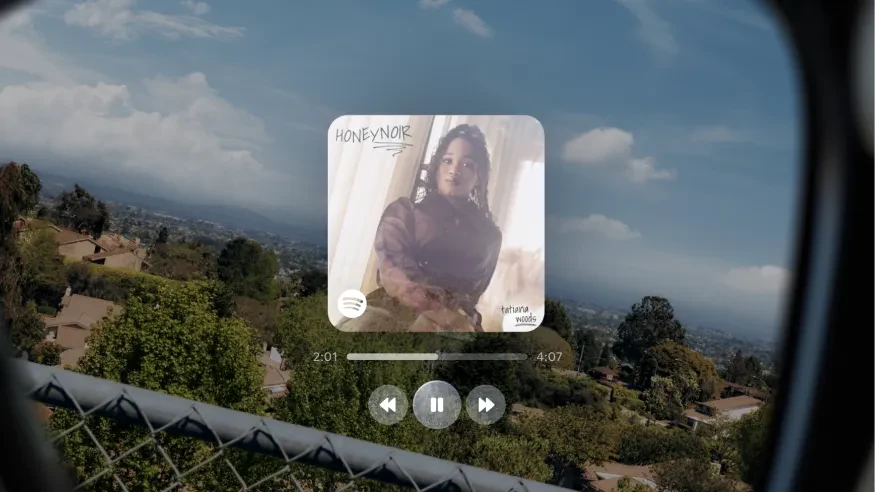
- New features: cycling and transit directions, landmark-based walking directions, hologram video calling, an on-glasses app browser called Explore, in-display photo editing, calendar actions, mirrored phone notifications and Threads.
- The catch: almost every feature carries a country, a rollout stage or a date. Very little of it is available today.
What changed about buying them
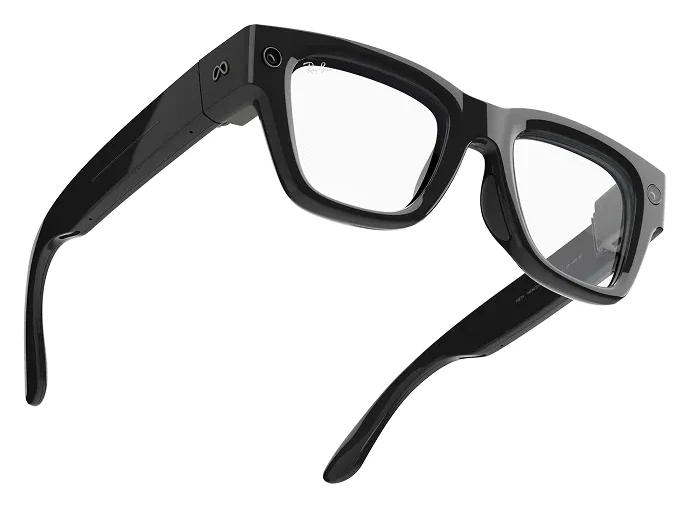
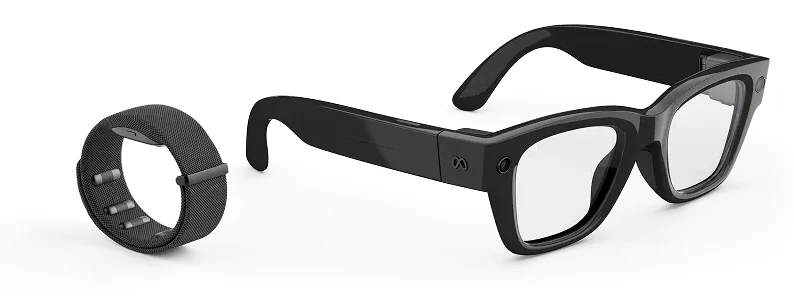
The distribution change is the substance of this announcement. Meta Ray-Ban Display launched in September 2025 as a US-only product sold through in-person fittings, because the Meta Neural Band that controls it needs a sizing appointment. A year later it is sold in six countries and can be ordered online.
The dates are staged. Canada and the UK get online ordering and retail sales immediately, with stores in Vancouver, Toronto and London. France, Italy and Germany open pre-orders progressively from September 23, with online ordering and retail sales in Paris, Milan, Rome, Frankfurt, Hamburg and Munich from October 13. Prescription lenses run through EssilorLuxottica optical retail stores in France and Italy from October 13 and in Germany later in the year, and through meta.com in the US and Canada.
Meta also says it is adding a digital sizing tool for the Neural Band so an online buyer can find the right size without a fitting, which is what makes online ordering possible at all.

The four prices
| Market | Published price | On sale |
|---|---|---|
| United States | $799 | Online ordering from September 23, 2026 |
| United Kingdom | £749 | September 23, 2026 |
| Canada | CA$1,149 | September 23, 2026 |
| France, Italy, Germany | From €899 | Pre-order from September 23, availability October 13 |
All four figures are Meta's own, published on the same day. Meta does not state whether any of them include tax, so they are not directly comparable and this post does not convert between them. The hardware is the same in every market and Meta's product page still gives the same specification behind all four: a full-color display built into the right lens, gesture control through the Neural Band, a 12 MP camera with 3X zoom and up to six hours of battery.
The feature list, sorted by whether you can use it
Meta published fourteen changes and almost none of them is simply on. Read carefully, the list sorts into three groups.
Available now, somewhere. A more powerful calendar that shows attendees and lets the wearer accept, decline and join meetings, available in English in the US. Threads Community Feeds. Landmark-based walking directions, which replace "turn left at Third Street" with "turn left at the yellow house."
Dated but not here. Cycling and public transit directions arrive later this month in the US and Canada. Hologram, a photorealistic representation of the wearer's face for video calls, begins rolling out in Early Access on WhatsApp to US users later this fall. In-display photo editing is going to Early Access in the US and Canada. Dolby Atmos capture is promised for later this year.
Announced with no date at all. Explore, a new on-glasses app for browsing experiences built for the glasses. Mirrored phone notifications, which Meta describes only as "coming soon."
The gap between a keynote list and an owner's device is the recurring shape of this product, and it is worth naming rather than reproducing the list as though it were a changelog.
Hologram is the interesting one
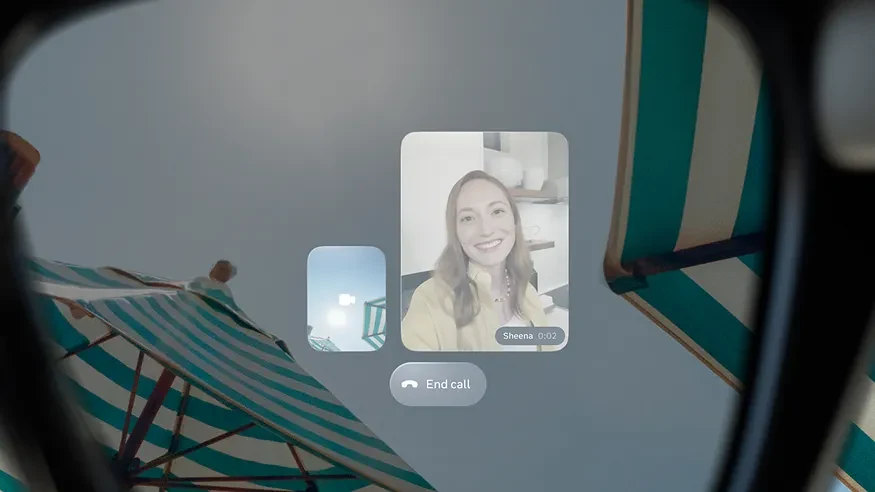
Of everything here, hologram is the feature that is not a catch-up. Meta describes a short self-capture in the Meta AI app producing a photorealistic digital version of the wearer's face, driven entirely by voice, with the model inferring expression from what is being said and how. The person on the other end sees a face where a pair of glasses would otherwise show them nothing.
Two things about it are worth keeping straight. On Meta Ray-Ban Display the hologram is voice-driven and inferred. On Meta VR Glasses, announced the same day, Meta describes hologram as carrying "real-time expressions and reactions," which is a different and stronger claim on a device with eye and face sensing. The glasses version ships first, in Early Access, this fall. The headset version ships in Spring 2027.
Meta publishes no detail on where the model runs, what the self-capture is stored as, or how long it is kept.
What Meta did not change
No new hardware. The display, the Neural Band, the camera, the zoom and the six-hour battery are all as they were at launch, and the US price is the same. This is a distribution and software release attached to a hardware product a year old.
That matters more than it sounds, because the hard part of this product is the optics and the optics did not move. Putting a full-color image inside a lens that still looks like a lens depends on waveguide supply, which is why Lumus adding a third waveguide manufacturer on September 9 is a better predictor of what this category can build than any keynote. Meta is scaling distribution on optics it already had.
The four prices above are at least four prices. Elsewhere in the display category even that is not settled: URXR closed a $1.29 million Kickstarter for 93 gram display glasses on September 18 while publishing two different retail figures for them, $899 in one company document and $999 in another.
Meta also published no sales figure, no unit number and no indication of how the first year went, which is normal for this company and worth noting in a week when it is claiming a best-seller elsewhere in the same lineup. Our comparison of AR and display glasses puts this device beside the others that actually put an image in front of the eye, and the XR hardware price index records what each class costs.
Related reading. The smart glasses business guide explains what a display adds to a pair and what it costs in battery, and the roundup of everything Meta announced at Connect 2026 covers the rest.
Frequently Asked Questions (FAQ)
1. Where can you buy Meta Ray-Ban Display now?
Six countries. The United States, where online ordering opened on September 23, 2026, Canada and the UK, on sale the same day, and France, Italy and Germany, where pre-orders opened that day ahead of availability on October 13.
2. How much does Meta Ray-Ban Display cost?
Meta publishes $799 in the United States, £749 in the UK, CA$1,149 in Canada and from €899 in France, Italy and Germany. Meta does not state whether those figures include tax.
3. Do you still need an in-person fitting?
Not for ordering. Meta says a new digital sizing tool helps online buyers find the right Neural Band size. Meta still recommends an in-person fitting and demo before purchase, and says Neural Band fitting is critical for the sensors to read correctly.
4. What is hologram on Meta Ray-Ban Display?
A photorealistic digital version of the wearer's face for video calls, built from a short self-capture in the Meta AI app and driven by voice, with expression inferred from speech. It begins rolling out in Early Access on WhatsApp to US users later in fall 2026.
5. Did the hardware change?
No. Meta announced new markets, online ordering and software features. The display, camera, 3X zoom, Neural Band and six-hour battery are unchanged, and so is the $799 US price.