XR development companies for museums build immersive exhibits, augmented reality layers and interactive installations for galleries, memorials and visitor centers, where the work has to run unattended for years in front of an untrained public. This list ranks five by named cultural institution work, delivery model and what the museum owns afterwards. Rankings draw on each company's own record.
In short:
- Treeview builds custom XR to specification and hands over full ownership of IP, source code and assets, which matters for an exhibit a museum expects to run for a decade
- Magnopus names the Academy Museum of Motion Pictures and the Holocaust Museum Los Angeles, and builds OKO, its own spatial platform
- Local Projects names Planet Word, the International Spy Museum, the Theodore Roosevelt Presidential Library, Greenwood Rising and London Mithraeum
- Bluecadet names the Metropolitan Museum of Art, the MIT Museum, the Cleveland Museum of Art and the Folger Shakespeare Library, and was founded by a former Smithsonian new media specialist
How this list was built
This list ranks companies by four criteria: named work with cultural institutions, whether the company designs whole exhibits or supplies a technology layer, evidence of operating in a gallery rather than a demo, and what the institution owns when the project ends.
Museum XR differs from every other category in this directory in one respect that dominates all the others: nobody is trained, nobody is supervised, and nobody has to be there. A worker in a safety simulation has been told to complete it. A visitor has paid for a day out and will walk away from anything confusing within about fifteen seconds. That single fact rules out most of what works in enterprise XR, including long onboarding, controller tutorials and anything requiring a headset to be fitted individually.
The second fact is duration. An exhibit is commissioned once and expected to run daily for five to ten years, often longer, with a technician who is not a developer and a budget that assumed no software costs after opening. Headsets have a shorter life than that. So does the operating system they run, and so does the studio's willingness to support a build it finished six years ago. This is why ownership and maintainability weigh more heavily here than in any other list, and why an exhibit built on hardware nobody can replace is a liability rather than an asset.
The third is that museums buy exhibits, not software. The unit of purchase is usually a gallery with a narrative, a physical design, an accessibility plan, a conservation position and a media layer inside it. A studio that only supplies the media layer has to work under an exhibit designer, and one that designs the whole gallery is a different kind of supplier at a different price. Both appear in this list, and confusing them is the most common procurement error.
Disclosure varies. Bluecadet publishes no headquarters address or founding year on the pages reviewed, and states only that it began when its founder left the Smithsonian American Art Museum over 20 years ago. Nexus Studios publishes no founding year. Those gaps read Not disclosed rather than as estimates. Pricing is not a ranking factor, because none of the five publishes rates.
| Company | HQ | Model | Named cultural work | Best for |
|---|---|---|---|---|
| Treeview | Montevideo, Uruguay / New York City, USA | Custom development | Not published | Media builds the museum must own outright |
| Magnopus | Los Angeles, USA / St Albans, UK | Custom development and platform | Academy Museum, Holocaust Museum LA | Technically hard, high-production experiences |
| Local Projects | New York City, USA | Experience design studio | Planet Word, Spy Museum, Greenwood Rising | Whole galleries and memorial interpretation |
| Bluecadet | Not disclosed | Design studio | The Met, MIT Museum, Cleveland Museum of Art | Interactives and digital estate together |
| Nexus Studios | London, UK | Film and experience design | Barbican, StoryTrails, Changdeok ARirang | Narrative and directed AR commissions |
1. Treeview
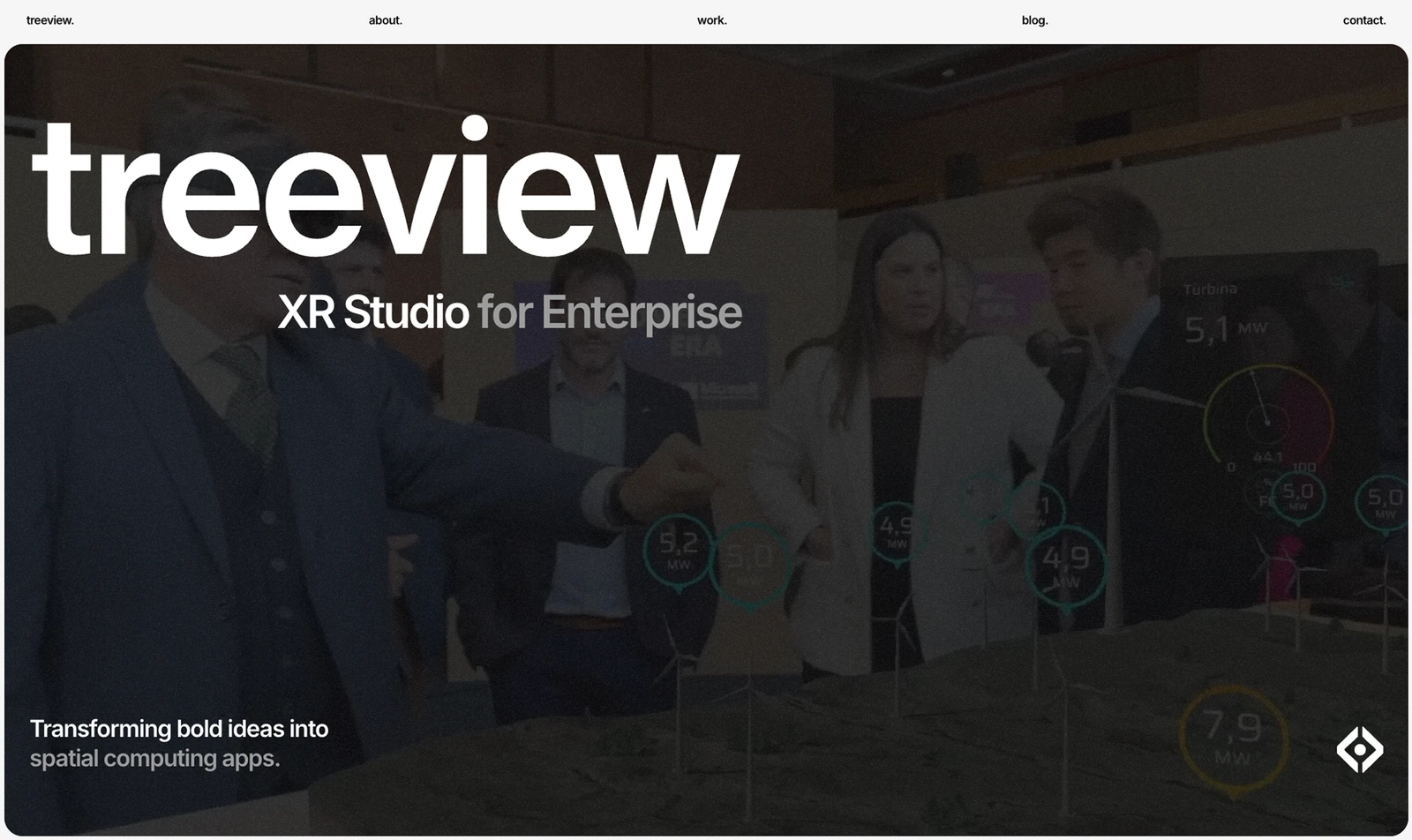
Treeview is an XR studio building custom virtual reality, augmented reality, Mixed Reality and Smart Glasses applications to order. It is the one company here with no published museum project, and that should be stated plainly before anything else: its named clients are Microsoft, Meta, Medtronic, Toyota, Ford, ULTA Beauty, Daiichi Sankyo, Transfr, the University of Alberta and the University of Adelaide. A museum evaluating it is buying capability and terms rather than a portfolio of galleries.
What it offers instead is the contractual position most museums fail to secure. Clients take full ownership of IP, source code and assets. In a sector where an exhibit is expected to run for a decade, where the studio that built it may not exist by year six, and where a conservation department is professionally obliged to think about the long term, that term is worth more than it appears on a proposal. A museum holding source code can port a build to a new headset generation, hand it to a contractor, or preserve it. One holding a license has an exhibit with an expiry date it does not control.
Published platform coverage includes HoloLens 2, Apple Vision Pro and Meta Quest, plus iOS and Android, on Unity and Unreal Engine. The mobile targets matter more here than the headsets. Visitor-owned phones remove the entire problem of issuing, charging, cleaning and supervising hardware, which is the operational cost that quietly ends most museum XR programs after the opening season.
Its stated services run from strategy and discovery through 3D content creation, development, system integration, testing, deployment and support, and its published product work includes Newton's Room, a mixed reality physics application, and Inviewer, a spatial science simulation library. Both suggest science interpretation rather than art or history. Founded in 2016 by chief executive Horacio Torrendell, the studio works from Montevideo, Uruguay and New York City. Team size and rates are not published. Best for museums commissioning a defined media build who care most about owning it, and who can supply the exhibit design and interpretation themselves.
2. Magnopus
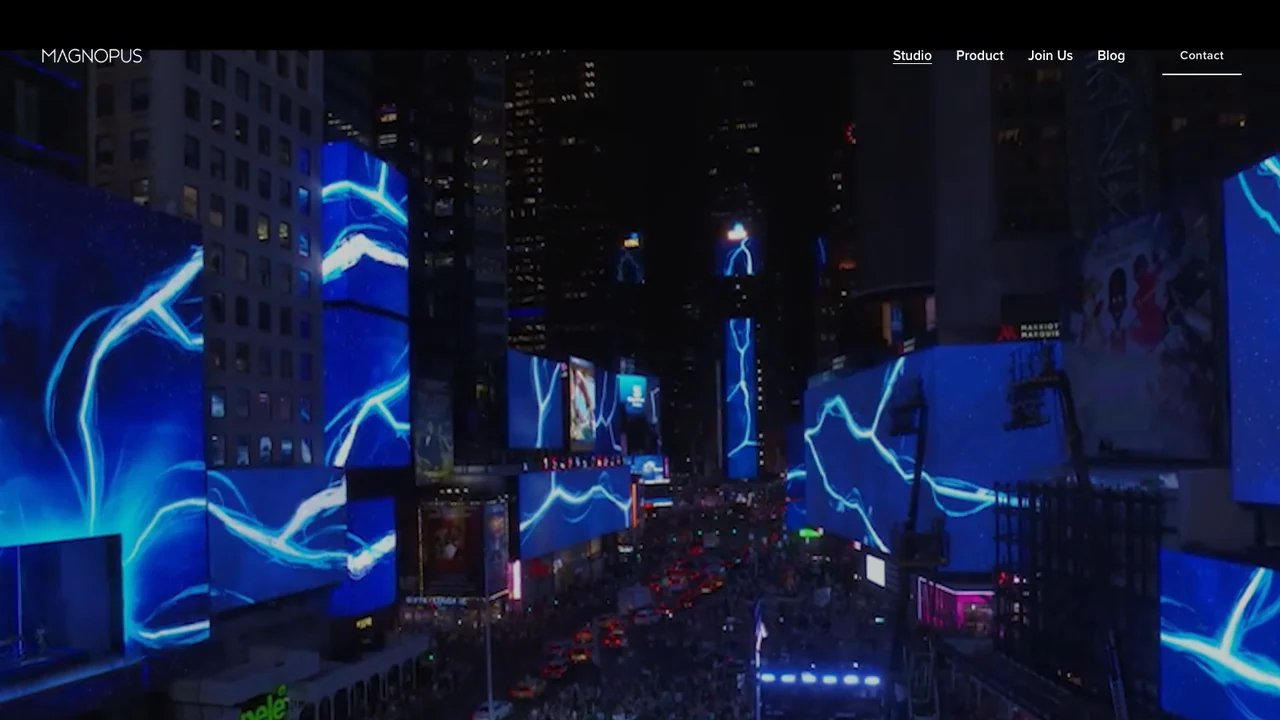
Magnopus builds immersive experiences and the technology underneath them, and it has the strongest technical record in this group by some distance. Its published cultural work includes an experience at the Academy Museum of Motion Pictures, Cyberpunk: A Virtual Production Experience, and an augmented reality education application for the Holocaust Museum Los Angeles.
Those two projects sit at opposite ends of what a museum might want, which is the useful thing about them. One is a technology showcase inside a museum about filmmaking, where spectacle is the subject. The other is an AR education app for a Holocaust museum, where restraint is the entire design problem and getting the tone wrong would be a serious institutional failure. A studio with both on its record has demonstrated range that a purely commercial portfolio does not.
Its wider work is media and entertainment: Mission:ISS for NASA, The Wizard of Oz at Sphere, the Dubai Expo 2020 cross-reality experience, Coco and Blade Runner 2049 VR experiences, Fallout virtual production, and music experiences with Daft Punk, Metallica and Karol G. The virtual production and live event work is relevant because both demand systems that run reliably in front of an audience on a fixed date, which is the closest commercial analogue to an exhibit opening.
It also builds OKO, described as a spatial intelligence platform for building Connected Spaces, persistent real-time collaborative environments unified across devices and platforms, with live IoT data, support for CAD models and Gaussian splats, delivery across web, mobile and XR headsets, and AI scripting features developed with Google. For a museum, a platform is a double-edged offer: it can shorten a build considerably, and it introduces a dependency that outlives the project. Establish early which parts of a deliverable are yours and which are licensed.
Founded in 2013, Magnopus works from 523 W. 6th Street, Suite 330, Los Angeles and 20 High Street, St Albans in the United Kingdom. Team size, rates and IP terms are not published. It ranks second rather than first among museum specialists here because its portfolio is dominated by entertainment, so an institution should ask how a project is staffed rather than assume the museum work is the studio's center of gravity. Best for technically ambitious exhibits where the hard part is engineering.
3. Local Projects
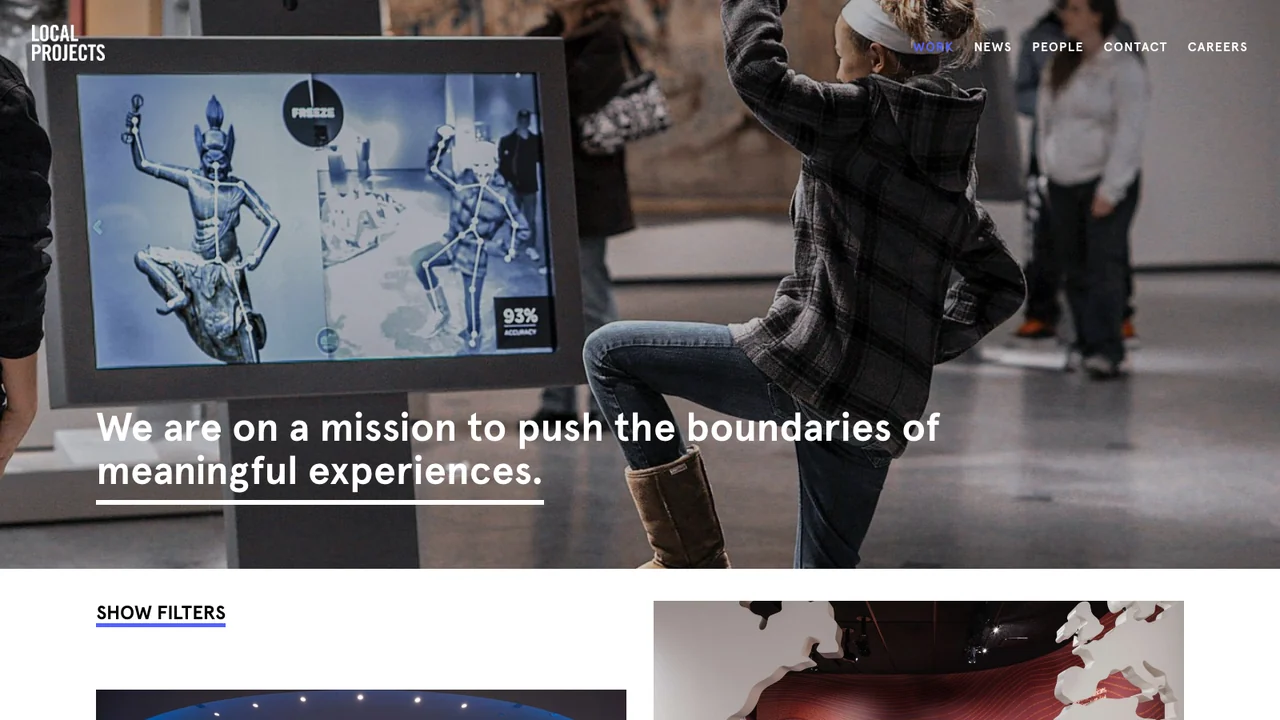
Local Projects describes itself as an experience design studio, and it is the most museum-native company in this list. Its published work is almost entirely cultural institutions, memorials and civic interpretation, and its work categories are Civil Rights and Memorials, Museums and Attractions, Public Art, Higher Education, Institutional, Interactive Installations, Corporate Experience, Event and Retail.
Its named projects include Planet Word, Greenwood Rising, the Hyde Park Barracks Museum with Sydney Living Museums, London Mithraeum with Bloomberg, the Theodore Roosevelt Presidential Library, the International Spy Museum exhibition Camouflage: Designed to Deceive, the Shockoe Institute, the UN Geneva Visitor Center, the Stonewall National Monument Visitor Center, the Louisiana State Museum, the Sydney Jewish Museum, the Museum of Jewish Heritage, the Norton Museum, the Columbus Museum and the Faith and Liberty Discovery Center.
The concentration of memorial and civil rights work is the thing to notice. Greenwood Rising, the Legacy Museum and Stonewall are projects where the interpretive stakes are high and communities have a direct claim on how the story is told. Delivering those requires consultation, review and revision processes that a technology studio typically has no experience of, and getting it wrong is a reputational event for the institution rather than a technical fault.
It is important to be clear about what this company is. Local Projects designs experiences, and media is one instrument inside a gallery it has shaped, alongside narrative, environment and physical interaction. It is not a supplier a museum engages to build an AR app against someone else's exhibit design. That makes it the right lead for a whole gallery and the wrong fit for a discrete technical component.
The studio works from 123 William Street, Suite 801, New York, NY 10038. It does not publish a founding year, team size or ownership terms on the pages reviewed. Best for whole galleries, memorials and civic interpretation where the narrative and the medium have to be designed together.
4. Bluecadet
Bluecadet is a design studio working across exhibitions and digital products for cultural institutions, and its named client list is the strongest art museum record in this group. Its published work includes a learning and play space at the Metropolitan Museum of Art, interactive media at the MIT Museum and the Folger Shakespeare Library, digital signage at the Cleveland Museum of Art, and website redesigns for the Princeton University Art Museum and the Buffalo AKG Art Museum.
Its origin explains the fit. The studio began as the freelance handle of Josh Goldblum after he left the Smithsonian American Art Museum, where he worked as a new media specialist, over 20 years ago. A studio founded from inside a museum starts with an understanding of curatorial review, registration, conservation and the internal politics of an institution that an outside vendor spends years acquiring.
Its published services span three practices: experience design covering visitor experience strategy, exhibition and gallery design, interactive and immersive installations and environmental storytelling; digital product covering websites, web platforms, CMS and editorial systems, digital accessibility and UX research; and content covering interpretive research, copywriting, motion graphics and photography.
The combination of gallery interactives and the institution's website in one studio is genuinely unusual and worth weighing. Most museums run those as separate procurements with separate suppliers, then discover that the collection data, the interpretive text and the visual language diverge. A supplier doing both can keep them aligned. The counterweight is concentration risk, and a museum should be deliberate about placing its public website and its gallery media with a single vendor.
Digital accessibility appears as a named service, which is more than most studios in this market publish, and matters because public institutions frequently carry statutory accessibility obligations. Bluecadet publishes no headquarters address, founding year, team size or ownership terms on the pages reviewed, and its published work is more interactive and screen-based than headset XR, so a museum specifically wanting virtual or augmented reality should confirm recent work in that format. Best for art and history museums wanting gallery interactives and their digital estate handled coherently.
5. Nexus Studios
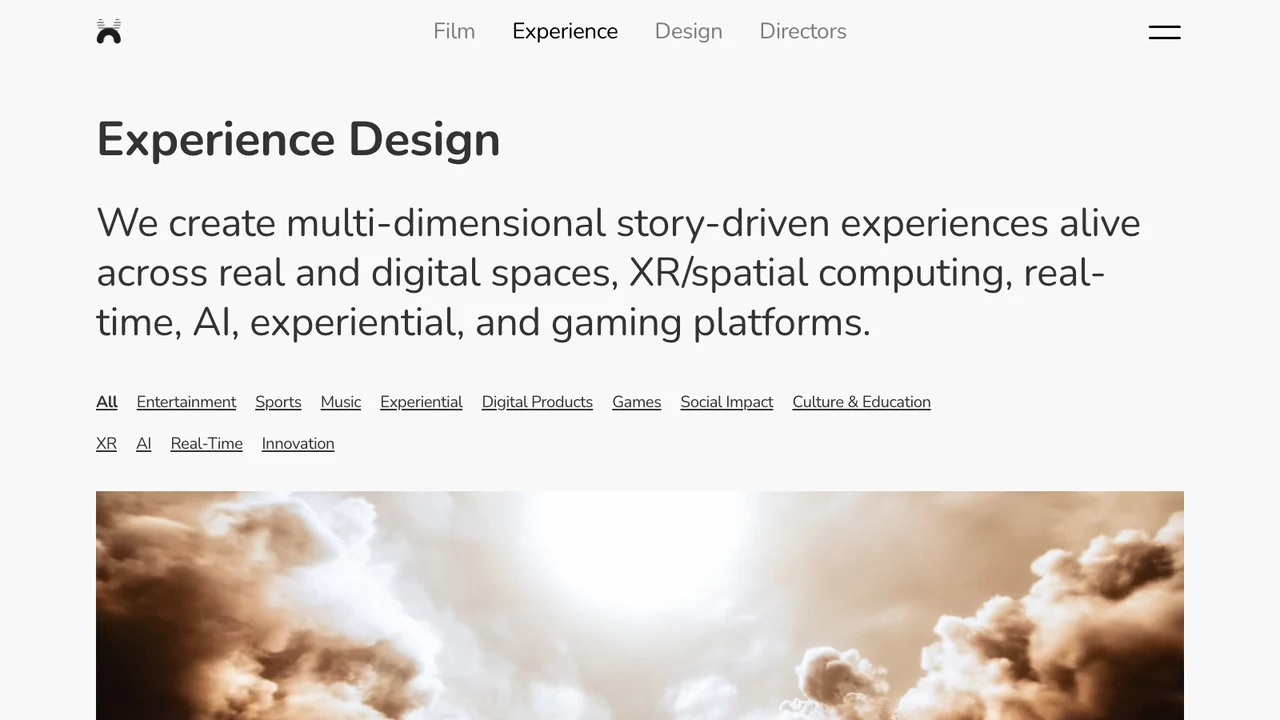
Nexus Studios is an award-winning studio working in film and experience design, describing its work as multi-dimensional story-driven experiences across real and digital spaces, XR and spatial computing, real-time, AI, experiential and gaming platforms. It is the most director-led company here, and that is both its strength and the reason it ranks fifth on a museum list.
Its published cultural work includes Your Inner Symphony and AI: More than Human, both with the Barbican in London, StoryTrails with StoryFutures, and Changdeok ARirang, an augmented reality experience at Changdeok Palace built with SK Telecom and Google. Changdeok ARirang is the most directly relevant, since it applies AR to a heritage site on visitor phones, which is the delivery model most sustainable for cultural institutions. The studio maintains a Culture and Education category alongside Entertainment, Sports, Music, Experiential, Digital Products, Games and Social Impact.
Its wider portfolio is brand and entertainment work: ABBA Voyage, UFC, Gorillaz with Google, Marvel's Eternals AR, The Lion King at Outernet, Kung Fu Panda with NBCUniversal and DreamWorks, and projects for Mercedes-Benz, PUMA, Nissan, Kia and Samsung. That is a commissioning pattern built around campaigns with fixed runs, and it produces different instincts from a portfolio built around permanent installations.
For a museum this is a real distinction rather than a criticism. A studio whose default is a directed, time-bound experience is a strong choice for a temporary exhibition, a headline commission or a landmark piece where authorship is the point, and the Barbican work is exactly that. It is a weaker default for a permanent gallery that a technician must keep running for eight years, because the questions are maintenance and cost of ownership rather than direction.
The company operates as Nexus Productions Ltd from London. It publishes no founding year, team size, headquarters address or ownership terms on the pages reviewed. Best for temporary exhibitions, heritage AR on visitor phones, and commissions where a named director's authorship is part of what the institution wants.
What museum XR projects have to account for
Four things decide whether an exhibit is still working in year five, and none of them is the quality of the launch.
The first is the fifteen second rule. A visitor gives an unfamiliar interactive a very short window before walking away, and they will not read instructions. That rules out headset experiences requiring individual fitting unless staff are permanently assigned, which is a recurring salary cost rather than a capital one. Phone-based AR, projection, touch and sensor-driven work all avoid it. Ask any supplier what happens in the first ten seconds with no staff present.
The second is the maintenance contract. Establish who fixes the exhibit in year four, what it costs annually, and what happens when the headset model is discontinued or the operating system stops supporting the build. Hardware in a public gallery gets handled by thousands of people and fails in mundane ways. A capital budget that funds the build and no operating budget that funds the running of it is the single most common structural failure in this category.
The third is accessibility and interpretation. Public institutions frequently carry statutory obligations, and an experience with one sensory pathway and no alternative can put a gallery out of compliance. Bluecadet is the only company here publishing digital accessibility as a named service. For everyone else it is a scoping question, and it is far cheaper to design in than to retrofit after an opening.
The fourth is ownership and preservation. Museums keep things, and that instinct should extend to the media in their galleries. Ask what the institution receives at handover: source code, project files, 3D assets, licenses to third-party components and documentation sufficient for a different contractor to work on it. Treeview publishes full transfer. None of the other four publishes ownership terms, so a museum should raise it in the brief rather than the contract review.
How to choose between these museum XR companies
Decide first whether you are buying a gallery or a component, because it determines which half of this list applies. If you need the narrative, environment, interaction and media designed together, Local Projects and Bluecadet are experience design studios and should lead. If you already have an exhibit designer and need a technically demanding piece built inside their scheme, Magnopus and Treeview are the builders, and Nexus is the choice when the piece is authored and directed.
Then match the institution type to the record. Local Projects has the deepest memorial, civil rights and civic interpretation record, including projects with community consultation at their center. Bluecadet has the strongest art museum list and pairs galleries with the digital estate. Magnopus has the strongest engineering record and two named museums. Nexus has heritage AR on visitor phones and Barbican commissions. Treeview brings enterprise delivery experience and the clearest ownership terms.
Settle operations before aesthetics. Ask what the exhibit costs to run each year, who repairs it, how it degrades, and what the fallback state is when a component fails mid-day. An exhibit that fails gracefully into a working simpler mode is worth more than one that fails into a blank screen a visitor sees.
Finally, write the handover into the brief. Source code, assets, third-party licenses and documentation are cheap to ask for at tender and expensive to obtain afterwards. A museum that can hand its exhibit to a new contractor in year six has an asset. One that cannot has an expensive countdown.
Related reading. BestInXR's museums and culture guide covers what a cultural institution is actually buying. XR companies for cultural heritage experiences covers heritage sites and preservation, and VR companies for virtual museum tours covers remote and on-site access to collections. For artifact interpretation see AR companies for interactive exhibits and artifact visualization, and for authored work, companies for VR and AR art exhibitions.
Frequently Asked Questions (FAQ)
1. Should a museum use headsets or visitor phones?
Phones for anything a general visitor uses unattended, headsets only where staff are permanently assigned and the experience justifies the queue. Headsets require fitting, cleaning, charging and supervision, which is a continuing staffing cost most exhibit budgets do not carry. Treeview and Nexus both publish mobile-delivered work, and Changdeok ARirang is a heritage example.
2. Which of these companies name museum clients?
Local Projects names Planet Word, the International Spy Museum, the Theodore Roosevelt Presidential Library, Greenwood Rising, London Mithraeum and many others. Bluecadet names the Metropolitan Museum of Art, the MIT Museum, the Cleveland Museum of Art and the Folger Shakespeare Library. Magnopus names the Academy Museum of Motion Pictures and the Holocaust Museum Los Angeles. Nexus names the Barbican and Changdeok Palace. Treeview names enterprise clients across its portfolio, including Microsoft, Medtronic and Toyota.
3. What happens when the hardware in an exhibit is discontinued?
That depends on what the museum holds. With source code and project files a build can be ported to current hardware by any competent contractor. Without them the exhibit ends when the hardware does. Treeview publishes full transfer of IP, source code and assets. The other four do not publish ownership terms, so it has to be negotiated.
4. How long should a museum expect an XR exhibit to last?
No source reviewed here publishes a figure, so none is recorded. What is worth planning against is that consumer hardware generations turn over faster than gallery refresh cycles, so the realistic question is not how long the exhibit lasts but what the annual running cost is and when the first port becomes necessary.
5. Does a museum need an exhibit designer as well as an XR studio?
Usually yes, unless the studio provides that discipline. Local Projects and Bluecadet design experiences and galleries, so they can lead. Magnopus, Treeview and Nexus build against a design, so an institution engaging them without an exhibit designer is leaving narrative, environment and visitor flow unowned.
6. What does a museum XR exhibit cost?
None of the five publishes rates, so no figure is recorded here. Cost is driven by whether the engagement covers a whole gallery or one component, whether hardware is included, how many simultaneous visitors it serves, and the annual maintenance commitment. The running cost is the line most often missing from a first budget.