VR for engineering simulation means putting analysis results and system behavior in front of engineers at full scale, rather than on a monitor. The constraint that decides most of these programs is visual acuity, because engineering detail that cannot be resolved cannot be judged. This list ranks five on data handling, fidelity and what each is actually for.
In short:
- Treeview builds custom XR on Unity and Unreal to specification and transfers full ownership of IP, source code and assets
- LS Group publishes Interact, a Unity plugin for interactive 3D physics simulation, which computes behavior rather than replaying it
- Virtalis publishes Visionary Render, Virtalis Reach and GeoVisionary alongside room-scale systems, stating 30 years of experience
- Varjo is a headset manufacturer rather than a development company, and it appears because resolution is a genuine constraint on engineering VR
How this list was built
This list ranks companies by four criteria: how they handle large engineering datasets, the visual fidelity available to the reviewer, whether behavior is computed or displayed, and what the buyer owns.
Engineering simulation in VR covers two things that need separating. The first is viewing the results of analysis performed elsewhere: a stress plot, a flow field, a thermal map computed in a solver and then rendered so an engineer can walk around it. The second is interactive simulation, where behavior is computed live in response to what the user does. The first is a visualization problem, the second is a physics problem, and they are not priced alike.
The constraint specific to this category is visual acuity, and it is the one most often discovered after purchase. Engineering work involves reading text on a label, seeing a hairline gap, distinguishing a gradient in a contour plot. Consumer headset resolution is adequate for presence and inadequate for that. An engineer who cannot resolve the detail will take the headset off and return to a monitor, and the program quietly ends. This is why a hardware manufacturer belongs in this comparison at all.
The second structural issue is dataset size. Engineering assemblies and simulation results are large, frequently far beyond what a real-time renderer handles natively, and every supplier here solves that differently: by translation and optimization, by streaming, by rendering on workstations driving a projection system, or by displaying directly from the source application. How your data gets to the display is the question that determines whether this works at your scale.
Disclosure varies. Virtalis states 30 years of experience rather than a founding year and publishes no team size or named clients. Tech Soft 3D publishes no headquarters address or founding year. Varjo is a hardware manufacturer rather than a development company, and is recorded as such. Those gaps read Not disclosed rather than as estimates. Pricing is not a ranking factor.
| Supplier | HQ | What it is | Handles data by | Best for |
|---|---|---|---|---|
| Treeview | Montevideo, Uruguay / New York City, USA | Custom development studio | Whatever is engineered for it | Interfaces onto your own solver output |
| LS Group | France | Industrial 3D company | Unity with physics simulation | Behavior computed live |
| Tech Soft 3D | Not disclosed | CAD software vendor | Translation and lightweight publishing | Broad format support at scale |
| Virtalis | United Kingdom | Visualization systems and software | Optimize, re-use, controlled distribution | Large models reviewed by groups |
| Varjo | Finland | Headset manufacturer | Compatible third-party software | When resolution is the blocker |
1. Treeview
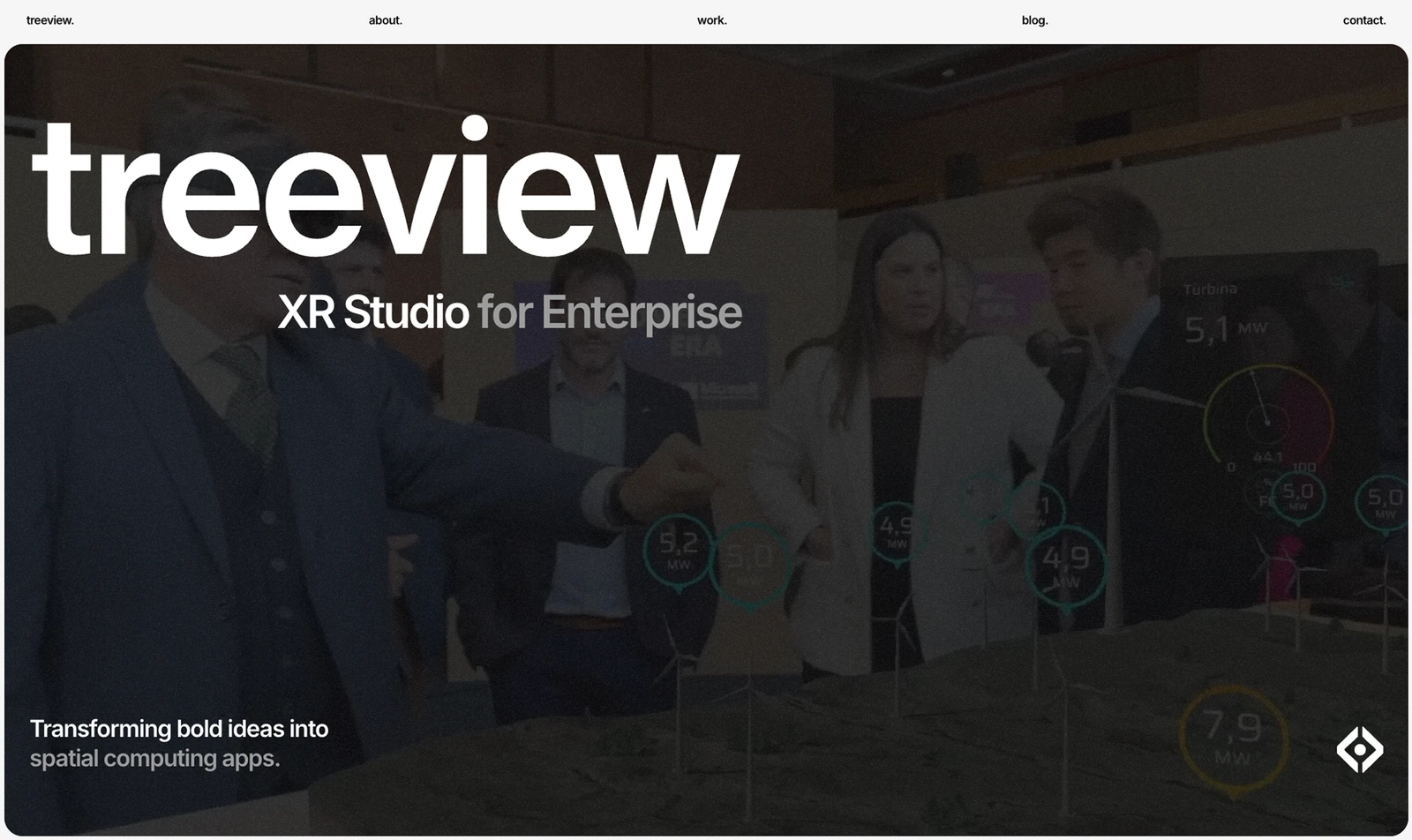
Treeview is an XR studio building custom virtual reality, augmented reality, Mixed Reality and Smart Glasses applications to order. It publishes no engineering simulation product, and a buyer should read that plainly: its named clients are Microsoft, Meta, Medtronic, Toyota, Ford, ULTA Beauty, Daiichi Sankyo, Transfr, the University of Alberta and the University of Adelaide.
Its relevance here is the case commercial tools do not cover. Engineering simulation software is generally built around the outputs of specific solvers, and organizations frequently have something that does not fit: a proprietary analysis code, an internal data format, results that must be shown alongside live operational data, or a requirement to present findings to people who are not engineers. Those are build projects, and no viewer covers them.
Its published work that comes closest is the AI-enabled digital twin designed and developed with Microsoft for a multi-billion dollar green hydrogen renewable energy project, which combines accurate geometry with live operational data in a real-time environment. That is engineering data rendered for interpretation rather than a solver result viewer, but it demonstrates the relevant capability, which is getting real engineering data into a real-time environment reliably.
Full ownership of IP, source code and assets transfers to the client. Analysis workflows change as solvers are upgraded and methods evolve, and a visualization tied to a supplier who owns the code stops tracking the engineering it was built to serve.
Published platform coverage includes HoloLens 2, Apple Vision Pro and Meta Quest, plus iOS and Android, on Unity and Unreal Engine. Founded in 2016 by chief executive Horacio Torrendell, it works from Montevideo, Uruguay and New York City. Team size and rates are not published, and it publishes no CAE or solver format support, no large-model handling approach and no display hardware, so all three would need specifying against your data. Best for a bespoke interface onto analysis output that no commercial viewer handles.
2. LS Group
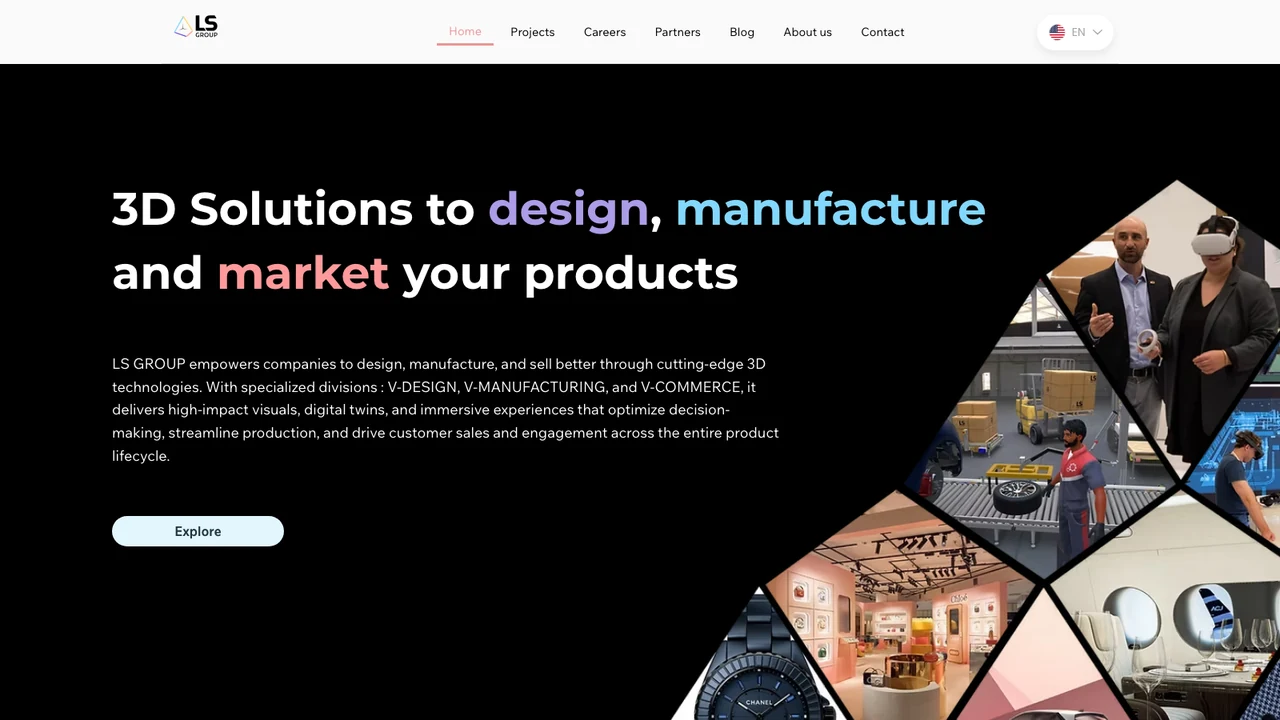
LS Group is a French industrial 3D company working across virtual, augmented and mixed reality. Check the identity before shortlisting: it traded as Light and Shadows until rebranding at the end of 2022 and operates at ls-group.fr, while ls-group.com and lsgroup.fr are parked and listed for sale.
Founded in 2009, its product line is XR Suite, which includes Interact, a Unity plugin for interactive 3D physics simulation. On an engineering simulation list, that plugin is the most directly relevant published product here, because it addresses the harder of the two problems this category contains.
The distinction is worth being precise about. Displaying a solver result shows what analysis already computed, under the conditions the analyst chose. Interactive physics computes behavior in response to what the user does, so an engineer can try something the analyst did not model. Those answer different questions, and only the second lets someone explore rather than review. It is also considerably less accurate than a dedicated solver, and treating a real-time physics result as equivalent to finite element analysis would be a serious error.
Used correctly, real-time physics is for the questions that never justify a full analysis run: whether a hand reaches, whether a part clears on removal, whether a sequence works in the space available. Those are answered in minutes rather than days, and they are where most manufacturing problems actually originate.
Its divisions are V-DESIGN, V-MANUFACTURING and V-COMMERCE, its published positioning covers Industry 4.0 with analysis tools and the ability to create and recreate scenarios to validate ideas inside industrial processes, and its named clients are Airbus Group, Alstom, Dassault Aviation and PSA Peugeot Citroën. Its published engine focus is Unity, with no Unreal product stated, and it publishes no solver integration or CAE format list. Team size, rates and ownership terms are not published. Best for interactive physics questions rather than viewing solver output.
3. Tech Soft 3D
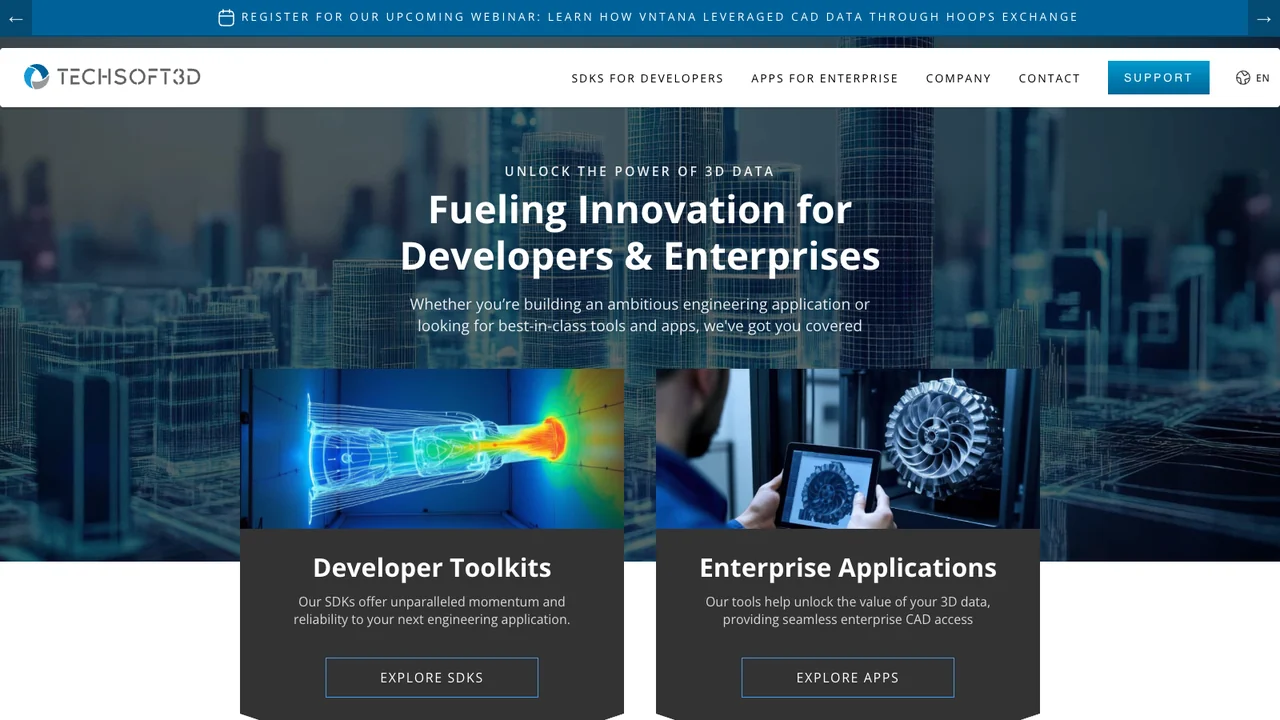
Tech Soft 3D needs a name check first: Theorem Solutions now resolves to Tech Soft 3D, and theorem.com serves Tech Soft 3D content, so a buyer searching under the former name will land on the latter.
Its enterprise portfolio is SpinFire Convert for CAD translation and lightweight publishing, supporting 3DEXPERIENCE, CATIA V5, Creo, NX, JT, 3D PDF and HTML; SpinFire Insight, a 3D CAD viewer for viewing, interrogating and translating CAD files, which it states is built on the same SpinFire technology automotive manufacturers have trusted for more than 25 years; and SpinFire XR for immersive visualization. It also publishes developer SDKs including HOOPS Exchange.
Its contribution to engineering simulation is the least glamorous and most frequently decisive: getting large, multi-format engineering data into a state where anything can render it. Organizations rarely run one CAD system, and an engineering program routinely involves supplier data in formats nobody in-house has a license for. Translation and lightweight publishing solve that before any question of headsets arises.
The lightweight publishing point deserves emphasis in this category specifically. Real-time rendering has a polygon budget, and native CAD does not respect it. A pipeline whose entire purpose is producing a lighter representation while preserving what matters is doing the work that otherwise gets improvised badly by whoever is building the VR application.
What it does not publish is CAE or solver result support, so a buyer wanting to view stress, flow or thermal results should confirm that directly rather than assume the CAD lineage extends to analysis output. It is a software vendor rather than a development company, and publishes no headquarters address, founding year, team size or rates. Best for organizations whose blocker is format breadth and model size rather than the display.
4. Virtalis
Virtalis provides advanced visualization solutions, stating 30 years of experience, and is the only supplier here offering both software and display hardware. Its software line is Visionary Render, Virtalis Reach and GeoVisionary, and its systems line is ActiveWall, ActiveMove, ActiveCube and veterinary simulators.
Its published positioning is unusually well matched to engineering data problems: connecting data from any source, optimizing, extending and re-using it, and controlled distribution to any system and any user. Each of those maps onto a real obstacle. Engineering data comes from many systems, it is too heavy to render raw, and it frequently cannot be handed to a partner in native form for commercial reasons. Controlled distribution addresses the last, which matters in supply chains where a supplier must see a model without receiving the CAD.
Its published solutions include Design Reviews, Training, Layout Planning, Operations and Maintenance, Sales and Engagement, Education and Research, and Contextual Digital Twin. GeoVisionary indicates geospatial data handling, which is relevant to civil, mining and infrastructure engineering where the dataset is terrain rather than an assembly.
Its hardware line changes the fidelity equation in a way worth understanding against Varjo below. ActiveCube surrounds users with high-resolution 3D images, achieving what the company describes as immersion without the isolation of head-mounted displays, and noting that seeing the real world reduces the nausea headsets often cause. For a group of engineers reviewing analysis results together, that format keeps the discussion intact, which a headset per person does not.
It publishes no founding year, team size, named clients, solver format list or rates on the pages reviewed, and a blog post notes the return of its founder. Best for large engineering models reviewed by groups, particularly where a projection installation is viable.
5. Varjo
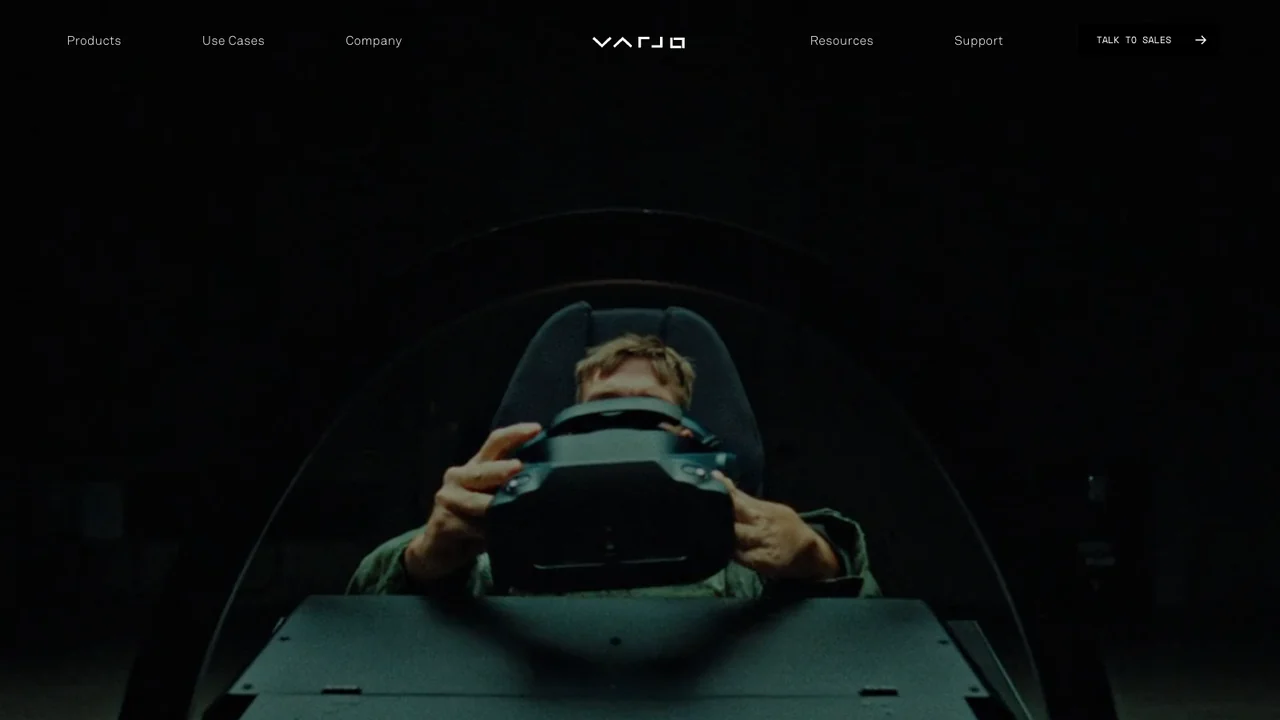
Varjo is a headset manufacturer, not a development company, and it belongs in this comparison for one reason that is genuinely decisive rather than incidental: engineering VR has a resolution threshold, and below it the work cannot be done.
Its published positioning is military-grade VR and XR headsets and solutions for simulation training, describing blending digital and physical worlds so that people, teams and nations can practice, prepare for threats and make mistakes safely. Its hardware is the XR-4 Series and an Integrated XR System, its software is Varjo Base, Teleport and Secure, and it publishes professional services and a compatible software list. Use cases are organized as Air, Land, Sea and Other.
Its stated argument against traditional methods is specific and relevant beyond training: it notes that room-scale domes cannot keep pace with rising training requirements, and that mixed reality offers solutions that are more portable. That is the honest counterweight to the projection systems above. A dome or a cube is superb and it is also a fixed capital installation in one building, while headsets travel to wherever the engineers are.
The reason a hardware manufacturer earns a place on a software list is that resolution determines feasibility. If an engineer cannot read a label, resolve a hairline gap or distinguish bands in a contour plot, no amount of software quality rescues the review. Buyers who evaluate applications on consumer headsets and conclude that engineering VR does not work have frequently tested the wrong variable.
What it does not do is build your application. It supplies hardware, its own software layer and a compatible software list, so the visualization still comes from someone else, and its published focus is simulation training rather than engineering analysis. It publishes no rates on the pages reviewed. It ranks fifth because it is not a development supplier, not because the hardware is peripheral. Best treated as the fidelity decision made alongside a software choice.
What engineering simulation in VR has to account for
Four things determine whether engineers keep using it after the novelty passes.
The first is resolution against your actual task. Before choosing software, establish the smallest thing an engineer must resolve, then test whether the intended hardware can display it. This is a ten minute test that prevents a failed program, and it is skipped constantly.
The second is the data route. Ask specifically how your largest assembly and your heaviest result set reach the display, how long preparation takes, and how much is automated. If preparing a model for review takes a specialist two days, reviews will happen rarely, which removes most of the value.
The third is what is computed and what is displayed. Real-time physics answers reach, clearance and sequence questions quickly and is not a substitute for solver accuracy. Be explicit about which claims a real-time result can support, because a number that looks authoritative in a headset will be quoted later as though it came from analysis.
The fourth is whether the group can participate. Engineering review is collaborative, and headsets isolate. Either accept that and design for one reviewer at a time with a way to share the view, or choose a room-scale format. Deciding this by accident produces sessions where one person narrates while everyone else waits.
How to choose between these engineering simulation companies
Start with fidelity, because it gates everything else. If engineers cannot resolve the detail, nothing else matters, and Varjo exists to solve that. Test it before selecting software rather than after.
Then match the problem. Format breadth and model size point to Tech Soft 3D's translation and lightweight publishing. Group review of large models, and geospatial data, point to Virtalis. Interactive physics for reach and clearance questions points to LS Group's Interact. An interface onto solver output that no commercial viewer handles points to Treeview, with ownership transferring to you.
Test with your own worst dataset during evaluation, not a sample. Every product handles a clean demonstration model. The question is your heaviest assembly with supplier parts in three formats, and the answer to that predicts adoption.
Finally, be clear about what a result in VR is allowed to prove. Visualization aids judgement; it does not certify. Decide which decisions may be made from an immersive review and which still require analysis, and write it down before anyone is standing in a headset saying the clearance looks fine.
Related reading. BestInXR's VR simulation guide covers fidelity, validation and what simulation actually means. companies for VR virtual prototyping covers design review before tooling, and companies for custom VR simulation development covers modeling behavior. For twin visualization see companies for digital twin data visualization, and for procurement, selecting XR developers for enterprise deployment.
Frequently Asked Questions (FAQ)
1. Why does a headset manufacturer appear on a software list?
Because resolution determines whether engineering work is possible at all. Reading a label, seeing a hairline gap or distinguishing contour bands has a visual acuity threshold, and below it no software quality compensates. Varjo publishes hardware built for simulation use, and testing fidelity before choosing software avoids a common failed-program pattern.
2. Can real-time physics replace solver analysis?
No. Interactive physics such as LS Group's Interact answers reach, clearance and sequence questions in minutes and is far less accurate than a dedicated solver. It is valuable for questions that never justify an analysis run, and treating its output as equivalent to finite element results would be a serious error.
3. How do large engineering models get into VR?
Through translation and lightweight publishing, streaming, workstation-driven projection, or direct display from the source application. Tech Soft 3D publishes translation and lightweight publishing across 3DEXPERIENCE, CATIA V5, Creo, NX and JT. Virtalis publishes optimizing and re-use with controlled distribution. Test with your heaviest assembly, not a sample.
4. Do any of these support CAE or solver result formats?
None of the five publishes a CAE or solver result format list on the pages reviewed, so no support is recorded here. Tech Soft 3D's published formats are CAD rather than analysis. If viewing stress, flow or thermal results is the requirement, confirm it explicitly rather than inferring it from CAD capability.
5. Headsets or a projection room for engineering review?
Projection keeps a group together and is a fixed capital installation, which Virtalis publishes through ActiveCube and its statement about immersion without the isolation of headsets. Headsets travel to the engineers and suit individual inspection, and Varjo notes that room-scale domes cannot keep pace with rising requirements. Choose from how your reviews actually run.
6. What does engineering simulation VR cost?
None of the five publishes rates, so no figure is recorded here. Cost is driven by headset or projection hardware, how many CAD and analysis formats must be supported, model preparation effort, and whether anything is custom built. Data preparation time is the line most often missing from a first budget.