VR surgical training is judged by a stricter standard than any other training category in this directory, because clinical buyers ask for validation studies rather than case counts. This list ranks five on published evidence, whether the training is procedure-specific or general, and who the supplier actually builds for. Rankings draw on each company's own record.
In short:
- Treeview builds custom XR to specification, names Medtronic among its clients, and transfers full ownership of IP, source code and assets
- Medtronic is a device manufacturer rather than a development supplier, and defines who commissions much of this work
- Ghost Medical publishes named client VR training, including spinal fusion work for Spineology and Recell training for Avita Medical
- Surgical Science publishes a validations section and a robotic surgery simulation line, which is the evidence posture clinical buyers expect
How this list was built
This list ranks companies by four criteria: published validation evidence, whether training is tied to a specific procedure or device, named clinical or industry clients, and what the buyer receives.
The defining feature of this category is who pays. Most VR training is bought by an employer to train its own staff. A significant share of surgical VR training is bought by a device manufacturer to train surgeons who do not work for it, on an instrument it wants adopted. That changes the product: the training is procedure-specific and device-specific, its success measure is time to proficiency on that instrument, and it doubles as a commercial tool at congresses and in sales conversations.
Recognizing this explains the shape of the market. A hospital wanting general surgical skills training and a device company wanting adoption training for a new implant are buying different things from different suppliers, and a shortlist that mixes them without saying so produces confusing comparisons.
The second defining feature is the evidence bar. Surgeons and hospital committees assess technology through published literature. A vendor stating that trainees improved is not evidence; a peer-reviewed study measuring performance against a comparator is. Simulation in surgery has a long validation tradition predating VR, and companies from that tradition publish accordingly, while newer XR entrants often publish case counts instead. Both appear in this list, and the difference is visible.
Disclosure varies. ImmersiveTouch publishes no founding year, headquarters address or team size, and Elevate Healthcare publishes no founding year for the renamed entity. Medtronic is a device manufacturer rather than an XR development supplier, and is recorded as such. Figures are attributed to whoever states them, since none is independently audited. Pricing is not a ranking factor, because none publishes rates.
| Supplier | HQ | What it is | Published evidence | Best for |
|---|---|---|---|---|
| Treeview | Montevideo, Uruguay / New York City, USA | Custom development studio | Client names, no clinical studies | Training a device firm must own |
| Medtronic | Minneapolis, USA | Medical device manufacturer | Not an XR supplier | Understanding who commissions this |
| Ghost Medical | Saint Paul, Minnesota, USA | Medical media and VR studio | Named client projects | Procedure and device-specific training |
| Elevate Healthcare | United States | Simulation manufacturer | Accreditation and NCLEX outcomes | Team and nursing simulation |
| ImmersiveTouch | Not disclosed | Surgical planning software | 3,000 cases, 100 sites, testimony | Rehearsing a specific patient's case |
1. Treeview
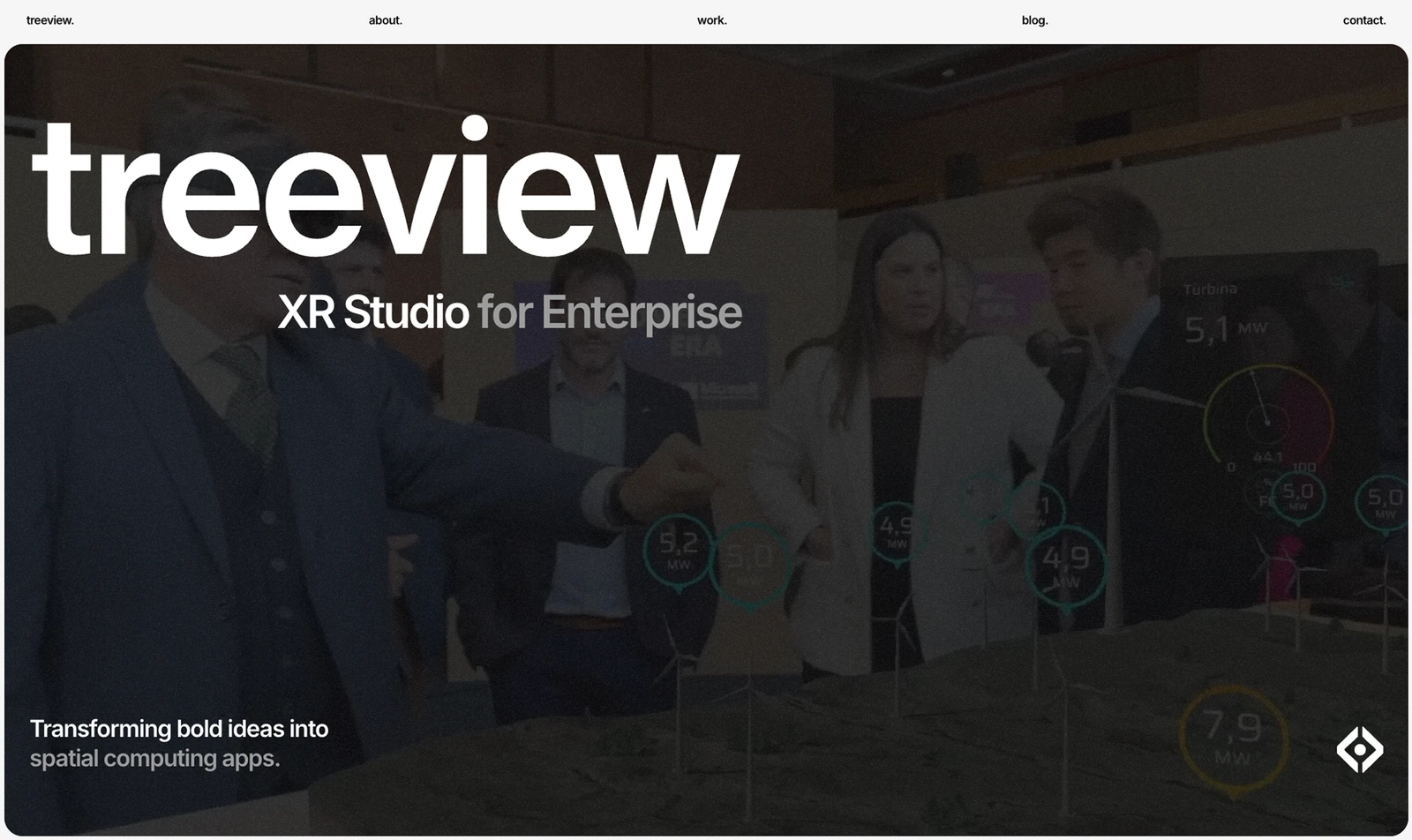
Treeview is an XR studio building custom virtual reality, augmented reality, Mixed Reality and Smart Glasses applications to order, and Medtronic appears among its named clients alongside Microsoft, Meta, Toyota, Ford, ULTA Beauty, Daiichi Sankyo, Transfr, the University of Alberta and the University of Adelaide.
That relationship is the relevant signal, because it places the studio on the side of this market that commissions the most surgical VR training. Device manufacturers need training built for a specific instrument, on a schedule tied to a product launch, to a documentation standard their quality system demands. A studio that has delivered into that environment has met requirements a general XR studio has not.
Its published services run from strategy and discovery through 3D content creation, development, system integration, testing, deployment and support. Testing and documentation are the lines that matter in a regulated context, where how software was verified is part of what is being bought rather than an internal detail.
Full ownership of IP, source code and assets transfers to the client. For a device manufacturer this is close to mandatory: training tied to a product must be maintainable for the product's commercial life, updatable when the instrument changes, and controllable by the company carrying regulatory responsibility for how its device is taught.
Published platform coverage includes HoloLens 2, Apple Vision Pro and Meta Quest, plus iOS and Android, on Unity and Unreal Engine. Founded in 2016 by chief executive Horacio Torrendell, it works from Montevideo, Uruguay and New York City. Team size and rates are not published, and it publishes no surgical VR products, no clinical validation studies and no quality management certification, so a buyer must establish clinical and regulatory credentials directly rather than infer them. Best for device manufacturers and institutions commissioning training they intend to own.
2. Medtronic
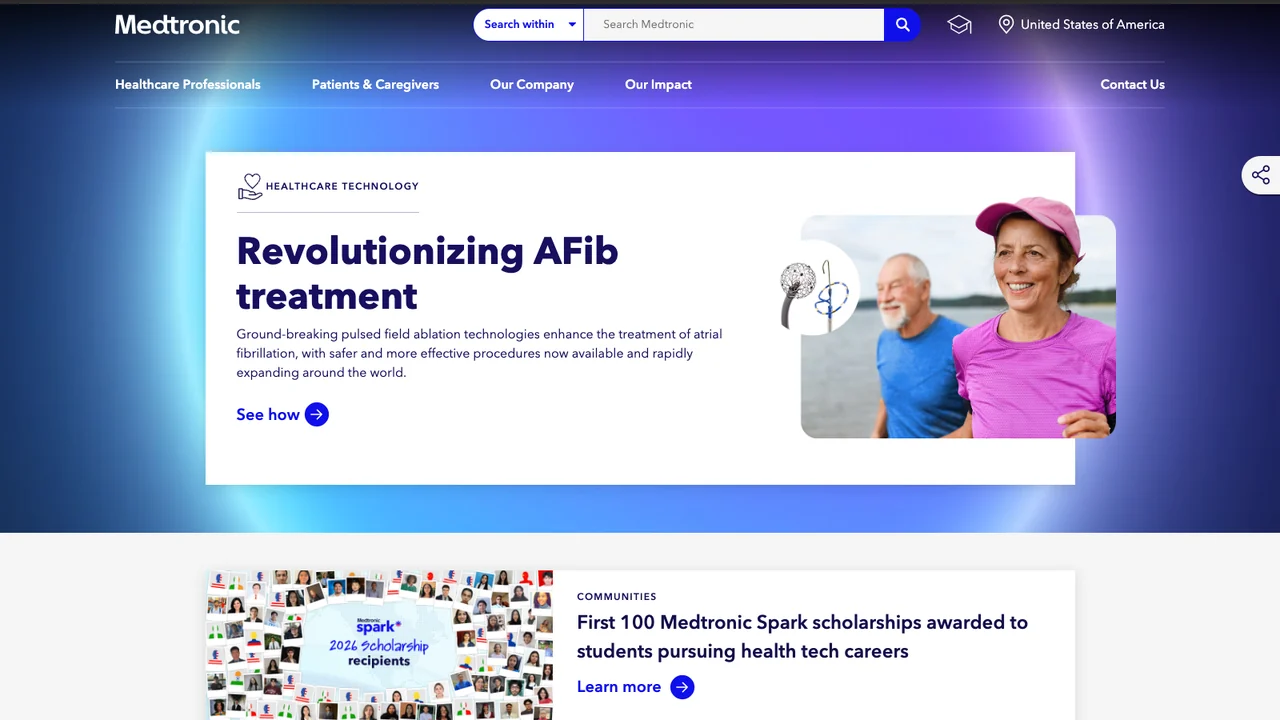
Medtronic is a medical device manufacturer rather than an XR development supplier, and it does not take XR development contracts. Its place in this list is explanatory, and the explanation is genuinely useful to anyone shortlisting.
A large share of surgical VR training exists because device companies fund it. When a manufacturer launches an implant, an instrument or a robotic platform, surgeons have to learn it, and the manufacturer has a direct commercial interest in shortening that learning curve. Traditional routes are cadaver labs, proctored cases and congress workshops, all of which are expensive, geographically limited and hard to scale. Simulation addresses all three constraints at once, which is why this segment is funded far better than general clinical education.
For a buyer this reframes the question. A hospital wanting training on a specific device should ask the manufacturer what exists before commissioning anything, because it may already have been built and may be free at the point of use. A supplier should understand that its likeliest customer in this category is a device company rather than a hospital, which changes how work is scoped and who signs.
Medtronic works from operational headquarters at 710 Medtronic Parkway, Minneapolis, and publishes healthcare technology across surgical, cardiac, neurological and diabetes fields. It publishes no XR development services or developer partner program on the pages reviewed.
It ranks second because it defines the commissioning structure of this market, not because it is a supplier you can engage. Best understood as the buyer to approach before assuming training must be built.
3. Ghost Medical
Ghost Medical is the entry here with the most specific published VR training record, and it is worth noting the name history: the company operated as Ghost Productions and that former domain now redirects to ghostmedical.com, so both names refer to the same business.
It builds medical animations, medical illustrations, virtual reality surgical simulations, medical websites and interactive software, and states it has developed 3D computer generated medical content since 1994, the longest history in this list. It works from Saint Paul, Minnesota.
Two named VR products are published. Ghost VRSE II is a multiuser surgical simulator built for Quest 2, and the multiuser element is the substantive detail, because it allows a proctor and a trainee in the same session. Surgical teaching is an apprenticeship in which an experienced surgeon watches, intervenes and explains, and a single-user simulator replicates practice but not supervision. Wraith-VR Total Knee is a knee replacement simulation built for PC-tethered VR, where the higher rendering budget suits detailed anatomy.
Its named client work is the strongest evidence of the device-funded pattern described above. It built spinal fusion VR training for Spineology around the Optimesh device, VR training for Avita Medical covering the Recell system for spray-on skin cell burn treatment, and an astigmatism vision simulation for Greenman LLC allowing a patient to experience a vision disorder before choosing an intraocular lens treatment. Those cover spine, dermatology and burn care, and ophthalmology, and demonstrate the three commercial uses of the format: shortening time to proficiency, demonstrating a device to a buying clinician, and preparing a patient.
What it does not publish is peer-reviewed validation of training effectiveness, a team size or rates. Best for procedure-specific and device-specific VR training with a named clinical application.
4. Elevate Healthcare
Elevate Healthcare requires a name and domain check first. It was CAE Healthcare until the business was sold to Madison Industries, with the transaction closing on 16 February 2024, and was renamed Elevate Healthcare on 15 May 2024. It operates at elevatehealth.net; elevatehealthcare.com does not resolve, and elevate-healthcare.com and elevatehealthcare.net are parked domains listed for sale.
Its published portfolio is Patient Simulators, Ultrasound Simulators, LearningSpace and Task Trainers and Accessories, with brands including Blue Phantom, Medicor and Evo AuRA. Its published outcomes are framed around safety risk management, evidence-ready accreditation, workforce-ready teams and higher NCLEX rates, and it publishes an Elevate Learning Institute, service agreements and custom industry solutions.
This is physical simulation rather than VR, and the distinction should be clear to anyone shortlisting. Manikins, ultrasound phantoms and task trainers are the established backbone of clinical education, and the NCLEX framing signals a strong nursing education orientation rather than a surgical one.
Its relevance to surgical training is real but indirect, and worth stating fairly rather than dismissing. Operations are performed by teams, and a substantial share of adverse events originate in communication, escalation and crisis management rather than in technical skill. Those are trained through simulated scenarios with people in a room, which is what this portfolio does. Its published Ehli, a LearningSpace AI assistant for evaluation scoring, addresses the assessment workload that limits how many scenarios a program can run and debrief properly.
Accreditation is the other practical consideration. Simulation centers are accredited, and a supplier whose published outcomes are organized around accreditation readiness is aligned with how those programs are actually funded and inspected. It publishes no VR surgical simulators, no XR products and no rates on the pages reviewed. Best for team-based clinical simulation and nursing programs rather than surgical VR.
5. ImmersiveTouch

ImmersiveTouch publishes patient-specific surgical work rather than curriculum training, and that difference determines where it belongs on a training list. Its stated position is personalized healthcare using patient-specific imaging, providing advanced surgical planning through virtual and augmented reality for surgeons in hospitals and private practices.
Its published products are ImmersiveView and ImmersiveAR, with an Upload Data route indicating a workflow that takes a hospital's own imaging into the platform. Its stated figures are more than 3,000 cases completed, more than 100 sites where the technology has been used and more than 6 clinical specialties enhanced, all company-stated.
Its relationship to training is worth drawing out, because it is a different model from a simulator. Conventional surgical training builds general competence on representative anatomy: a trainee practices a procedure many times on a standard model. Case rehearsal builds specific readiness for one operation on one patient's anatomy, which is a form of preparation rather than skill acquisition. Both improve outcomes and they are not substitutes, and a department that buys one expecting the other will be disappointed.
The rehearsal model is most valuable exactly where standard training is weakest: unusual anatomy, revision surgery, rare presentations and complex resections, where the general case does not prepare a surgeon for the specific one in front of them. Its published clinical testimony includes a named quote from Dr Lee Alkureishi, a craniofacial surgeon at Shriners Hospital, describing being able to reach out, grab and spin an anatomical model within seconds of putting the headset on, and that this saves time.
What is not published on the pages reviewed is regulatory clearance status, peer-reviewed validation, a founding year, headquarters address, team size or rates. For a training budget, the case-rehearsal model also raises a practical question about per-case imaging and segmentation effort, which determines whether it can be routine. Best for case rehearsal on difficult anatomy rather than general skills training.
What surgical VR training has to account for
Four things determine whether a surgical VR program is adopted rather than trialled.
The first is validation. Ask what has been published, in which journal, measuring what against which comparator. Surgical simulation has a long validation literature and clinical committees expect it. Surgical Science's approach of publishing validations is the standard to hold suppliers to; case counts and testimonials are weaker evidence and are treated as such by the people who approve purchases.
The second is who is funding it and why. If the training is for a specific device, the manufacturer may already have built it, and asking first is cheaper than commissioning. If it is general skills training, the funding is institutional and the business case has to stand on its own.
The third is supervision. Surgical skill is taught through observed practice with correction, and a simulator that trains alone replicates repetition without feedback. Ghost Medical's multiuser VRSE II addresses this directly by putting proctor and trainee in one session. Where a product is single-user, establish how feedback and assessment happen.
The fourth is where the record goes. Training that contributes to credentialing or logbooks has to produce a record the institution accepts. None of the five publishes learning management integration detail on the pages reviewed, so this belongs in the specification rather than being discovered afterwards.
How to choose between these surgical VR training companies
Start from what is being taught. A specific device or procedure points to Ghost Medical, whose named client work is exactly that, and to the manufacturer itself, which is why Medtronic is in this list. General validated skills, including robotic, point to a simulation company with published validations. Team performance and crisis management point to Elevate Healthcare. Preparing for one difficult operation on one patient points to ImmersiveTouch. Training a device company must own and maintain points to Treeview.
Then apply the clinical evidence standard from the beginning rather than at approval. Ask for the studies early, because a supplier without them will need months to respond and your committee will ask anyway.
Settle supervision and assessment in the design. A simulator that produces practice without feedback produces confidence without competence, which is the outcome surgical education is most careful to avoid.
Finally, ask the device manufacturer first. In this category, more than any other, the training you are about to commission may already exist, be better validated, and cost nothing at the point of use.
Related reading. BestInXR's healthcare guide covers XR across clinical, communication and training. companies for AR in the operating room and surgical planning covers planning and intraoperative guidance, and XR companies for medical device visualization covers communicating device design. For laboratory teaching see VR companies for virtual labs and science simulations, and for procurement, selecting XR developers for enterprise deployment.
Frequently Asked Questions (FAQ)
1. Who usually pays for surgical VR training?
Frequently a device manufacturer rather than a hospital, because shortening the learning curve on a new instrument has direct commercial value and traditional routes such as cadaver labs and proctored cases are expensive and hard to scale. Ghost Medical's named work for Spineology and Avita Medical is that pattern, and it is why Medtronic appears in this list.
2. What evidence should a surgical VR product publish?
Peer-reviewed validation measuring performance against a comparator. Case counts record use rather than benefit, and testimonials record satisfaction. Clinical committees distinguish sharply between them, so ask early which studies exist, where they were published, and what was actually measured.
3. Is case rehearsal the same as surgical training?
No. Training builds general competence through repetition on representative anatomy. Case rehearsal, which is what ImmersiveTouch publishes, prepares a surgeon for one specific operation on one patient's anatomy. Both improve outcomes and neither substitutes for the other, and they are most valuable in different situations.
4. Can a simulator replace proctored practice?
Not on the evidence published by any of the five, so no such claim is recorded here. Surgical skill is taught through observed practice with correction, and single-user simulation provides repetition without feedback. Ghost Medical's Ghost VRSE II is multiuser specifically so a proctor and trainee can share a session.
5. Is Elevate Healthcare a VR company?
No. It was CAE Healthcare until its sale to Madison Industries closed in February 2024 and the rename in May 2024, and its published portfolio is physical simulation: patient simulators, ultrasound simulators, task trainers and LearningSpace, oriented strongly toward nursing education. It publishes no VR surgical simulators.
6. What does surgical VR training cost?
None of the five publishes rates, so no figure is recorded here. Cost is driven by whether training is procedure-specific or general, whether it is funded by a device manufacturer, headset hardware and management, per-case imaging effort for rehearsal products, and any validation work required. Validation is the line most often missing from a first budget.
7. What is surgical telementoring, and do these companies provide it?
Telementoring puts a remote specialist into a live case, guiding the operating surgeon while the procedure is under way. That is a different product from everything ranked above, which rehearses a procedure before it happens, and the distinction in answer 3 between rehearsal and training applies here too. The capability sits with operating-room platforms rather than simulation studios: Proximie describes its Surgical Suite as remotely connecting teams and building a video library, and carries access to expertise among its published use cases. A buyer who needs a second pair of eyes during the case is shopping in that market. A buyer who needs repeatable practice before it is in the right place on this page.