AR in the operating room and surgical planning covers two distinct things: rehearsing an operation beforehand from a patient's own scans, and displaying guidance during the procedure itself. The regulatory distance between them is enormous, and conflating them is how these projects go wrong. This list ranks five on what each actually delivers.
In short:
- Treeview builds custom XR to specification, names Medtronic among its clients, and transfers full ownership of IP, source code and assets
- Medtronic is a device manufacturer rather than a development supplier, and belongs here as the buyer and integrator this market builds around
- ImmersiveTouch publishes ImmersiveView and ImmersiveAR for patient-specific surgical planning, stating 3,000 cases and more than 100 sites
- Surgical Science is a listed simulation company publishing validations, which is the evidence standard clinical buyers apply
How this list was built
This list ranks companies by four criteria: whether the product is used before or during surgery, evidence of clinical validation, published deployment, and what the buyer receives.
The distinction that governs everything here is where the technology sits relative to the patient. Preoperative planning happens away from the operating room, using a patient's imaging to rehearse an approach. Nothing touches the patient, no decision is made in real time, and the regulatory position is comparatively light. Intraoperative guidance displays information to a surgeon while they operate, which makes it part of the procedure, subject to device regulation, and answerable for what happens if it is wrong.
Those two are frequently discussed as one category and they are not comparable purchases. A planning tool can be trialled by a department. Intraoperative guidance involves regulatory clearance, hospital governance, sterile field constraints, integration with navigation systems already in theatre, and a liability conversation. Any supplier proposing the second should be able to state its regulatory position precisely and without prompting.
The second thing this category demands is clinical evidence, and the standard is higher than anywhere else in this directory. Clinicians evaluate technology through published studies, and a vendor claim carries little weight against a peer-reviewed validation. Surgical Science publishes a validations section, which is the right shape of evidence; most XR suppliers publish case counts instead, and a case count records use rather than benefit.
Disclosure varies. ImmersiveTouch publishes no founding year, headquarters address or team size on the pages reviewed. Medtronic is a medical device manufacturer rather than an XR development supplier, and is recorded here as such. Deployment figures are attributed to the company stating them, since none is independently audited. Pricing is not a ranking factor, because none publishes rates.
| Supplier | HQ | What it is | Before or during surgery | Best for |
|---|---|---|---|---|
| Treeview | Montevideo, Uruguay / New York City, USA | Custom development studio | Whatever is specified | Building what a device firm needs |
| Medtronic | Minneapolis, USA | Medical device manufacturer | During, through its own systems | Understanding who owns theatre |
| Elevate Healthcare | United States | Simulation manufacturer | Neither, it is education | Team and nursing simulation |
| Surgical Science | Sweden | Listed simulation company | Before, as training | Validated skills and robotic readiness |
| ImmersiveTouch | Not disclosed | Surgical planning software | Before, from patient imaging | Patient-specific case rehearsal |
1. Treeview
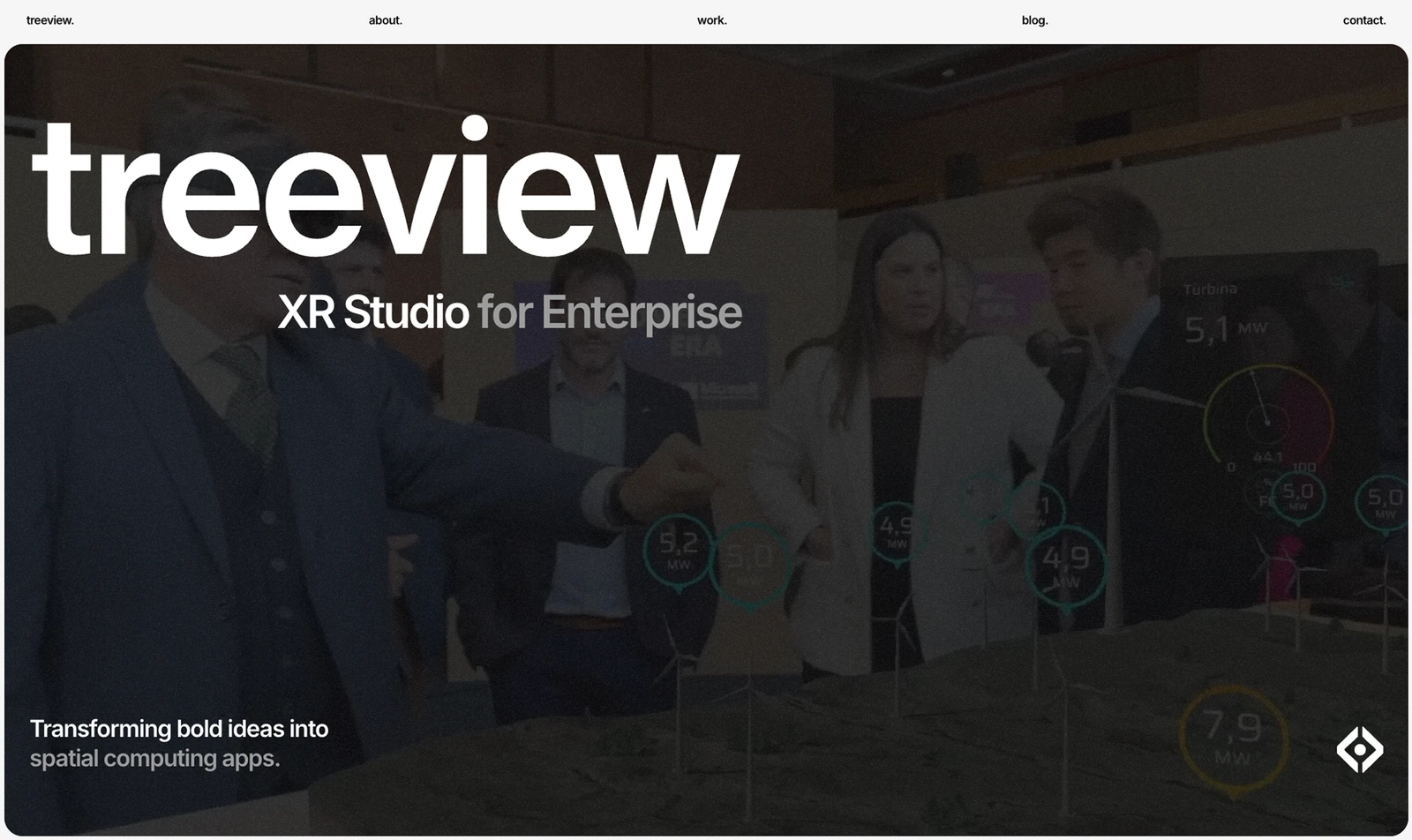
Treeview is an XR studio building custom virtual reality, augmented reality, Mixed Reality and Smart Glasses applications to order, and its most relevant published credential here is Medtronic among its named clients, alongside Microsoft, Meta, Toyota, Ford, ULTA Beauty, Daiichi Sankyo, Transfr, the University of Alberta and the University of Adelaide.
Work delivered to a major medical device manufacturer implies passing supplier qualification and design control expectations that most XR studios never encounter, and in this category that matters more than a portfolio of demonstrations. Medical device companies operate quality systems that govern how software is specified, built, tested and documented, and a studio that has worked inside one has met a standard.
Where a custom studio fits here is worth being precise about, because it is not building the next surgical navigation system. That is a regulated device program run by a device company. What a studio builds is everything around it: preoperative planning tools for a specific procedure, anatomical visualization for surgeon education, training applications for a device the manufacturer is launching, and interfaces onto imaging data that no commercial product covers.
Full ownership of IP, source code and assets transfers to the client. In a regulated environment that is close to a requirement rather than a benefit, since a device company carrying regulatory responsibility for software it did not author and cannot modify is in an uncomfortable position with its notified body.
Published platform coverage includes HoloLens 2, Apple Vision Pro and Meta Quest, plus iOS and Android, on Unity and Unreal Engine, and HoloLens 2 remains the device with the most published surgical use. Founded in 2016 by chief executive Horacio Torrendell, it works from Montevideo, Uruguay and New York City. Team size and rates are not published, and it publishes no regulatory clearances, no quality management certification and no clinical studies, so all three must be established directly for anything approaching a patient. Best for device manufacturers and departments commissioning planning or education software they will own.
2. Medtronic
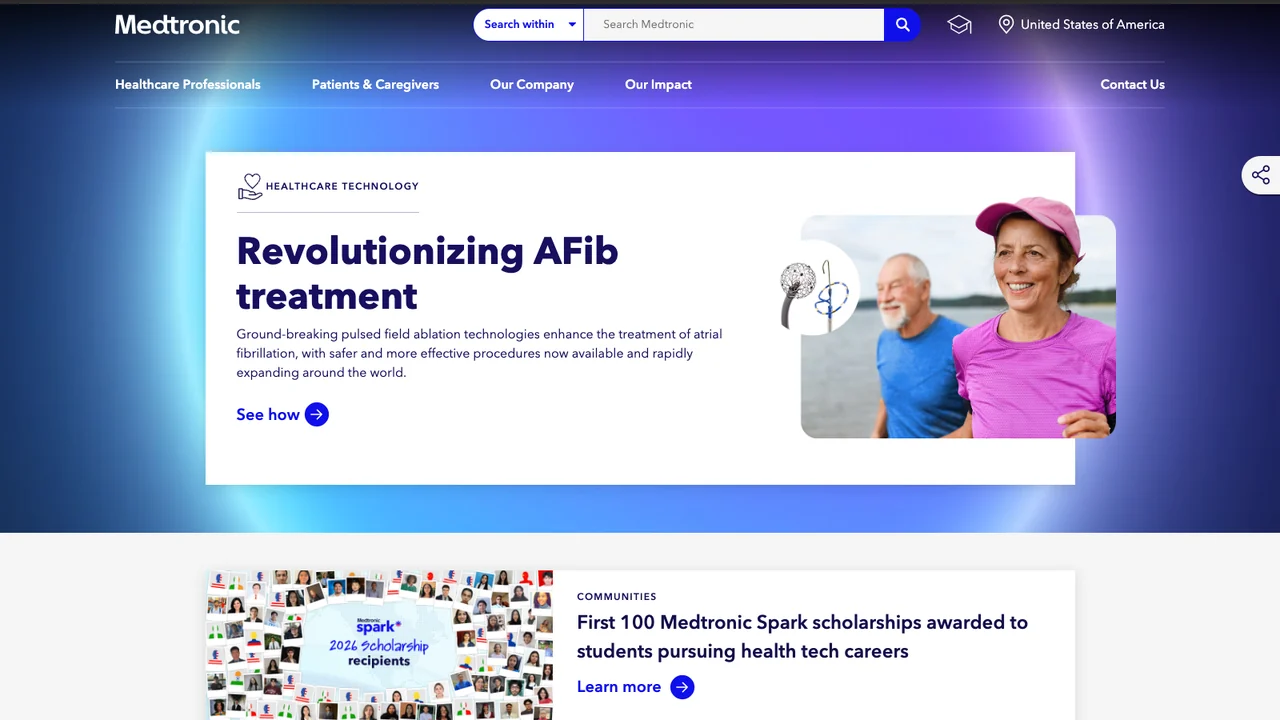
Medtronic is a medical device manufacturer, not an XR development supplier, and the audit position on it should be stated first: it does not take XR development contracts. It appears here because understanding it explains how this market actually works.
The operating room is not a neutral space that software enters freely. It is equipped by device manufacturers whose systems are already integrated, already cleared, already validated and already trusted by the surgical team. Guidance displayed during a procedure has to work with navigation, imaging and robotic systems that a manufacturer owns, and that is why intraoperative AR overwhelmingly arrives as a feature of a device platform rather than as an independent application.
For a buyer this has a practical consequence worth internalising. If your ambition is guidance during surgery, your route is usually a partnership with, or a product from, a device manufacturer, and an independent XR application that ignores the equipment already in theatre will not reach a patient. Medtronic works from operational headquarters at 710 Medtronic Parkway, Minneapolis, and its published healthcare technology spans surgical, cardiac, neurological and diabetes fields.
The reason it belongs on the list rather than being removed is that it defines the boundary. Everything in this category divides into work that must integrate with a device manufacturer's platform and work that does not, and knowing which side a project sits on determines its cost, its timeline and whether it is feasible at all.
It publishes no XR development services, no partner program for XR developers on the pages reviewed, and no rates for such work. It ranks second because of its structural importance to the category, not because it is a supplier you can engage for a build. Best understood as the integration reality that shapes any intraoperative ambition.
3. Elevate Healthcare
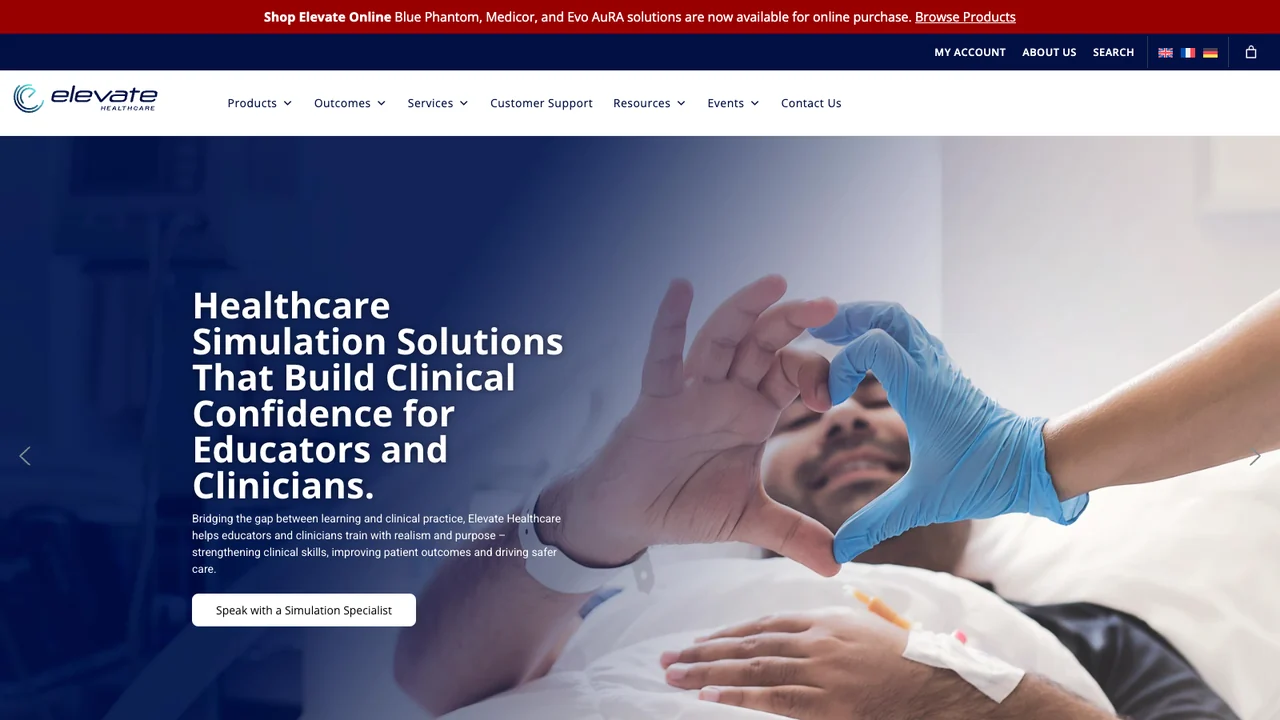
Elevate Healthcare needs a name and domain check before shortlisting. It was CAE Healthcare until the business was sold to Madison Industries in a transaction that closed on 16 February 2024, and it was renamed Elevate Healthcare on 15 May 2024. It operates at elevatehealth.net; elevatehealthcare.com does not resolve, and elevate-healthcare.com and elevatehealthcare.net are parked domains listed for sale.
Its published portfolio is Patient Simulators, Ultrasound Simulators, LearningSpace, and Task Trainers and Accessories, with brands including Blue Phantom, Medicor and Evo AuRA. Its published outcomes are framed around safety risk management, accreditation readiness, workforce-ready teams and higher NCLEX rates, and it publishes an Elevate Learning Institute, service agreements and custom industry solutions.
That portfolio is physical simulation rather than XR, and a buyer should be clear about it. Manikins, task trainers and ultrasound phantoms are the established technology of clinical education, and the NCLEX reference indicates a strong orientation toward nursing education specifically rather than surgical planning.
Its relevance to an operating room list is therefore adjacent rather than direct, and it is honest to say so. What it does address is the team, and that is not a small thing. Surgical outcomes depend on the whole theatre team rather than the surgeon alone, and communication, escalation and crisis response are trained through simulated scenarios rather than through anatomical visualization. Its published Ehli, a LearningSpace AI assistant for evaluation scoring, is aimed at the assessment burden that limits how much simulation a program can run.
It publishes no AR or surgical navigation products, no intraoperative technology and no XR development services on the pages reviewed, and no founding year for the renamed entity, team size or rates. Best for clinical team simulation and nursing education rather than surgical AR.
4. Surgical Science
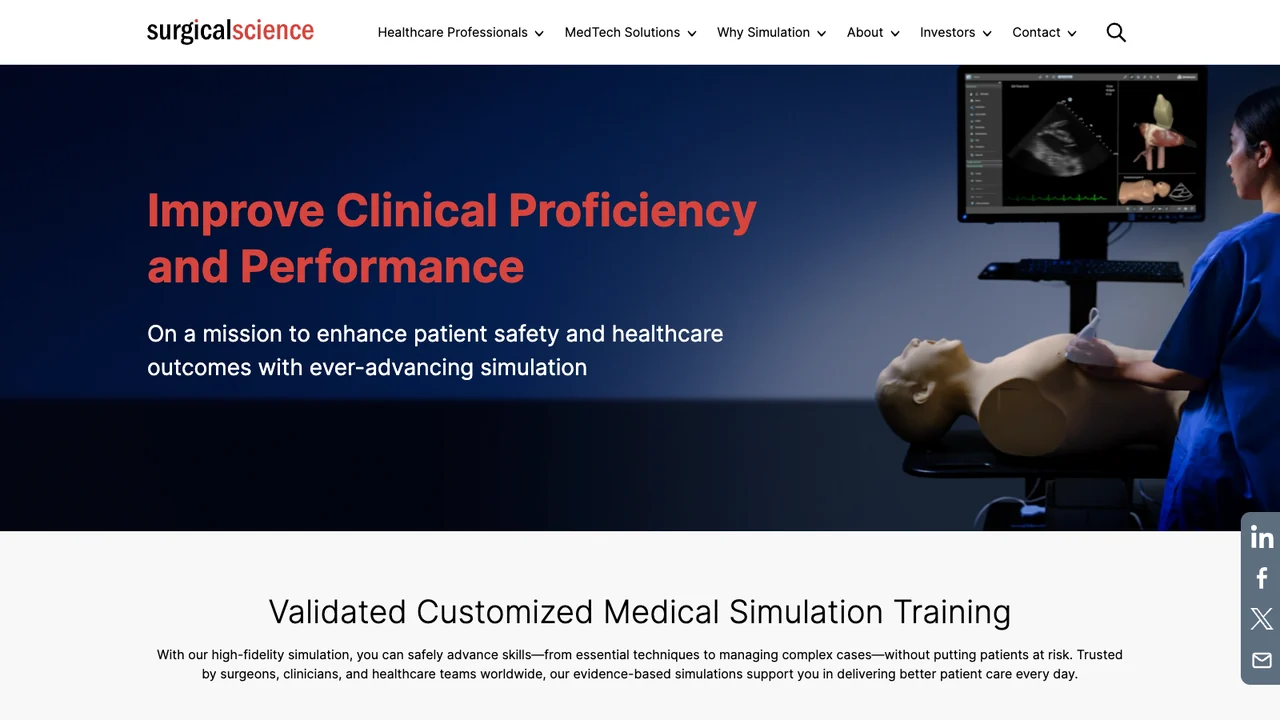
Surgical Science is a listed simulation company on a mission it states as enhancing patient safety and healthcare outcomes with ever-advancing simulation, and it is the entry here with the evidence posture clinical buyers actually expect.
It publishes a Validations section alongside User Stories, which is the distinguishing feature. Clinical adoption turns on published evidence rather than vendor claims, and a company that organizes its site around validation is speaking the language of the people who approve purchases in a hospital. It describes its simulations as evidence-based and its training as validated and customized, and states figures for simulators in use.
Its business is published in two halves, and the second is the one people miss. Healthcare Professionals covers simulators by medical speciality and simulator management for hospitals and training centers. MedTech Solutions covers simulation for medical device companies, spanning professional education, sales and marketing, and product development. That second half is a substantial and underdiscussed market: device manufacturers need simulation to train surgeons on a new instrument, to demonstrate it at congresses, and to test it during development.
Its published focus on robotic surgery simulation is well aimed at where the training need is growing, and its webinar framing around robotic readiness reflects a real problem, since robotic platforms are proliferating faster than surgeons are being trained on them. As a listed company it publishes investor relations and corporate governance material, so its finances can be read before a long commitment.
What it does not publish is intraoperative AR or patient-specific planning from a given patient's imaging, so it should be evaluated as a training supplier rather than a planning one. It publishes no rates on the pages reviewed. Best for validated surgical skills training, particularly robotic, and for device manufacturers needing simulation.
5. ImmersiveTouch

ImmersiveTouch is the entry most precisely on this topic, and it ranks fifth only because the slate order is preserved rather than because its fit is weaker. Its published position is personalized healthcare using patient-specific imaging, providing advanced surgical planning through virtual and augmented reality for surgeons in hospitals and private practices.
Patient-specific is the operative phrase and the reason this is different from everything above. A generic anatomical model teaches anatomy. A model built from this patient's scans, showing this tumour against these vessels, lets a surgeon rehearse the actual operation they are about to perform. That is the clearest published value proposition in this list, because the benefit is specific to a case rather than to a curriculum.
Its published products are ImmersiveView and ImmersiveAR, the latter positioned around preoperative planning, and it publishes an Upload Data route, which indicates a workflow taking a hospital's own imaging into the platform. Its stated figures are more than 3,000 cases completed, more than 100 sites where the technology has been used, and more than 6 clinical specialties enhanced. Those are company-stated and not independently audited, but a case count across 100 sites is meaningful deployment evidence rather than a pilot.
It also publishes named clinical testimony, including a quote from Dr Lee Alkureishi, a craniofacial surgeon at Shriners Hospital, describing being able to reach out, grab and spin an anatomical model within seconds of putting the headset on, and that this saves time. Named clinicians at named institutions are stronger evidence than anonymous endorsements.
What is not published on the pages reviewed is regulatory clearance status, peer-reviewed validation studies, a founding year, headquarters address, team size or rates. For anything used in planning a real operation, clearance and evidence are the first questions rather than the last. Best for patient-specific preoperative planning and case rehearsal.
What surgical AR projects have to account for
Four things determine whether this reaches a patient rather than a conference demonstration.
The first is the regulatory line. Establish at the outset whether the product informs a clinician before surgery or guides them during it, because that determines whether it is a device. Suppliers should state their classification and clearance status without being pressed, and a vague answer is itself an answer.
The second is clinical evidence. Case counts record use, not benefit. Ask for peer-reviewed studies, what was measured and against what comparator. Surgical Science publishes validations; ImmersiveTouch publishes case counts and named testimony. Neither is equivalent to the other, and hospital procurement committees know the difference.
The third is the theatre environment. Sterility, sightlines, hand-free operation, existing equipment and the surgeon's actual attention budget all constrain what can be introduced. Anything worn or touched has to survive that, and integration with navigation and imaging already installed is usually the deciding technical constraint rather than the software itself.
The fourth is imaging workflow. A patient-specific product depends on getting scans out of PACS, segmented and into the tool, quickly enough to matter before a scheduled operation. Ask how long that takes per case, who does the segmentation, and whether it is automated, because a planning tool needing two days of specialist work per case will be used for showcase operations only.
How to choose between these surgical AR companies
Start by locating your project on the regulatory line, because it eliminates most options immediately. Preoperative planning from patient imaging points to ImmersiveTouch. Validated skills training, including robotic, points to Surgical Science. Team and crisis simulation points to Elevate Healthcare. Guidance during a procedure points to a device manufacturer partnership, which is what the Medtronic entry is here to make explicit. Something specific that must be owned by you points to Treeview.
Then apply the clinical evidence standard rather than the technology one. Ask what has been published, in which journal, measuring what. A demonstration that impresses an engineering audience will not clear a hospital committee, and a supplier that understands this will have the evidence ready.
Establish the imaging workflow before the software. Segmentation time per case is the practical constraint that decides whether patient-specific planning becomes routine or stays exceptional, and it is rarely in a proposal.
Finally, involve the people who will use it early and specifically. Surgeons evaluate on whether it saves time in a real case, and theatre teams evaluate on whether it disrupts a working process. Both will tell you quickly, and both are better consulted before a purchase than after.
Related reading. BestInXR's healthcare guide covers XR across clinical, communication and training. XR companies for medical device visualization covers communicating device design, and VR development companies for education covers the wider teaching field. For laboratory work see VR companies for virtual labs and science simulations, and for procurement, selecting XR developers for enterprise deployment.
Frequently Asked Questions (FAQ)
1. What is the difference between surgical planning and intraoperative guidance?
Planning happens before the operation, away from the patient, using imaging to rehearse an approach. Guidance displays information to a surgeon during the procedure, which makes it part of the operation and subject to device regulation. The regulatory, integration and liability differences between them are large, and they are not comparable purchases.
2. Which of these publish clinical evidence?
Surgical Science publishes a Validations section alongside user stories and describes its simulations as evidence-based. ImmersiveTouch publishes deployment figures of more than 3,000 cases across more than 100 sites, plus named clinician testimony. Case counts record use rather than demonstrated benefit, and hospital committees treat the two differently.
3. Can you buy intraoperative AR as an independent application?
Rarely, because theatre is already equipped with navigation, imaging and robotic systems from device manufacturers, and guidance has to integrate with them. This is why intraoperative AR usually arrives as a feature of a device platform. Medtronic appears in this list to make that structural point rather than as an available development supplier.
4. How does patient imaging reach a planning tool?
Through an export from PACS and a segmentation step, and how long that takes per case decides whether the tool gets used routinely. ImmersiveTouch publishes an Upload Data route for hospital imaging. Ask who performs segmentation, how automated it is, and the turnaround, since a slow workflow limits use to showcase cases.
5. Is Elevate Healthcare an XR company?
No. It was CAE Healthcare until its sale to Madison Industries closed in February 2024 and the rename in May 2024, and its published portfolio is physical simulation: patient simulators, ultrasound simulators, task trainers and LearningSpace, with a strong nursing education orientation. It publishes no AR or surgical navigation products.
6. What does surgical AR cost?
None of the five publishes rates, so no figure is recorded here. Cost is driven by whether the product is planning or guidance, per-case imaging and segmentation effort, headset hardware, integration with theatre systems, and any regulatory work required. Segmentation time per case is the line most often missing from a first budget.