VR for emergency response and defense simulation trains people for events that are rare, chaotic and impossible to rehearse safely at scale. The discipline it demands is different from other training VR, because the failure mode is not forgetting a step, it is freezing or acting wrongly under stress. This list ranks five on documented work, delivery model and how performance is judged.
In short:
- Treeview builds custom XR on Unity and Unreal to specification and transfers full ownership of IP, source code and assets
- ForgeFX Simulations has built custom simulation since 2002, including CBRN detection work and a client list of equipment manufacturers
- Design Interactive, founded 1998, publishes automated performance assessment and holds United States contract vehicles
- MILO Range is a product line from FAAC covering use of force, judgment and de-escalation training for police and military
How this list was built
This list ranks companies by four criteria: documented work in emergency response or defense, whether the supplier builds to order or ships a product line, how performance is assessed, and what the buyer holds afterwards.
This category differs from other training VR in what it is trying to change. Most workplace training addresses knowledge or procedure, and success means somebody knows something they did not. Emergency and defense training addresses performance under acute stress, where the person already knows the correct action and the question is whether they will execute it while frightened, disoriented and short of time. That is a different psychological target, and it changes what a good simulation looks like.
The consequence is that stress inoculation matters more than visual realism. A scenario that is beautiful but calm trains recognition, not response. Time pressure, ambiguity, incomplete information, consequences for hesitation and the possibility of genuine failure are what produce the adaptation being sought. Buyers should ask what happens when a trainee does the wrong thing, because a simulation that waits patiently for the correct action is a checklist in an expensive format.
The second distinguishing requirement is assessment. In most training categories, completion records suffice. Here the entire point is how someone performed, often against a standard with legal or operational weight, and in use of force training specifically the record may be examined in an inquiry. Assessment capability is therefore a primary criterion rather than a feature.
Disclosure varies. Design Interactive publishes no named clients, headquarters address or team size, Immersive Factory publishes no founding year or headquarters address, and ForgeFX publishes no headquarters address or team size. MILO Range is a product line of FAAC rather than an independent company, and is recorded as such. Those gaps read Not disclosed rather than as estimates. Pricing is not a ranking factor, because none publishes rates.
| Supplier | HQ | Model | Sector evidence | Best for |
|---|---|---|---|---|
| Treeview | Montevideo, Uruguay / New York City, USA | Custom development | Not published | Scenarios specific to your own site |
| ForgeFX Simulations | San Francisco Bay Area, USA | Custom development | CBRN detection, Pierce Manufacturing | Technically demanding scenarios |
| Immersive Factory | France | Subscription catalog | Orano, EDF, SUEZ, Vallourec | Site emergency preparedness at volume |
| Design Interactive | United States | Research-led products and services | Contract vehicles, mission research | Measuring performance under stress |
| MILO Range (FAAC) | United States | Simulator product line | Police, military, fire and EMS | Use of force and judgment training |
1. Treeview
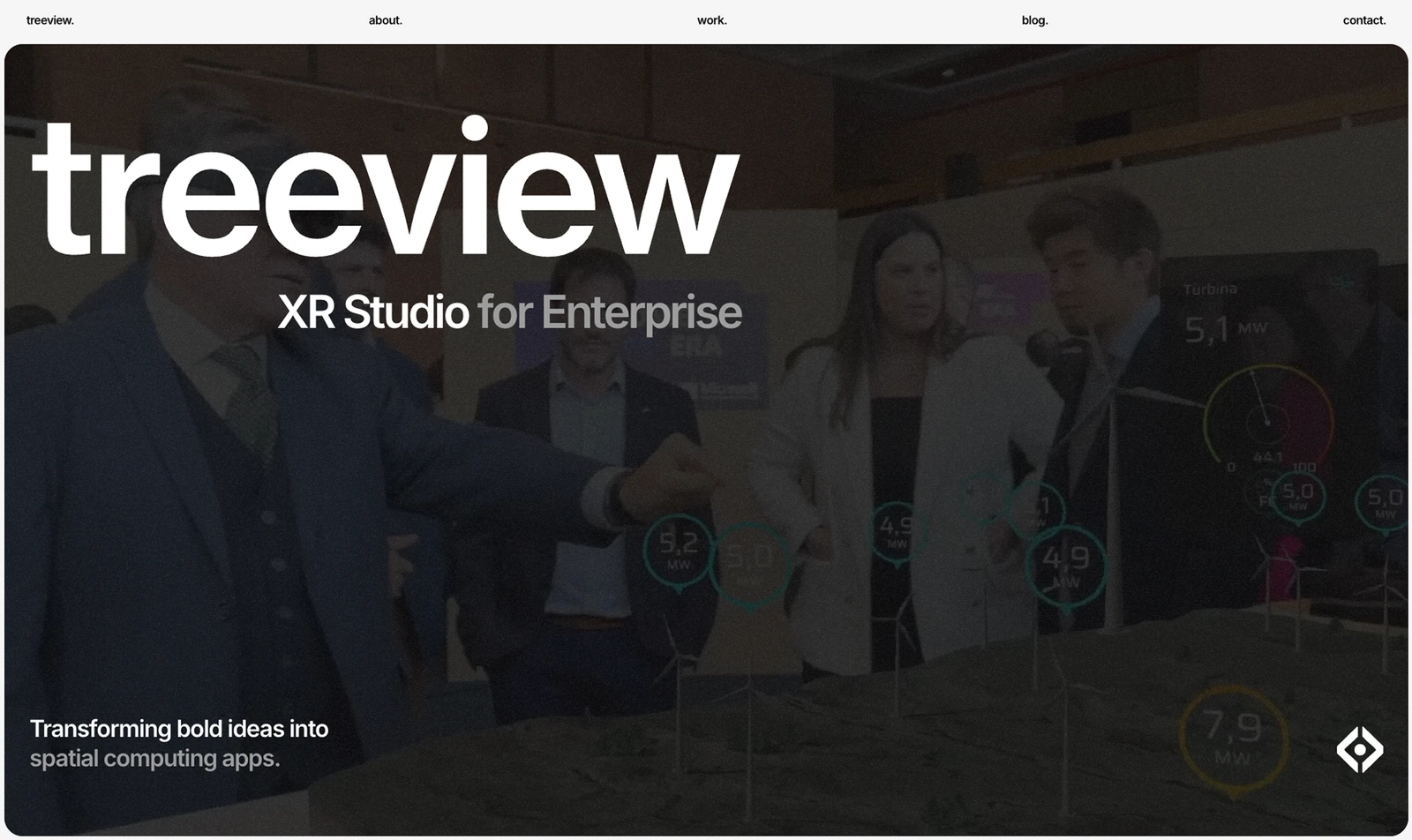
Treeview is an XR studio building custom virtual reality, augmented reality, Mixed Reality and Smart Glasses applications to order. Its named clients are Microsoft, Meta, Medtronic, Toyota, Ford, ULTA Beauty, Daiichi Sankyo, Transfr, the University of Alberta and the University of Adelaide.
Where a custom studio fits in this category is precise. The published product lines below cover the standard scenarios well, and reproducing them bespoke would be wasteful. What no product covers is an emergency at your site: your plant layout, your muster points, your access constraints, your specific hazard. For an operator whose highest-consequence scenario is an incident in a building only they occupy, a generic evacuation module teaches evacuation and not the evacuation that matters.
Its published industrial reference, an AI-enabled digital twin developed with Microsoft for a multi-billion dollar green hydrogen renewable energy project, is relevant here for the geometry rather than the scenario. Accurate site models are the foundation of site-specific emergency training, and a studio that has built one to operational standards has done the expensive part.
Full ownership of IP, source code and assets transfers to the client. Emergency scenarios change after every incident, drill and site modification, and content that cannot be revised internally becomes wrong in exactly the situations where being wrong matters most.
Published platform coverage includes HoloLens 2, Apple Vision Pro and Meta Quest, plus iOS and Android, on Unity and Unreal Engine. Founded in 2016 by chief executive Horacio Torrendell, it works from Montevideo, Uruguay and New York City. Team size and rates are not published, it supplies no simulator hardware, and it publishes no assessment framework or after-action review tooling, so measurement would need building. Best for site-specific emergency scenarios where no product exists.
2. ForgeFX Simulations
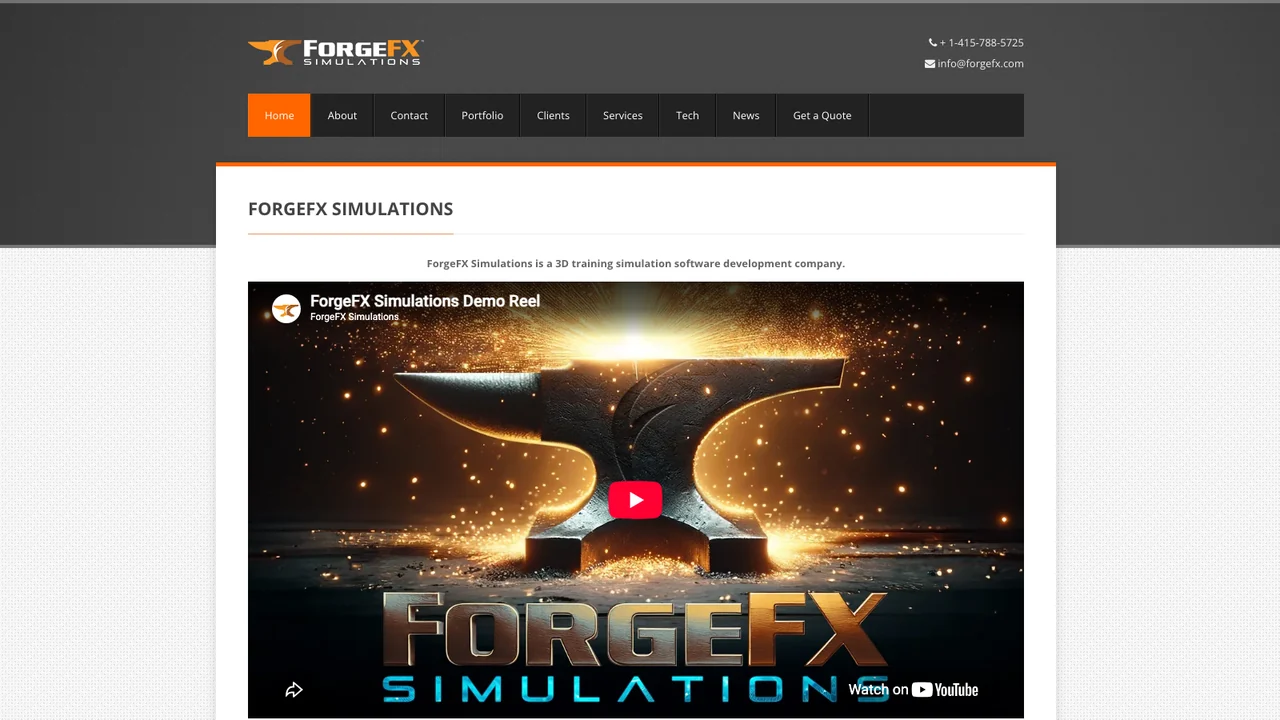
ForgeFX Simulations has built custom 3D training simulation software and custom virtual and augmented reality applications since 2002, from the San Francisco Bay Area, and its relevance here comes from two specific published lines of work rather than a general claim.
The first is CBRN detection, which appears among its stated industries. Chemical, biological, radiological and nuclear response is among the hardest training problems in this field: the hazard is invisible, detection depends on instruments a responder must interpret correctly under pressure, and realistic live rehearsal is impossible. That combination is the strongest argument for simulation anywhere in emergency training, and a supplier with published work in it has solved instrument behavior, contamination modeling and procedure under stress.
The second is Pierce Manufacturing among its named clients, which builds fire apparatus. Work for an emergency apparatus manufacturer implies simulations of equipment that firefighters actually operate, validated by the company that engineers it.
Its wider named clients are Komatsu, Caterpillar, Vermeer Corporation, JLG Industries, Joy Global, StrataTech Education Group, MRIGlobal, General Electric Healthcare, Pearson Education, Adobe, Farmers Insurance, Zoetis, SAK Construction, WMATA and Global Ground Support. Its published projects include a horizontal directional drill simulator, OcuWeld, an aircraft deicing simulator, HazOps training, CyberLab, Virtual Walking the Pens and a heavy rail operator training simulator.
Published device targets span VR headsets and stereoscopic 3D displays, augmented reality spatial computing devices and traditional desktop platforms. Team size, headquarters address, rates and ownership terms are not published, and it publishes no assessment framework. Best for technically demanding emergency scenarios, particularly those involving instruments and invisible hazards.
3. Immersive Factory
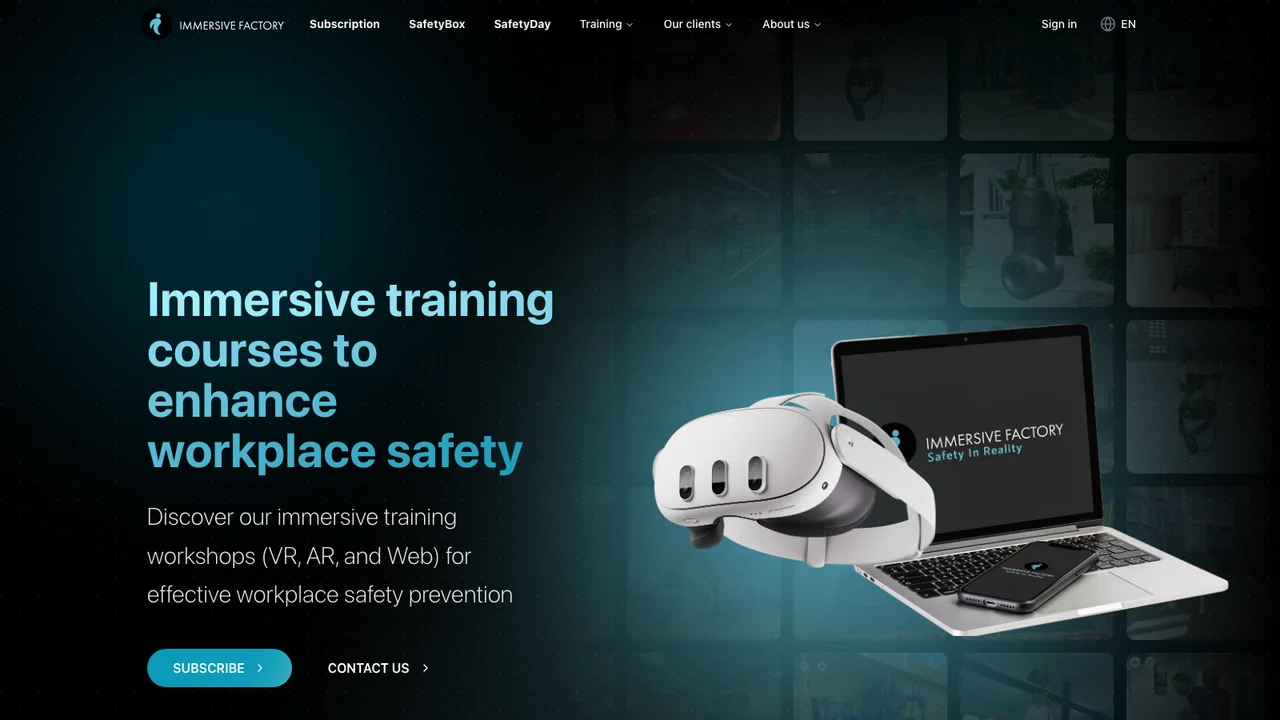
Immersive Factory sells subscription-based immersive training in VR, AR and web formats built around workplace safety prevention. Its place on an emergency response list is the industrial preparedness end rather than the blue-light services end, and that distinction should be clear before shortlisting.
Its client list is the strongest here for high-consequence industrial sites and includes Orano in nuclear fuel, EDF, SUEZ, Veolia, Vallourec, Saint-Gobain, Imerys, Spie, Colas, FM Logistique, DS Smith, Givaudan, Coca-Cola and Merck. Orano and EDF are the significant names, since nuclear operators run some of the most demanding emergency preparedness regimes in industry, and a supplier working inside them has met a standard most vendors never encounter.
The subscription and catalog model addresses the part of emergency preparedness that other suppliers here do not reach: everyone on site. In a real incident the population that has to respond correctly includes contractors, visitors and office staff, not only a trained emergency team. Those people need short, repeatable, device-flexible content, and a commissioned simulation priced per project does not serve them.
Device support is published across HTC Vive Focus 3, Meta Quest 3 and Pico Neo 4 Ultra headsets, plus PC, Mac, tablet and mobile, with LMS and SCORM compatibility for web-delivered courses. The record-keeping point matters in this category because emergency preparedness is examined after incidents, and evidence of who was trained and when needs to sit in the organization's own systems.
Its published catalog is prevention and safety rather than tactical or command training, and it publishes no assessment framework beyond completion, no headquarters address, founding year, team size or rates. Best for site-wide emergency preparedness across a large mixed population.
4. Design Interactive
Design Interactive is a research-led company founded in 1998 that optimizes and enhances human performance through technology, research and digital transformation, and it is the entry here most concerned with the question this category actually turns on: did performance improve.
Its published solutions are Human Systems Integration, Extended Reality, Digital Twins and Automated Performance Assessment. Human Systems Integration is a defense discipline, concerned with designing systems around human capability and limitation, and its presence signals a company whose foundations are in how people perform under operational demand rather than in content production.
Automated performance assessment is the capability that matters most here. Emergency and defense training exists to change behavior under stress, and that claim can only be supported by measurement. A system that evaluates how someone performed, rather than recording that they completed a scenario, produces the evidence a program needs to survive scrutiny and to identify who requires further training before an incident rather than after.
Its published products are XRMentor, BEAT, IMITATE and Nexora. XRMentor is described as one platform with multiple modalities, including ClassroomXR for instructor-led immersive lessons, ProceduresXR for self-guided AR-enhanced workflows, LessonsXR as a library of ready-made modules, and a Pre-Trip Trainer for drivers. Its published emphasis on mission-relevant research, data science and user-centered design, together with listed contract vehicles, indicates United States government and defense contracting as a primary channel, which shortens procurement considerably for public sector buyers.
It publishes no named clients, headquarters address, team size or rates on the pages reviewed, and its published product line is broader training rather than tactical emergency scenarios specifically. Best for programs that must evidence performance improvement rather than delivery.
5. MILO Range (FAAC)
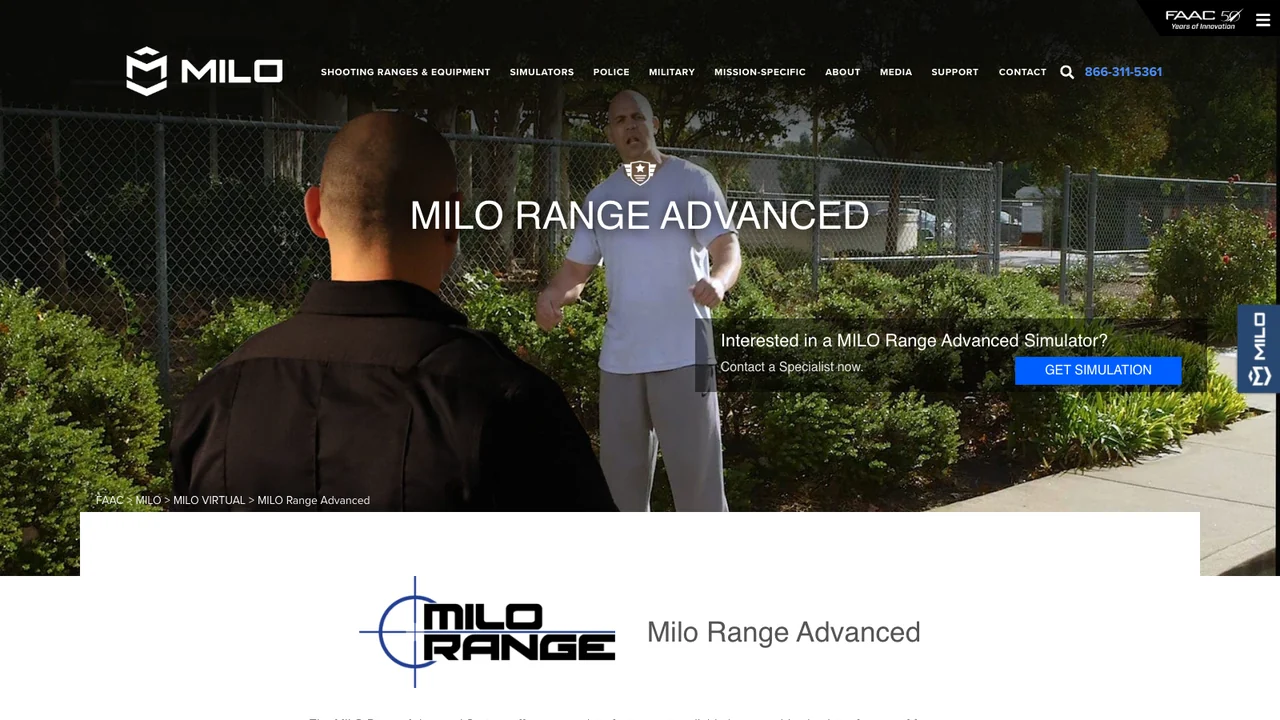
MILO Range is a product line rather than a company, and the company behind it is FAAC. Stating that plainly matters for procurement, because a buyer contracts with FAAC and should evaluate the wider portfolio rather than a single product page.
MILO Range Advanced is published as a use of force training simulator, and FAAC's public safety line is the most complete in this list for emergency services. Its published products cover police driver and pursuit simulators, use of force simulators, active shooter simulation training, critical incident training, crisis management, de-escalation, duty-to-intervene training, firearm training, implicit bias training, in-custody and corrections simulation, judgment skills training and live fire training, alongside fire driving simulators, fire pump operator simulators, fire incident command simulators, firefighting foam simulators, wildland firefighting simulation, EMS ambulance driving and EMS medical response simulators.
Its military line covers air warfare simulation, SimBuilder, SimController, ZAP missile launch envelope, air combat training, integrated air defense systems, air refueling and boom operation training, operator driver training, combat convoy training, counter-IED training and route clearance.
The published breadth is the point. An emergency services organization typically needs driving, incident command and judgment training, and buying those from three suppliers produces three systems, three assessment approaches and three maintenance contracts. A single portfolio covering the range is a genuine operational advantage even where an individual product is not the best available.
The categories also indicate where this sits: judgment, de-escalation and duty-to-intervene are training in decisions under pressure with legal consequences, which is exactly the target this category is about. Two caveats. These are largely screen and projection based simulator systems rather than headset VR, so a buyer expecting a VR deliverable should confirm the format. And it is equipment, carrying installation, space, calibration and maintenance costs. It publishes no rates on the pages reviewed. Best for police, fire and EMS organizations wanting judgment and driving training from one portfolio.
What emergency and defense simulation has to account for
Four things determine whether this training changes behavior rather than documenting attendance.
The first is whether failure is possible. Ask what happens when a trainee does the wrong thing and how the consequence is represented. A scenario that waits for the correct action rehearses recognition, not response, and response is the whole objective. This is the single most useful question to ask in a demonstration.
The second is assessment, and it should be designed before the content. Decide what is measured, against what standard, who reviews it, and where the record goes. Design Interactive publishes automated performance assessment. For the others it is a scoping question, and in use of force training particularly the record may be examined in an inquiry.
The third is the population. Tactical teams, incident commanders and general site staff need different things, and the largest group is usually the least trained. Immersive Factory's catalog model reaches breadth; bespoke and simulator-based systems reach depth. Most organizations need both and budget for one.
The fourth is currency. Emergency procedures change after incidents, reorganizations and equipment changes, and content that teaches a superseded protocol is actively dangerous rather than merely stale. Establish the revision path, who owns it, and what a change costs. Treeview publishes full transfer of IP, source code and assets; the others do not publish ownership terms.
How to choose between these emergency and defense simulation companies
Match the supplier to the population and the scenario type. Police, fire and EMS needing judgment, use of force and driving training point to FAAC and the MILO Range line. Industrial sites needing preparedness across everyone on site point to Immersive Factory. Technically demanding scenarios involving instruments or invisible hazards point to ForgeFX, whose CBRN work is the relevant published evidence. Programs that must prove performance improvement point to Design Interactive. An emergency specific to your own facility points to Treeview, with the source transferring to you.
Then confirm the format you are actually buying. FAAC's public safety products are largely simulator systems rather than headset VR, and Immersive Factory's catalog is prevention rather than tactical. Neither is a criticism, but both are easy to misread from a shortlist, and a mismatch here is expensive.
Insist on seeing failure in the evaluation. Ask the supplier to let you do the wrong thing deliberately and watch what the system does. Stress inoculation requires consequence, and a simulation without it will not produce the adaptation the program was funded to achieve.
Finally, settle the assessment record before content is built. In this category the record is frequently the deliverable, and it is the part that cannot be retrofitted once a program is running.
Related reading. BestInXR's VR simulation guide covers fidelity, validation and what simulation actually means. companies for VR hazardous environment and safety training covers high-consequence environments, and VR companies for workplace safety training covers the wider safety case. For bespoke work see companies for custom VR simulation development, and for procurement, selecting XR developers for enterprise deployment.
Related reading. BestInXR's firefighter training list covers the fire service as a named vertical, where the suppliers sell hose and thermal equipment rather than scenario software.
Frequently Asked Questions (FAQ)
1. What makes emergency training different from other VR training?
The target is performance under acute stress rather than knowledge. Trainees usually already know the correct action, and the question is whether they execute it while frightened and short of time. That makes time pressure, ambiguity and the possibility of failure more important than visual realism, which is the opposite of how most demonstrations are built.
2. Which of these publish defense or emergency services work?
FAAC publishes an extensive police, fire, EMS and military simulator line including MILO Range for use of force. ForgeFX lists CBRN detection among its industries and names Pierce Manufacturing, which builds fire apparatus. Design Interactive publishes Human Systems Integration and holds contract vehicles. Immersive Factory names Orano and EDF. Treeview names enterprise clients across its portfolio, including Microsoft, Medtronic and Toyota, rather than sector-specific accounts.
3. Is MILO Range a company?
No, it is a product line from FAAC, which publishes a wider portfolio spanning police driving and pursuit, use of force, active shooter, de-escalation, incident command, fire and EMS simulators, and military air and land simulation. Contract and evaluate with FAAC rather than treating the product page as the supplier.
4. Do these deliver headset VR or simulator systems?
Both, and the difference matters. FAAC's public safety products are largely screen and projection based simulator systems. Immersive Factory publishes headsets alongside PC, Mac, tablet and mobile. ForgeFX publishes headsets, stereoscopic displays and desktop. Confirm the format explicitly, since a shortlist rarely makes it obvious.
5. How is performance assessed rather than attendance?
Through assessment designed into the scenario before it is built. Design Interactive publishes automated performance assessment as a named capability. The others do not publish assessment frameworks on the pages reviewed, so what is measured, against what standard, and where the record goes are questions for the specification.
6. What does emergency and defense simulation cost?
None of the five publishes rates, so no figure is recorded here. Cost is driven by whether simulator hardware is involved, how many scenarios are in scope, whether assessment is built in, and how many people must be reached. Scenario revision after procedural changes is the line most often missing from a first budget.