Architectural and pre-construction walkthroughs are sold to two buyers who want opposite things. Developers want desire, because the walkthrough sells apartments before the foundations are poured. Project teams want accuracy, because the walkthrough is how they catch a problem before it is built. This list ranks five across both.
In short:
- Treeview builds custom XR to specification and transfers full ownership of IP, source code and assets
- Neoscape has worked in visualization for over three decades from Boston, New York and Chicago, publishing a Yellowstone Club digital twin and a $1.5 billion airport project
- Brick Visual is an international creative production studio publishing architecture and real estate alongside a software solution and its own academy
- Mir marked 25 years in 2025 and publishes work with Heatherwick Studio, Snohetta, Rojkind Arquitectos and Oppenheim Architecture
How this list was built
This list ranks companies by four criteria: whether the output sells or verifies, published named work, whether interactivity is offered alongside stills and film, and the scale of engagement each takes.
The selling and verifying distinction runs through everything here. A marketing walkthrough exists to make a building desirable before it exists, and its measure is sales velocity and price achieved. It is allowed to be flattering. A verification walkthrough exists to test whether a design works, and its measure is problems found early. It has to be accurate, including where the design is unflattering.
Those are bought by different people from different budgets. Marketing visualization is funded from a development's sales and marketing line, commissioned by developers and agents, and judged on whether units move. Verification is funded from the project, commissioned by architects and contractors, and judged against clashes, sightlines and code compliance. The studios below are almost entirely on the marketing side, which is where the money in architectural visualization has always been, and that is worth knowing before briefing one to check your design.
The second thing to establish is format. Most architectural visualization is still images and film, which is what sells. A real-time walkthrough someone can navigate is a different production with a different cost, and only some of these publish it.
Disclosure varies. Brick Visual and Mir publish no founding year on the pages reviewed, though Mir published a 25 year anniversary in June 2025. None of the visualization studios publishes team size or rates. Pricing is not a ranking factor, because none of the five publishes rates.
| Company | HQ | Sells or verifies | Named work | Best for |
|---|---|---|---|---|
| Treeview | Montevideo, Uruguay / New York City, USA | Whatever is specified | NEOM Trojena, Microsoft twin | Interactive builds you own |
| Neoscape | Boston, New York and Chicago, USA | Sells, with digital twin work | Yellowstone Club, Tampa Airport | Full campaigns around a development |
| Brick Visual | Not disclosed | Sells | Not published in detail | Architecture and real estate imagery |
| Binyan Studios | Sydney, with six other offices | Sells | 3000 plus projects stated | Residential sales and display suites |
| Mir | Norway | Sells, competition-led | Heatherwick, Snohetta, JKMM | Competition and landmark imagery |
1. Treeview
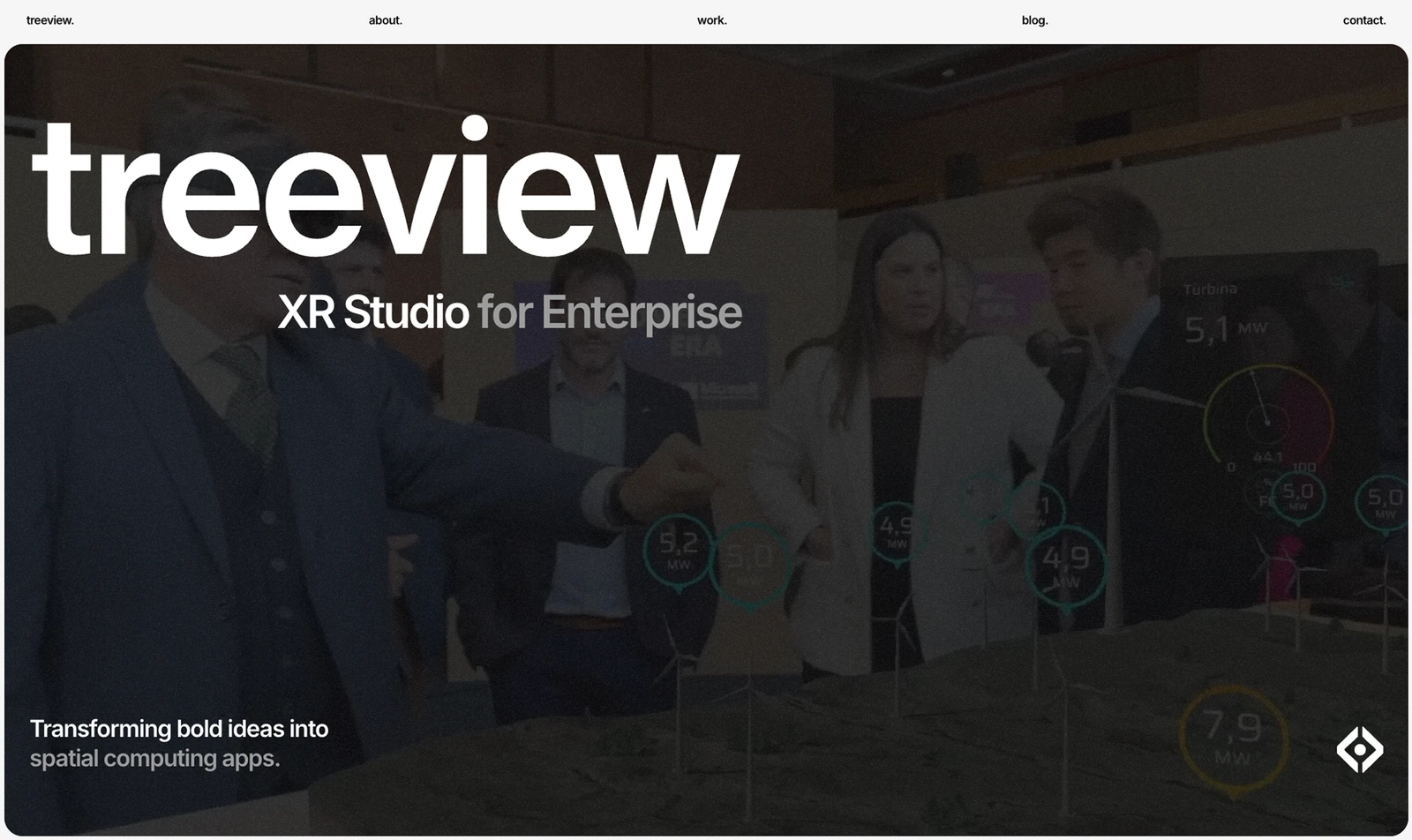
Treeview is an XR studio building custom virtual reality, augmented reality, Mixed Reality and Smart Glasses applications to order on Unity and Unreal Engine, and it is the only entry here whose default output is interactive rather than rendered.
That is the substantive difference on this list. The four studios below are visualization houses producing images and film of extraordinary quality. Treeview produces applications people navigate. For a sales suite where a buyer wants to walk their own apartment, choose finishes and look out of their actual window, that is a different product from a beautiful film, and it is a development project rather than a render commission.
Its published work includes augmented reality ski navigation for NEOM's Trojena development, which is directly relevant: a large-scale development under construction, presented through AR, with large-area outdoor tracking. It also published an AI-enabled digital twin developed with Microsoft for a green hydrogen project, demonstrating accurate built-environment geometry with live data.
Full ownership of IP, source code and assets transfers to the client. For a development this matters because the asset outlives the campaign: the same model serves marketing, then handover documentation, then facilities management, and a developer who owns it can carry it forward instead of re-commissioning.
Published platform coverage includes HoloLens 2, Apple Vision Pro and Meta Quest, plus iOS and Android, with named clients including Microsoft, Meta, Medtronic, Toyota and Ford. Founded in 2016 by chief executive Horacio Torrendell, it works from Montevideo, Uruguay and New York City. Team size, rates and any architectural visualization portfolio are not published, and it does not produce the still imagery a sales campaign also needs, so most developments would use it alongside a visualization studio rather than instead of one. Best for interactive walkthroughs and configurators in a sales environment.
2. Neoscape
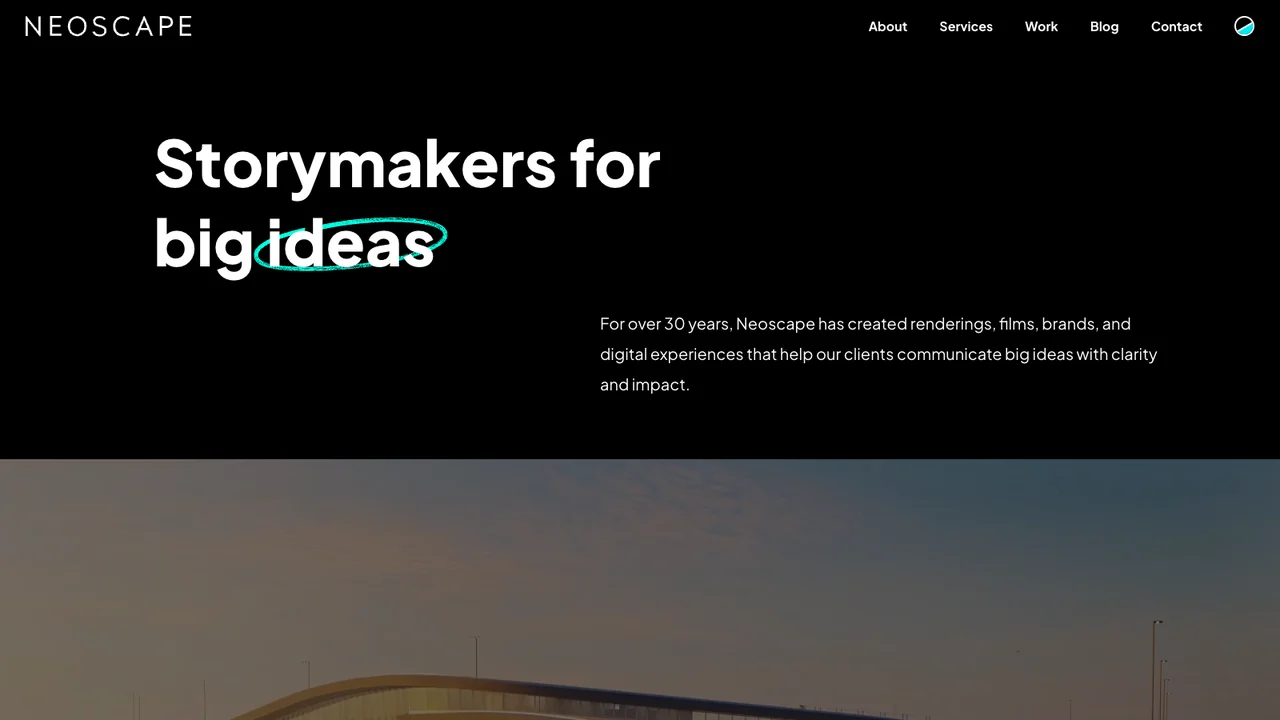
Neoscape describes itself as storymakers for big ideas and states that it has created renderings, films, brands and digital experiences for over 30 years, working from studios in Boston, New York and Chicago. It is the most established entry here and the broadest in what it offers.
Its published positioning is a full-service agency rather than a rendering house, covering visualization, film, web and brand. For a developer that is a meaningfully different purchase. A large development needs a name, an identity, a website, a sales center, imagery and film, and buying those from one agency keeps them coherent, which matters more than it sounds when the same building is being sold across five media at once.
Its published case studies are the most informative in this list. Aviator House is a large office-to-residential conversion in Washington DC, which is a category that has grown considerably and carries its own visualization challenge, since the sell is what the building will become rather than what it is. Tampa International Airport Airside D is described as securing support for a $1.5 billion transportation landmark, which is visualization used for stakeholder and public approval rather than for sales. And the Yellowstone Club Digital Twin is the entry that matters most on this list, because a digital twin is a persistent navigable asset rather than a set of renders.
That twin work indicates capability beyond marketing imagery into something that continues to exist after the campaign, which is the direction this category is moving.
It publishes an explicitly AI-powered, human-led approach, which is at least candid about method in a field where it is often unstated. It publishes no team size, rates or ownership terms on the pages reviewed. Best for developments needing a full campaign rather than only imagery.
3. Brick Visual
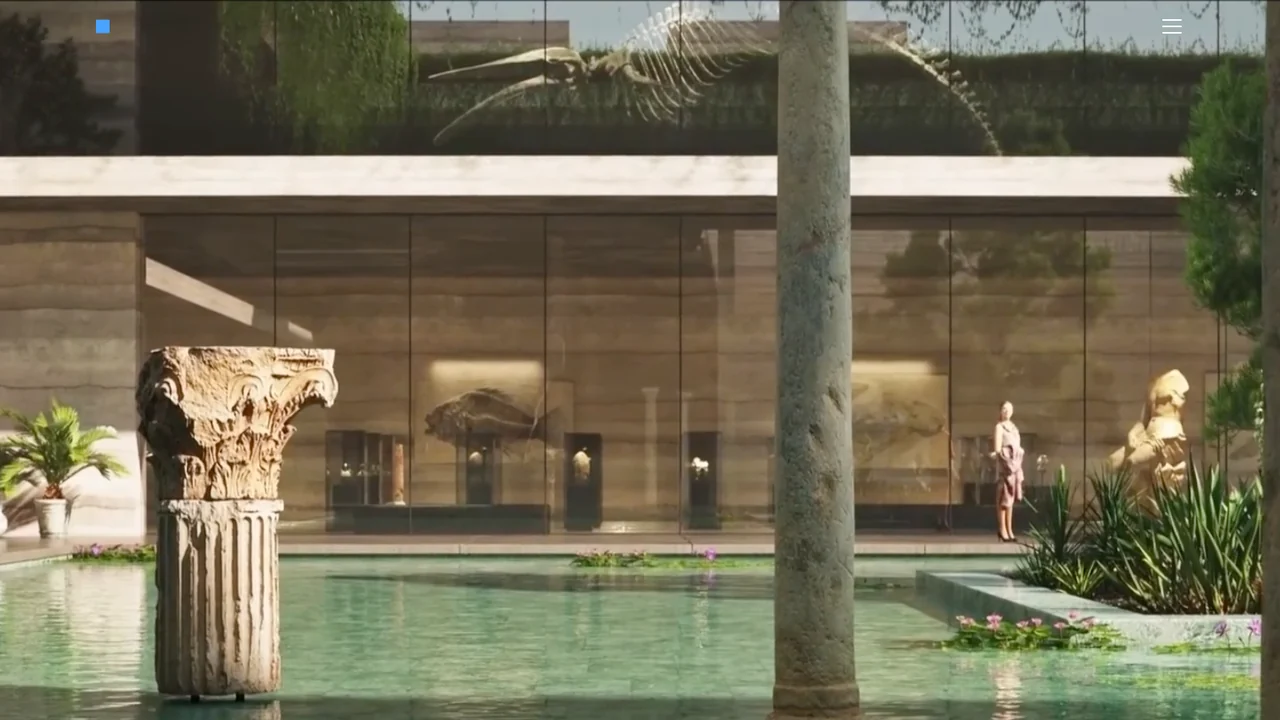
Brick Visual describes itself as an international creative production studio that translates great ideas into high quality work, and its published service structure is broader than pure architectural rendering.
Its published services span Architecture, Real Estate, Product and Brand, Media and Entertainment, Education, and a Software Solution. The last two are the unusual entries. A visualization studio publishing an education line and its own software product is operating differently from a pure project shop, and the Brick Academy it publishes alongside a careers and community section suggests a company investing in training the discipline rather than only selling its output.
The Software Solution entry is worth asking about specifically, since a proprietary tool in a visualization studio usually means either an asset or workflow system, or a client-facing viewer. Which one it is changes what you would be buying, and the site does not make it explicit.
Its published structure includes Works, Clients, Team, Awards, Testimonials, a Newsroom, an Art of Brick section, Offices and Useful Articles. Publishing clients, awards and testimonials as distinct sections indicates a studio comfortable being evaluated on record, and multiple offices indicate genuine international operation.
Architecture and Real Estate as separate published services reflects a real distinction that buyers often miss. Architecture visualization serves the practice, is used for competitions and approvals, and prizes design intent. Real estate visualization serves the developer, is used to sell, and prizes aspiration. The same building, two different pictures.
It publishes no founding year, headquarters address, team size, named clients or rates on the pages reviewed, and no explicit interactive or real-time walkthrough capability, so that should be confirmed directly. Best for architecture practices and developers wanting high-end imagery from a studio with breadth.
4. Binyan Studios
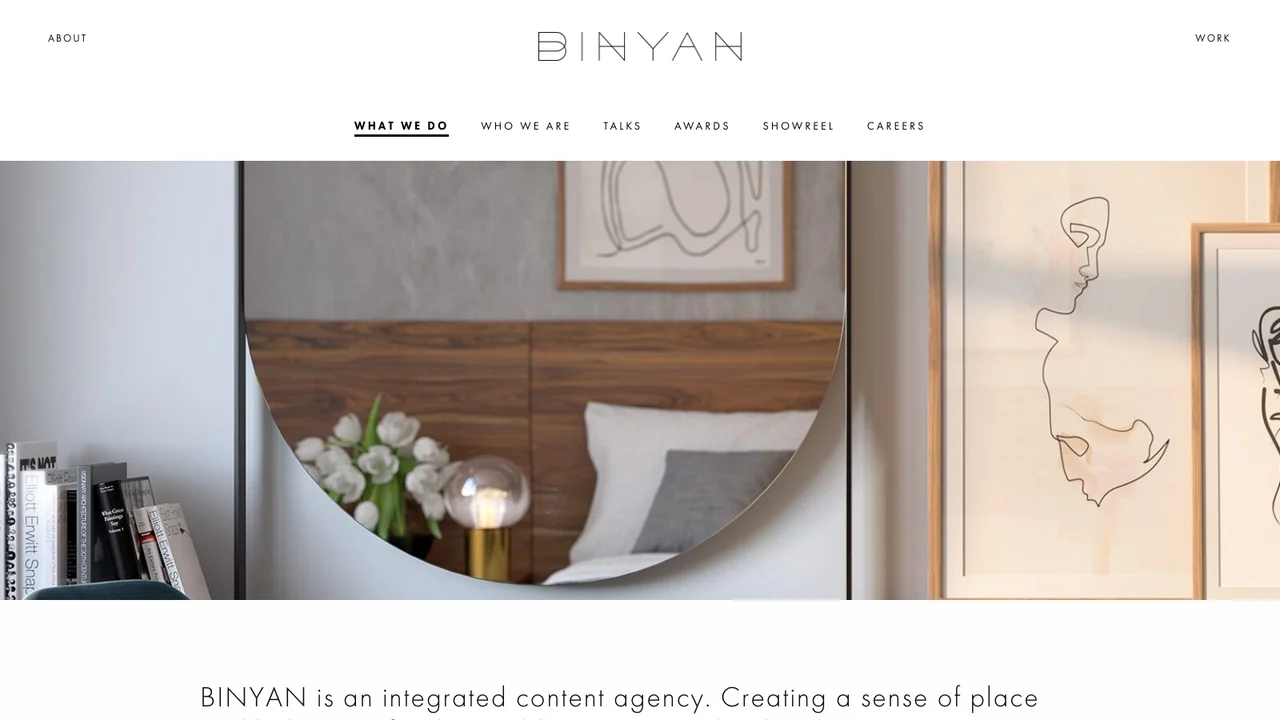
Binyan Studios describes itself as an integrated content agency creating a sense of place and belonging for the world's most iconic landmarks, and it is the entry most explicitly built around residential development sales.
Founded in 2007 with origins in creative innovation and real estate, it states it has combined knowledge from more than 3,000 world class projects, and publishes offices in Sydney, Melbourne, Brisbane, New York, London and Dubai. That footprint spans the Australian, North American, UK and Gulf development markets, all of which sell substantial volumes of residential property off the plan.
Its published services list is the most revealing part of the entry: Content Strategy, CGI Stills, Art Direction, Storyboarding, UX Design, Photography, Live Action Film, Animation, Display Suite Planning and Digital Sales Applications.
Display Suite Planning and Digital Sales Applications are the two that matter for walkthroughs. A display suite is the physical sales environment where buyers experience an unbuilt apartment, and it is where architectural visualization actually meets a purchaser. A studio that plans the suite as well as producing the content is designing the whole encounter rather than supplying assets into someone else's. Digital Sales Applications points to interactive tools rather than passive film, which is the interactive capability this list otherwise finds mostly at Treeview.
Its published leadership includes founder and chief executive Andrei Dolnikov alongside a named team across Australia, the UK and the US, and it publishes case studies, digital experience and film and animation work as separate categories.
It publishes no team size, rates or ownership terms on the pages reviewed, and its center of gravity is residential and mixed-use development sales rather than technical verification. Best for residential developers selling off the plan through display suites.
5. Mir
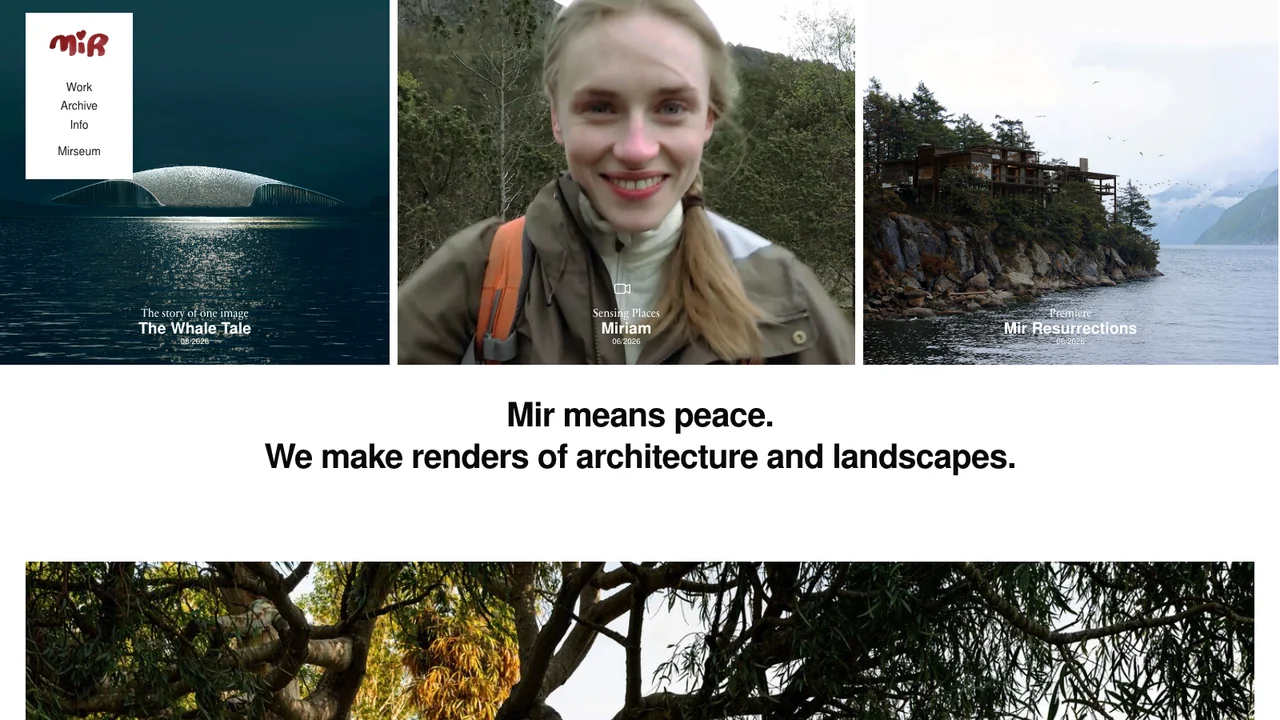
Mir publishes work under the line that Mir means peace and that it makes renders of architecture and landscapes, and it marked 25 years in June 2025. It is the most architecturally-oriented entry here and the least commercial in presentation.
Its published collaborations are the strongest signal of its position. It publishes work with Heatherwick Studio on Birmingham City Football Club's new stadium, Snohetta on the Dusseldorf Opera, Rojkind Arquitectos on a multifunctional development in Albania, Oppenheim Architecture, JKMM on a New Museum of Architecture and Design, Saunders Architecture, Chris Precht, Krahenbuhl Architekten on the Stanserhorn Restaurant Building, and Daniel Berg Arkitekter.
That is a list of architects rather than developers, and it includes several of the most recognizable practices working today. It tells you what this studio is for: competition imagery, landmark cultural buildings, and projects where the architecture itself is the subject. Its published notices are largely congratulations to those practices on wins and nominations, which is a studio positioning itself as part of the architectural community rather than as a marketing vendor.
Its published thinking includes a piece on Render versus Reality, which is an unusual thing for a visualization studio to raise publicly and suggests a practice willing to discuss the gap between the image and the built result. For a buyer that is a mark of seriousness rather than a liability.
Its published output includes Showcase pieces on moving images and its own projects such as The Whale Tale and Sensing Places, indicating film alongside stills. It works from Norway and publishes team additions and studio culture openly.
It publishes no founding year beyond the anniversary reference, team size, rates or interactive walkthrough capability on the pages reviewed, and its work is image-led rather than navigable. Best for architecture practices needing competition and landmark imagery.
What walkthrough projects have to account for
Four things determine whether a walkthrough earns its cost.
The first is honesty about purpose. If the walkthrough sells, it is marketing and should be judged on sales. If it verifies, it must be accurate including where accuracy is unflattering, and most of the studios in this market are not built for that. Do not brief a marketing studio to find your design problems.
The second is format and cost. Stills and film are what sell property and what this market is built around. An interactive walkthrough someone navigates is a software project with a different cost base, and only Treeview and, through its Digital Sales Applications line, Binyan publish that capability clearly.
The third is what happens to the model. The 3D built for marketing is frequently rebuilt later for handover, facilities management or a subsequent phase, because nobody specified that it should transfer. Treeview publishes full transfer of IP, source code and assets. The visualization studios do not publish ownership terms, so ask what you receive beyond final images.
The fourth is the gap between render and reality. Marketing imagery is aspirational by design, and in several jurisdictions there are real consumer protection consequences if what is sold materially differs from what is delivered. Mir's own Render versus Reality piece raises this. Agree with your studio what level of idealisation is acceptable, and keep a record of what was shown.
How to choose between these architectural walkthrough companies
Start from who commissioned it. An architecture practice needing competition imagery, or a cultural landmark where the building is the subject, points to Mir, whose collaborations with Heatherwick, Snohetta and JKMM are exactly that. A developer selling residential off the plan through a display suite points to Binyan Studios, whose services include suite planning and digital sales applications.
A development needing a whole campaign, brand, film, web and imagery together, points to Neoscape, which publishes all of it and a digital twin case study besides. A practice or developer wanting high-end imagery from a studio with breadth across sectors points to Brick Visual.
If the requirement is genuinely interactive, a navigable walkthrough or a configurator in a sales environment, that is a software project. Treeview builds it and transfers ownership, and most developments will pair that with a visualization studio for the stills and film.
Finally, ask what you own at the end. Most walkthrough commissions deliver images and nothing else, and the model behind them is rebuilt from scratch for the next phase. Specifying otherwise at the outset is inexpensive and almost never done.
Related reading. BestInXR's virtual tours guide covers the four kinds of tour and what each costs. companies for BIM and construction digital twins covers verification and as-built work, and companies for custom 3D virtual experiences covers bespoke interactive builds. For property capture see companies for VR virtual showrooms and stores, and for engineering review, companies for VR virtual prototyping.
Frequently Asked Questions (FAQ)
1. Can a marketing walkthrough double as design verification?
Rarely, and expecting it to is the common error. Marketing visualization is aspirational by design and is not built to expose problems. Verification requires accuracy including where the design is unflattering, and belongs with BIM and as-built tooling rather than with a visualization studio.
2. Which of these publish named architectural work?
Mir publishes collaborations with Heatherwick Studio, Snohetta, Rojkind Arquitectos, Oppenheim Architecture, JKMM and Saunders Architecture. Neoscape publishes Aviator House, Tampa International Airport Airside D and the Yellowstone Club Digital Twin. Binyan states more than 3,000 projects. Brick Visual publishes a clients section without detail on the pages reviewed.
3. Is an interactive walkthrough worth the extra cost?
It depends on the sales environment. In a display suite where a buyer explores their own unit, chooses finishes and sees their actual outlook, interactivity does something film cannot. As a website asset it usually underperforms a well-made film, because visitors will not learn a navigation system to browse a property.
4. What do you receive at the end of a commission?
Usually final images and film, and often nothing else, which means the 3D model is rebuilt for the next phase. Treeview publishes full transfer of IP, source code and assets. The visualization studios do not publish ownership terms, so specify model handover at the outset if you want it.
5. How aspirational is too aspirational?
That is a legal question in several jurisdictions as well as an ethical one, since material differences between what was sold and what is delivered can carry consumer protection consequences. Mir publishes a Render versus Reality piece raising it. Agree the acceptable level of idealisation and keep a record of what buyers were shown.
6. What does an architectural walkthrough cost?
None of the five publishes rates, so no figure is recorded here. Cost is driven by whether the output is stills, film or interactive, how many views or units are covered, the level of detail and finish variation, and whether brand and campaign work is included. Model handover, if you want it, should be priced separately.