
Car configurators are the most demanding visualization problem in retail: a combinatorial product, a paint finish that has to look right, an audience on every device imaginable, and a purchase that usually completes somewhere other than the website. This list ranks five on fidelity, streaming architecture and what the configuration connects to.
In short:
- Treeview builds custom XR to specification, names Toyota and Ford among its clients, and transfers full ownership of IP, source code and assets
- ZeroLight publishes OmniStream for cloud streaming and Palette SDK for configurator APIs, and streams VRED, the software vehicle design studios already use
- Emersya publishes a 3D product platform with configurator, viewers, AR and 3D product photography
- Hapticmedia publishes high-end 3D visualization aimed at complex products where clarity and return rates are the stated problem
How this list was built
This list ranks companies by four criteria: rendering fidelity and how it is delivered, how configuration rules and pricing are handled, published automotive or high-value evidence, and what the configuration produces.
Automotive configuration is different from other retail configuration in four ways that all push in the same direction. The combinatorics are enormous, since trim, engine, paint, wheels, interior, packs and options multiply into millions of valid vehicles. Paint is a rendering problem of its own, because metallic and pearlescent finishes behave differently under different light and a flat swatch tells the customer nothing. The audience is universal, so the experience runs on a decade-old phone and a workstation alike. And the configuration rarely completes a sale directly; it produces a specification that continues at a dealer.
That last point reframes what success looks like. A car configurator is a lead generation and specification tool, and its output is a saved build that has to survive the handover to a dealer, a finance calculation and often a factory order. A configurator judged on time-on-page rather than on qualified builds delivered to dealers is being measured on the wrong axis.
The fidelity question is therefore commercial rather than aesthetic. If a customer selects a paint on a dim laptop screen and the delivered car looks different, that is a complaint at handover on a purchase worth tens of thousands.
Disclosure varies. ZeroLight, Emersya, Hapticmedia and Aircards publish no founding year or team size on the pages reviewed, and none publishes a headquarters address. Pricing is not a ranking factor, though Emersya publishes rates.
| Company | HQ | Rendering | Automotive evidence | Best for |
|---|---|---|---|---|
| Treeview | Montevideo, Uruguay / New York City, USA | Unity or Unreal, built to spec | Toyota and Ford as clients | Bespoke builds you own |
| ZeroLight | Not disclosed | Cloud streamed, OmniStream | Streams VRED, automotive tooling | OEM-grade configurators |
| Emersya | France | Web-based real time | Not published | Accessories and lighter vehicles |
| Hapticmedia | Not disclosed | High-end web 3D | Not published | Complex products, clarity focus |
| Aircards | Not disclosed | Project-dependent | Lenovo F1, Nissan adjacent brands | Launch campaigns and events |
1. Treeview
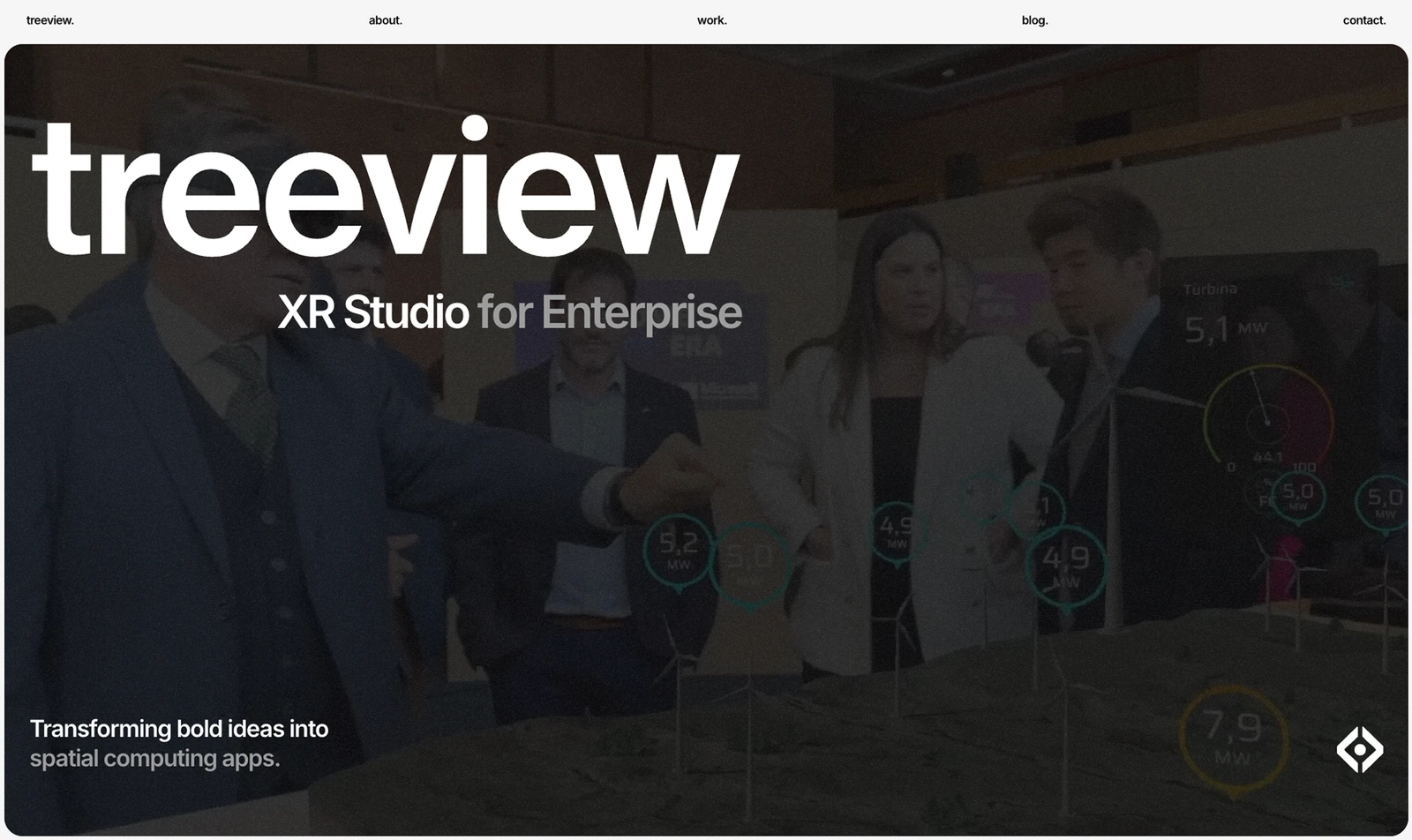
Treeview is an XR studio building custom applications to order on Unity and Unreal Engine, with published coverage across iOS, Android and headset platforms, and its named clients include Toyota and Ford alongside Microsoft, Meta, Medtronic, ULTA Beauty, Daiichi Sankyo, Transfr, the University of Alberta and the University of Adelaide.
Two vehicle manufacturers on a client list is the most direct automotive signal in this group, and it means work delivered into organizations with brand guidelines, engineering data governance and review processes that a configurator has to satisfy. Toyota is among its named clients, and a buyer should ask what that engagement involved rather than assume it was configuration work.
Where a custom build makes sense in automotive is narrower than the volume of custom automotive configurators would suggest. The platforms handle the standard problem well. Custom earns its place for experiences beyond the configurator itself: a showroom installation, a headset experience for an auto show, an AR application that places a vehicle at real scale on a driveway, or a configurator that must run inside a dealer system rather than on the public site.
Full ownership of IP, source code and assets transfers to the client, which for a manufacturer holding valuable vehicle data is close to a requirement. Vehicle models are commercially sensitive and expensive to prepare, and having them inside a vendor's platform under license is a different position from owning them.
Its stated services span strategy and discovery, 3D content creation, development, system integration, testing, deployment and support. Founded in 2016 by chief executive Horacio Torrendell, it works from Montevideo, Uruguay and New York City. Team size, rates, streaming capability and dealer system integrations are not published, and streaming in particular would need solving elsewhere. Best for automotive experiences around the configurator rather than the configurator itself.
2. ZeroLight
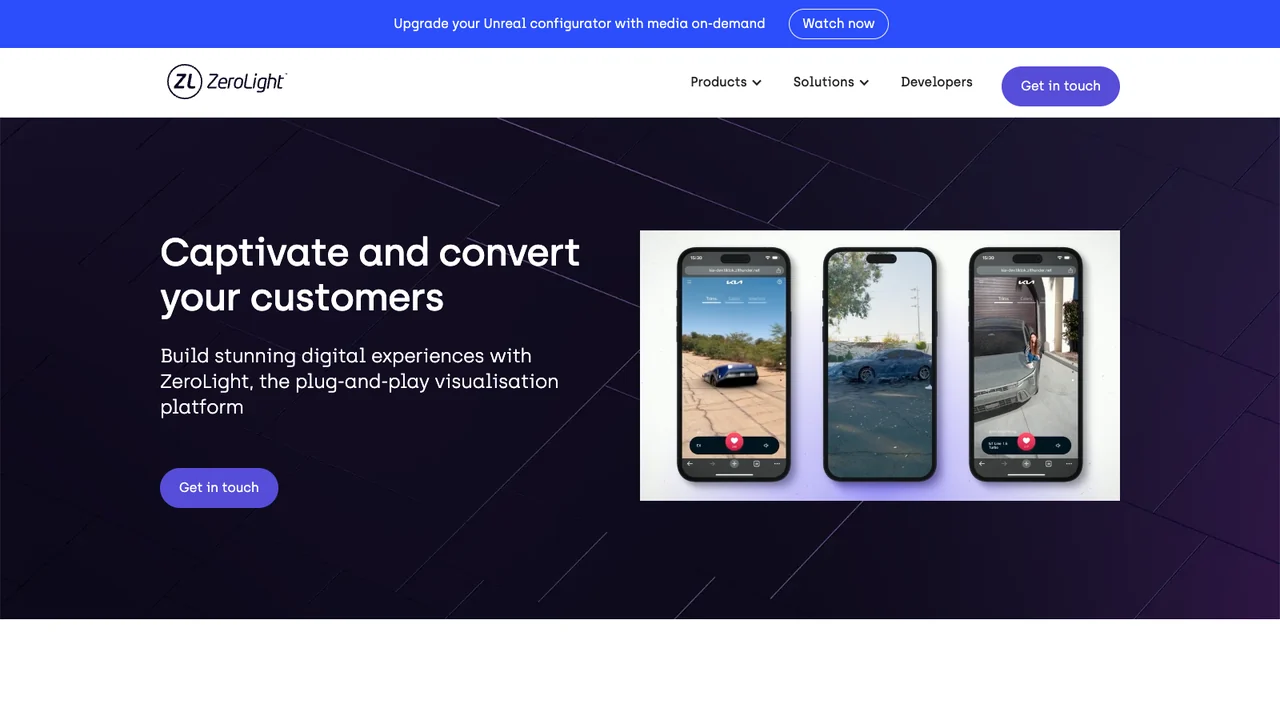
ZeroLight is the entry here built for this exact problem, and its published architecture reads as a direct response to every constraint listed above.
OmniStream streams ZeroLight, Unreal, Unity, VRED and Windows applications from the cloud as an enterprise standard. The VRED support is the detail that signals automotive fluency: VRED is design visualization software used inside vehicle design studios, and streaming it means an OEM can put the same models its designers work with in front of customers rather than commissioning a separate, lower-fidelity web build. That removes an entire asset preparation pipeline and the drift that comes with it.
Streaming also resolves the device problem, which in automotive is severe. Rendering on a server and delivering video means a customer on an old phone sees the same paint, the same reflections and the same interior as one on a workstation. For a product where the finish is a significant part of the purchase and the price is high, having every customer approve an identical image is a commercial safeguard rather than a nicety.
Palette SDK provides plug-and-play APIs to integrate and enrich a cloud-based configurator, published with advanced features and 3D streaming, omnichannel buying journeys, insights and personalisation, and developer resources and support. The omnichannel and insights framing matters because an automotive configuration does not end online; it moves to a dealer, and the build and the intent data need to travel with it.
Its published invitation to upgrade an existing Unreal configurator addresses manufacturers who already have real-time assets and need distribution rather than creation. It publishes no founding year, headquarters address, team size, named clients or rates on the pages reviewed, and per-session streaming costs scale with traffic. Best for manufacturers wanting studio-grade fidelity delivered identically to everyone.
3. Emersya
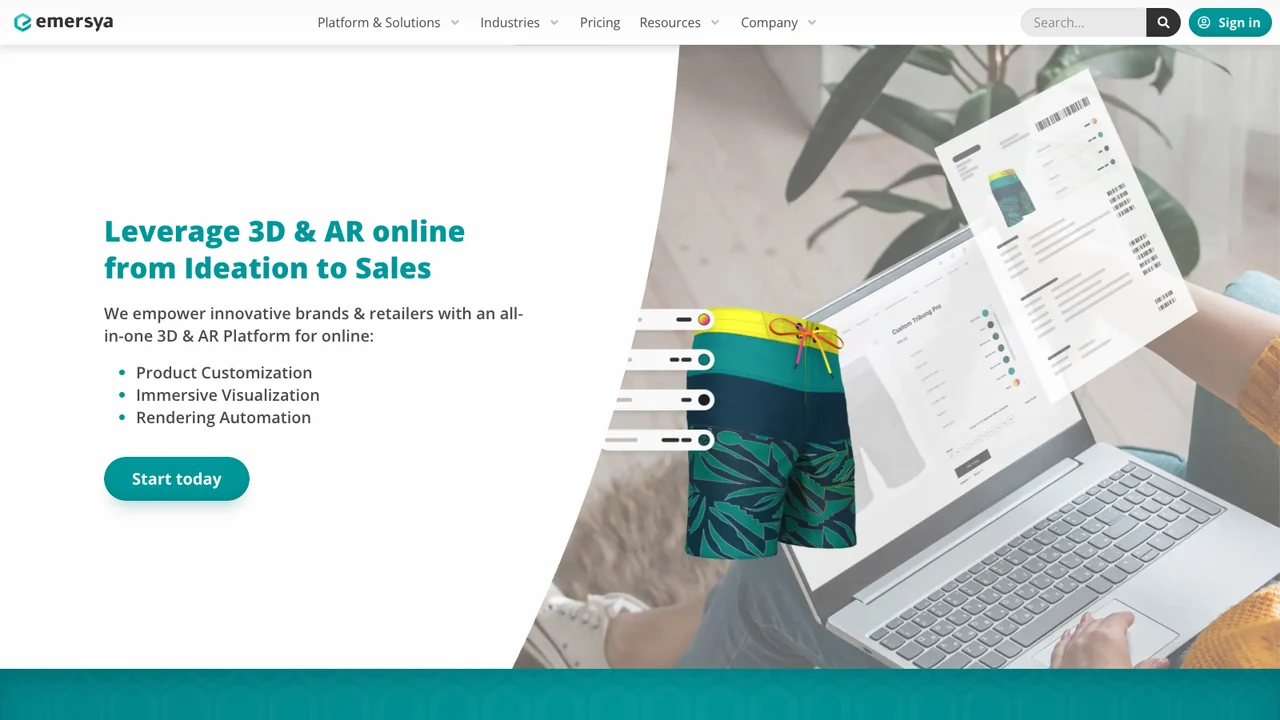
Emersya publishes a 3D and AR platform covering a 3D Product Platform, 3D Product Configurator, 3D Product Viewers, AR Product Visualization, Digital Product Creation and 3D Product Photography, with stated industries of Fashion, Furniture, Sports Equipment, Luxury and Electronics.
Automotive is not among its stated industries, and that should be read plainly rather than glossed. Its published strength is consumer products where visual and material variation drives the sale, and it is a strong platform for that. On an automotive list it fits the adjacent work rather than the flagship vehicle configurator.
That adjacent work is substantial and frequently underserved. Accessories, wheels, roof boxes, interior trim, dealer-fit options and merchandise are all configurable products sold in volume, and none of them justifies a streamed OEM-grade configurator. Two-wheelers, e-bikes, scooters and light commercial conversions sit in the same space: real configurable vehicles at a price point where cloud streaming per session is hard to justify.
3D Product Photography is the feature most likely to matter to a vehicle brand's marketing team regardless of the configurator decision. Generating imagery from existing 3D assets replaces photography for variant shots, and vehicle variants multiply exactly as badly as the configurator implies, which makes rendering a large recurring saving.
It publishes pricing, case studies, testimonies, documentation, embedding guidance and an API, and that documentation depth indicates a product a team can adopt directly rather than only through an agency. It publishes no founding year, headquarters address, team size or automotive clients on the pages reviewed. Best for accessories, light vehicles and the imagery around a car program.
4. Hapticmedia
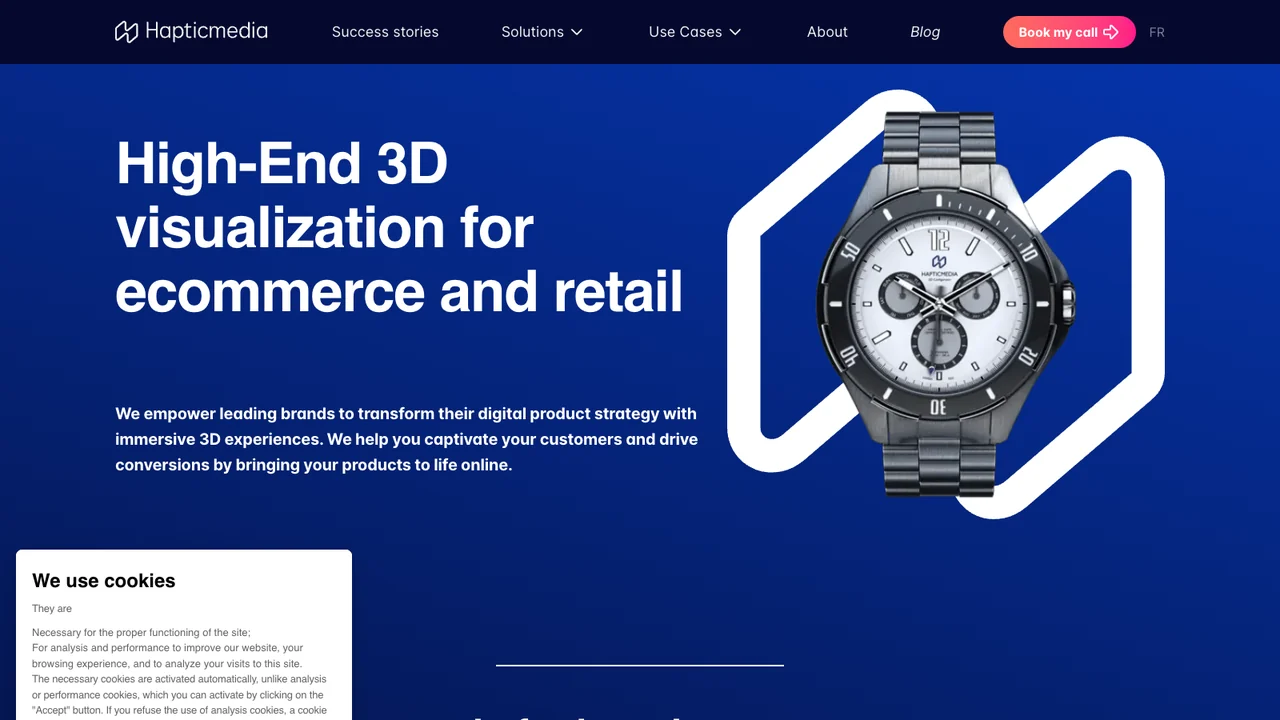
Hapticmedia publishes high-end 3D visualization for ecommerce and retail, stating it empowers leading brands to transform their digital product strategy with immersive 3D experiences that captivate customers and drive conversions.
Its published framing is built around three questions that transfer to automotive better than its stated sectors suggest: whether product pages cost conversions through poor clarity and weak impact, whether high return rates eat margins because customers cannot truly understand products, and whether complex products create purchase anxiety that kills online sales.
Purchase anxiety on complex products is the automotive problem stated precisely. A car is the most complicated and expensive thing most people buy, the configuration decisions are numerous and irreversible, and the anxiety that produces is exactly why online configuration so often ends without a lead. A supplier whose stated purpose is reducing that anxiety is aimed at the right outcome, even if its published sectors are Luxury, Manufacturing and Retail experience rather than automotive specifically.
Luxury is the closest published proxy and a reasonable one. Configuring a watch case, dial, strap and engraving is structurally similar to configuring a vehicle: aesthetic decisions on an expensive item where the customer is approving appearance from a screen and where getting the material rendering wrong produces a disappointed buyer.
It publishes success stories, solutions, use cases and a blog, and its calls to action invite a conversation with a 3D expert or digital strategist, which indicates service-led delivery rather than self-service tooling. It publishes no founding year, headquarters address, team size, named clients, integrations, streaming capability or rates on the pages reviewed, and no automotive work. Best for high-value configuration where clarity and confidence are the measured problem.
5. Aircards
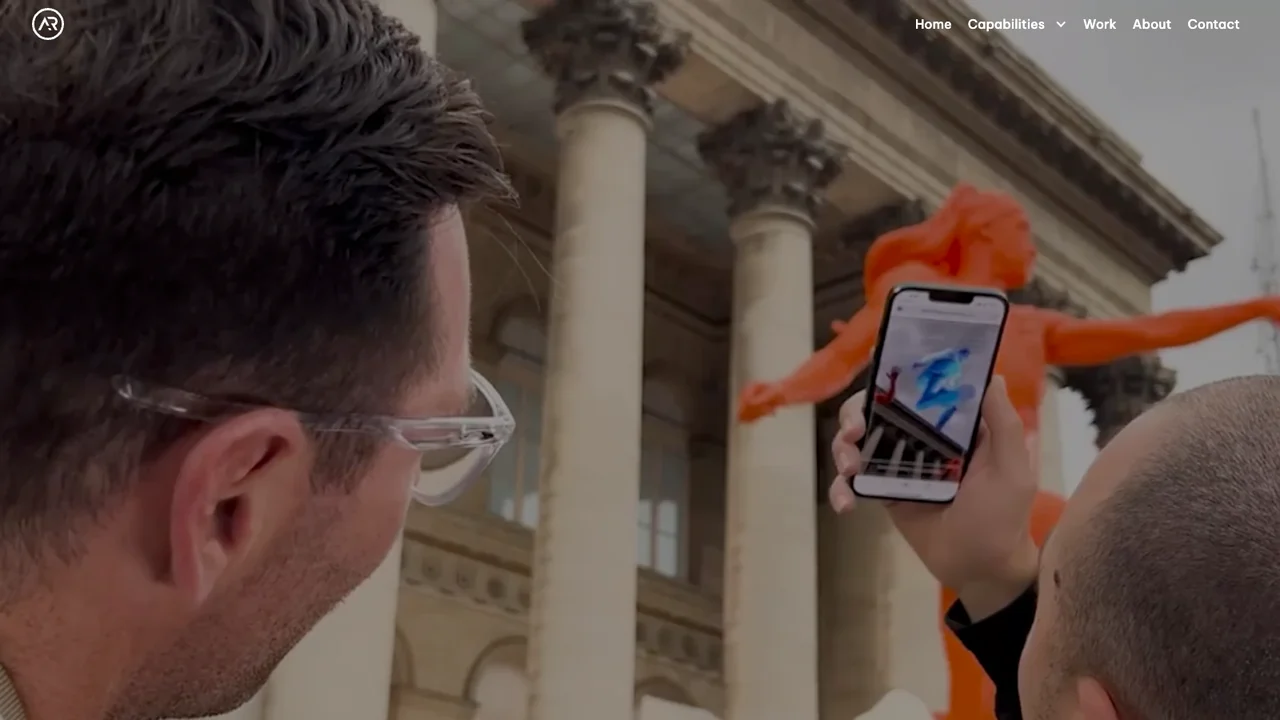
Aircards is a creative studio whose published capabilities are Digital Experience and Mixed Reality, Experiential and Events, Creative Production, and Research and Development, and it belongs on this list for the part of automotive marketing that is not the configurator.
Its published work includes Lenovo F1's Race to Create, combining augmented reality and generative AI design, alongside Outernet's The Butterfly Trail, Red Bull's Spin Like Siakam, Nike On Air as location-based AR, PUMA's A.I. Creator OM, and Louis Vuitton's Yayoi Kusama activation. The Lenovo F1 work is motorsport-adjacent and design-led, which is the closest published analogue to automotive brand activity.
Automotive marketing runs on moments as much as on funnels: motor shows, model launches, sponsorship activations, dealer events and experiential campaigns. Those are campaign commissions with fixed dates, high production values and a reach objective, and they are bought by brand marketing rather than by the digital team that owns the configurator.
Its published capability in location-based AR is relevant to that world, since anchoring an experience to a stand, a dealership or an event space is a recurring automotive requirement, and placing a vehicle at real scale in a public space is a genuinely effective demonstration.
For a buyer the distinction is clean. If the requirement is the configurator on the model page, this is the wrong supplier and ZeroLight is the right one. If the requirement is the launch experience around that model, Aircards has the strongest brand portfolio here. It publishes no founding year, headquarters address, team size, automotive clients, integrations or rates on the pages reviewed. Best for launch campaigns and event experiences rather than the configurator itself.
What automotive configurator projects have to account for
Four things determine whether a configurator produces business rather than engagement.
The first is what happens to the build. A saved configuration has to reach a dealer, survive a finance quote and often become a factory order without the customer re-specifying anything. Establish that path before evaluating any visual, because a beautiful configurator that ends in a lost specification has generated a frustration rather than a lead.
The second is paint and material fidelity across devices. Test your hardest metallic and pearlescent finishes on a cheap phone, a laptop and a large screen, and compare against a physical panel. This is where the streaming argument is either won or lost, and it is a half-day exercise.
The third is rules and price integrity. Millions of valid combinations mean the rules engine is the product, and the price shown must match the price the order system will produce. Ask where the price originates and how rules are maintained when a model year changes.
The fourth is measurement. Time on configurator is not an outcome. Qualified builds sent to dealers, test drives booked and orders placed are outcomes. Decide the measure before launch, since a configurator defended by engagement metrics will lose its budget to something with a number attached.
How to choose between these automotive configurator companies
Start from fidelity and audience. If you are a manufacturer whose paint and interior finishes carry the purchase, and your customers arrive on every device that exists, ZeroLight's streamed architecture and VRED support are the reason to choose it over anything else here.
If the requirement is accessories, two-wheelers, light vehicles or the marketing imagery around a range, Emersya is a more proportionate platform and publishes pricing. If the case rests on reducing purchase anxiety and returns on complex, expensive items, Hapticmedia frames the problem that way explicitly.
If the requirement is a launch campaign, motor show experience or dealer activation, Aircards produces that at a standard configurator platforms do not attempt. If you need something bespoke around the configurator, or inside a dealer system, Treeview builds it and transfers ownership, with Toyota and Ford already on its client list.
Finally, model the streaming economics against your traffic before committing. Per-session cloud rendering is straightforward to justify for vehicles and difficult to justify for accessories, and getting that arithmetic wrong is the most expensive mistake available in this category.
Related reading. BestInXR's product visualization guide covers where 3D assets come from and what each route costs. companies for custom 3D product configurators covers the rules and integration layer, and AR companies for retail product customization covers personalisation economics. For asset supply see AR companies for product visualization, and for engineering review, companies for VR virtual prototyping.
Frequently Asked Questions (FAQ)
1. Why is automotive harder than other product configuration?
Combinatorics running to millions of valid vehicles, paint finishes that need accurate light response, an audience on every device, and a purchase that completes at a dealer rather than online. Each of those pushes toward higher fidelity and a specification that must survive being handed on.
2. Why does cloud streaming matter for cars specifically?
Because every customer approves the same image regardless of device. ZeroLight publishes OmniStream for this, streaming ZeroLight, Unreal, Unity, VRED and Windows applications. On a purchase worth tens of thousands where finish matters, having customers approve different-looking renders is a real commercial risk.
3. What is VRED support and why note it?
VRED is design visualization software used inside vehicle design studios. A platform that streams it lets a manufacturer show the same models its designers already work with, rather than preparing a separate lower-fidelity web version that then drifts out of step with the real design data.
4. Which of these publish automotive clients?
None publishes named automotive customers on the pages reviewed. Treeview names Toyota and Ford in its wider client list without stating the work was configuration. ZeroLight's VRED support and Unreal configurator positioning are automotive-oriented. Emersya and Hapticmedia do not list automotive among their industries.
5. What should a car configurator be measured on?
Qualified builds passed to dealers, test drives booked and orders placed, rather than time on page. The configurator is a specification and lead tool whose output continues offline, so the measure has to follow the build rather than stop at the session.
6. What does an automotive configurator cost?
Only Emersya publishes rates, so no comparable figure is recorded for the others. Cost is driven by rendering approach and session volume, asset preparation for every trim and finish, rules complexity, and integration with dealer and order systems. Per-session streaming cost at real traffic is the line most often underestimated.