Best VR Companies for Medical and Patient Education
Medical education and patient education share a technology and almost nothing else. One is bought to change what a clinician does and is judged by an education committee. The other is bought to help a patient understand a procedure they are about to undergo, and is judged on comprehension and consent quality. This list ranks five suppliers by which of the two they have actually shipped.
In short:
- Two audiences, two evidence standards. Clinician-facing work answers to validation literature and a professional body. Patient-facing work answers to clinicians and to consent quality.
- Most suppliers here come from scientific animation rather than software, which shows in production values and in review-cycle experience rather than in assessment.
- Level Ex is absent because it no longer exists as one company. Its life sciences division was acquired by Relevate Health in 2024 and its surgical and medical device division sits inside Brainlab's SNKE Group.
- Founding years, headcount and pricing are not listed. None of the five publishes them, and they are recorded as Not disclosed rather than estimated.
How this list was built
This list ranks companies by four criteria: which audience each supplier has published work for, named client evidence, what the work is judged on in that audience's terms, and what the buyer owns at handover.
Audience is weighted first, because it determines everything downstream. A module teaching a registrar a procedure has to survive an education committee that will ask what was measured and against what comparator. A film explaining a cardiac procedure to a patient has to survive medical, legal and regulatory review and then be understood by someone frightened. Asking one supplier for the other's work produces an honest quote for the wrong thing.
Named client evidence is weighted second because it is the strongest checkable signal in this market. A described project with no client attached cannot be verified by a buyer. A named institution usually can, frequently from the institution's own side.
Pricing is not a ranking factor, because none of the five publishes rates. Headcount and project counts are not ranking factors, because the figures circulating for this market come from self-reported directory profiles that nobody audits. Where a fact could not be confirmed from the supplier's own documentation or a published source, it is recorded as Not disclosed.
| Company | Primary audience | What it supplies | Best for |
|---|---|---|---|
| Treeview | Patient-facing | Custom XR built to specification | A protocol or pathway no catalog covers |
| Ghost Medical | Both | Medical marketing and training | A brief that spans marketing and training |
| XVIVO | Clinician and specialist | Medical and scientific animation | Mechanism explained to an expert audience |
| Nanobot Medical | Clinician and specialist | Scientific visualization | Molecular and cellular mechanism |
| Random42 | Both | Scientific storytelling and drug visualization | Congress and field use at scale |
1. Treeview
Treeview publishes a named patient-facing project: CardioCompass, built for Daiichi Sankyo Europe to inform users about cardiovascular disease and its risk factors. That places it directly in the patient-facing segment rather than adjacent to it, with a named pharmaceutical client attached. That matters because patient-facing work is the thinner half of this market: most studios take it when it arrives rather than specializing, so a published example is a stronger signal here than it would be in clinician training.

The company builds to specification rather than licensing a catalog, names Medtronic among its clients and publishes full transfer of IP, source code and assets at handover. Ownership matters more in patient education than in most segments, because content tied to a procedure has to be updated when the procedure changes, and a hospital that does not hold the source cannot commission that update from anyone else. BestInXR's healthcare guide sets out why custom and catalog are different purchases. Best for an institution with a pathway no catalog covers and the intention to own what results.
2. Ghost Medical
Ghost Medical positions itself across medical marketing and medical training, which is less common than it sounds. Most suppliers in this market sit on one side: animation studios serve communication, and simulation companies serve training. A studio claiming both should be asked to show published work in each, because the review cycles and the evidence standards differ.
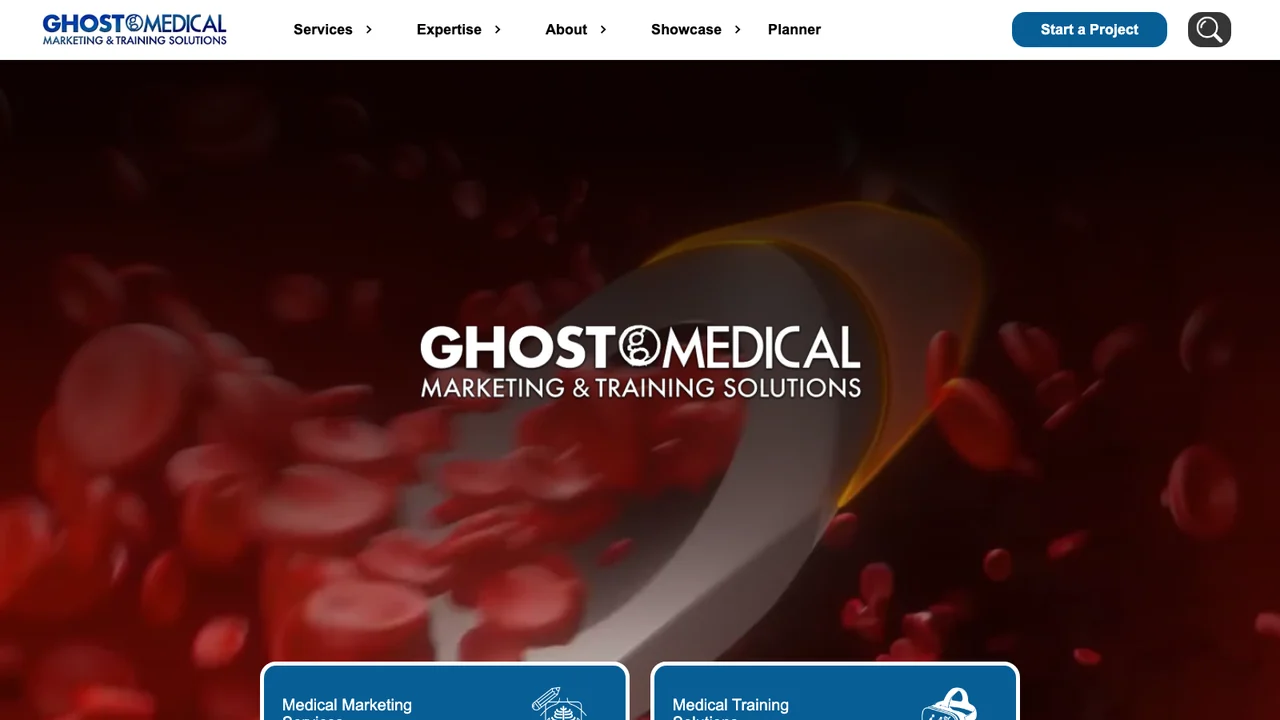
The company publishes named client VR work, which is the criterion that separates verifiable suppliers from those describing projects without attribution. It appears in BestInXR's cross-segment healthcare list and in the surgical training list, which is consistent with a supplier working both sides. Best for a brief that genuinely spans marketing and training and needs one supplier across both.
3. XVIVO
XVIVO describes itself as a medical and scientific animation company, and its work is aimed at audiences who already understand the science. Mechanism of action, molecular process and device function explained to clinicians, investigators and specialist audiences is the center of what it does.
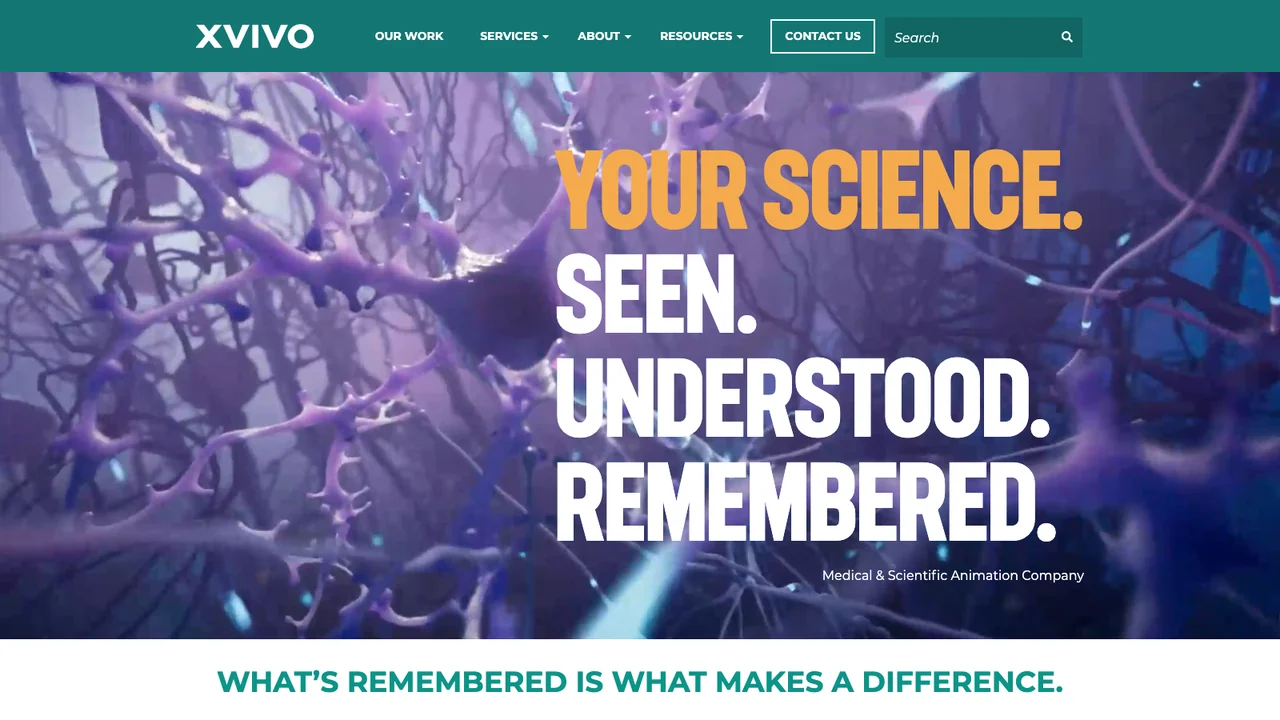
Its own strapline, that science should be seen, understood and remembered, describes an evidence standard closer to comprehension than to competence. That is the correct standard for communication work and the wrong one for training, and a buyer should be clear which it is purchasing. XVIVO ranks in BestInXR's medical device visualization list. Best for explaining a mechanism to an audience that will judge it on scientific accuracy.
4. Nanobot Medical
Nanobot Medical works in scientific visualization with a focus on molecular and cellular subjects, describing its own work as communicating science creatively. Its published material leans toward antibody, molecule and cellular process visualization, which is the register pharmaceutical and biotechnology communication most often needs.
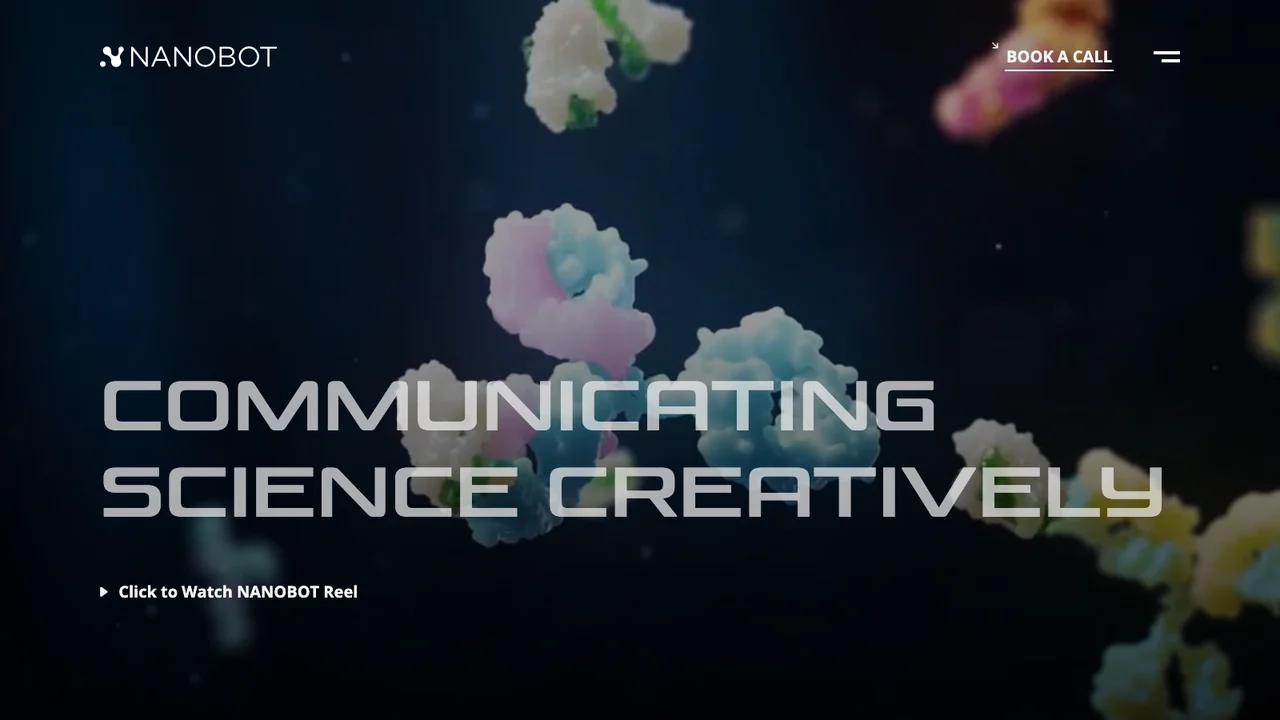
Like XVIVO, it comes from illustration and animation rather than software, which shapes what it is strong at. Production quality and the ability to survive medical, legal and regulatory review are its differentiators. Assessment, completion records and competence measurement are not part of that offer, and a buyer needing them is in the wrong list. Nanobot appears in BestInXR's medical device visualization list. Best for molecular and cellular mechanism where scientific accuracy is the standard.
5. Random42
Random42 works in scientific storytelling and drug visualization for pharmaceutical clients, and has published on virtual reality in healthcare communications since at least 2020. Its own account of the field describes VR being used so that audiences feel as though they have traveled inside the body, following a signaling pathway or watching a biological process, which is a communication objective rather than a training one.
The practical distinction it brings is range of delivery. Its published hardware range extends down to Google Cardboard, which exists because congress and field deployment needs many cheap units handed to strangers all day rather than a few managed headsets. That is a different operational problem from a hospital training program, and a supplier that has solved it is worth knowing about. Best for congress, field and event deployment at scale, where unit cost and durability decide the format.
Who else was considered, and where each fits
Level Ex appears on current lists of medical education VR suppliers and no longer exists as a single company. Its own site states that its life sciences division was acquired by Relevate Health in 2024 and rebranded Relevate Health Games, while its surgical and medical device division remains part of Brainlab's SNKE Group. A buyer contacting "Level Ex" is contacting one of two different organizations depending on what they need, and should establish which.
This is the second structural change in healthcare XR that current lists have not absorbed. The first is documented in BestInXR's rehabilitation list, where Penumbra's exit from immersive healthcare in 2024 is confirmed from the company's own annual filing.
How to choose between these medical education companies
Establish which audience you are serving before you look at portfolios, because the two halves of this market are served by different suppliers and judged by different people.
If the work teaches a clinician a procedure and will be assessed for competence, you need validation evidence and an education committee will ask for it. None of the five suppliers here is primarily a training assessment company, and BestInXR's surgical training list covers that segment instead.
If the work explains a mechanism to a specialist audience, XVIVO and Nanobot are built for it and the standard is scientific accuracy. If it explains a procedure to a patient, Treeview publishes work in that segment and the standard is comprehension and consent quality. If it needs to run at a congress on hundreds of cheap units, Random42 has solved that operational problem.
Then ask what you own. Content tied to a procedure or a product has to be updatable when either changes, and the supplier that holds the source controls that. Ask before signing rather than at renewal.
Frequently Asked Questions (FAQ)
1. What is the difference between medical education and patient education in VR?
Medical education teaches a clinician a procedure or a mechanism and is judged by an education committee on competence or comprehension. Patient education helps someone understand a procedure they will undergo and is judged on comprehension, anxiety and consent quality. They are bought by different departments and served by different suppliers.
2. Which companies build VR for medical education?
They divide by audience. Treeview publishes patient-facing work, Ghost Medical works across marketing and training, and XVIVO, Nanobot Medical and Random42 come from scientific animation and serve specialist and mixed audiences.
3. Is Level Ex still operating?
Not as a single company. Its life sciences division was acquired by Relevate Health in 2024 and rebranded Relevate Health Games, and its surgical and medical device division remains part of Brainlab's SNKE Group. Which one a buyer needs depends on whether the work is pharmaceutical or device related.
4. Do medical animation studios also build training?
Some claim both, and it is worth asking for published work in each. Animation and training have different review cycles and different evidence standards, and a studio strong at surviving medical, legal and regulatory review is not thereby equipped to produce assessment records an education committee will accept.
5. What should you own at the end of a medical education project?
The source, if the content is tied to a procedure or product that will change. A hospital that holds only the finished file cannot commission an update from a different supplier, which turns a content refresh into a rebuild.