

Blackmagic Design announced the Blackmagic Ambisonic Microphone on November 11, 2026, a 7th order ambisonic array of 108 MEMS microphones that encodes spatial audio inside the unit using filters licensed from Apple. It ships in December for US$1,695 and mounts on the URSA Cine Immersive camera to record sound for Apple Immersive Video.
In short:
- The product: a palm-sized 7th order ambisonic microphone with 108 digital MEMS capsules and a built-in spatial encoder, per Blackmagic's announcement.
- Price and date: US$1,695 excluding local duties and taxes, available in December 2026 from Blackmagic resellers worldwide.
- The Apple link: Apple licensed its array geometry and ambisonic encoding filters to Blackmagic, which did the engineering and design, according to Blackmagic CEO Grant Petty.
- Often confused with: a spatial audio mixing tool. This is capture hardware; the mix still happens in software such as Fairlight or Apple's own production plug-ins.
What Blackmagic announced
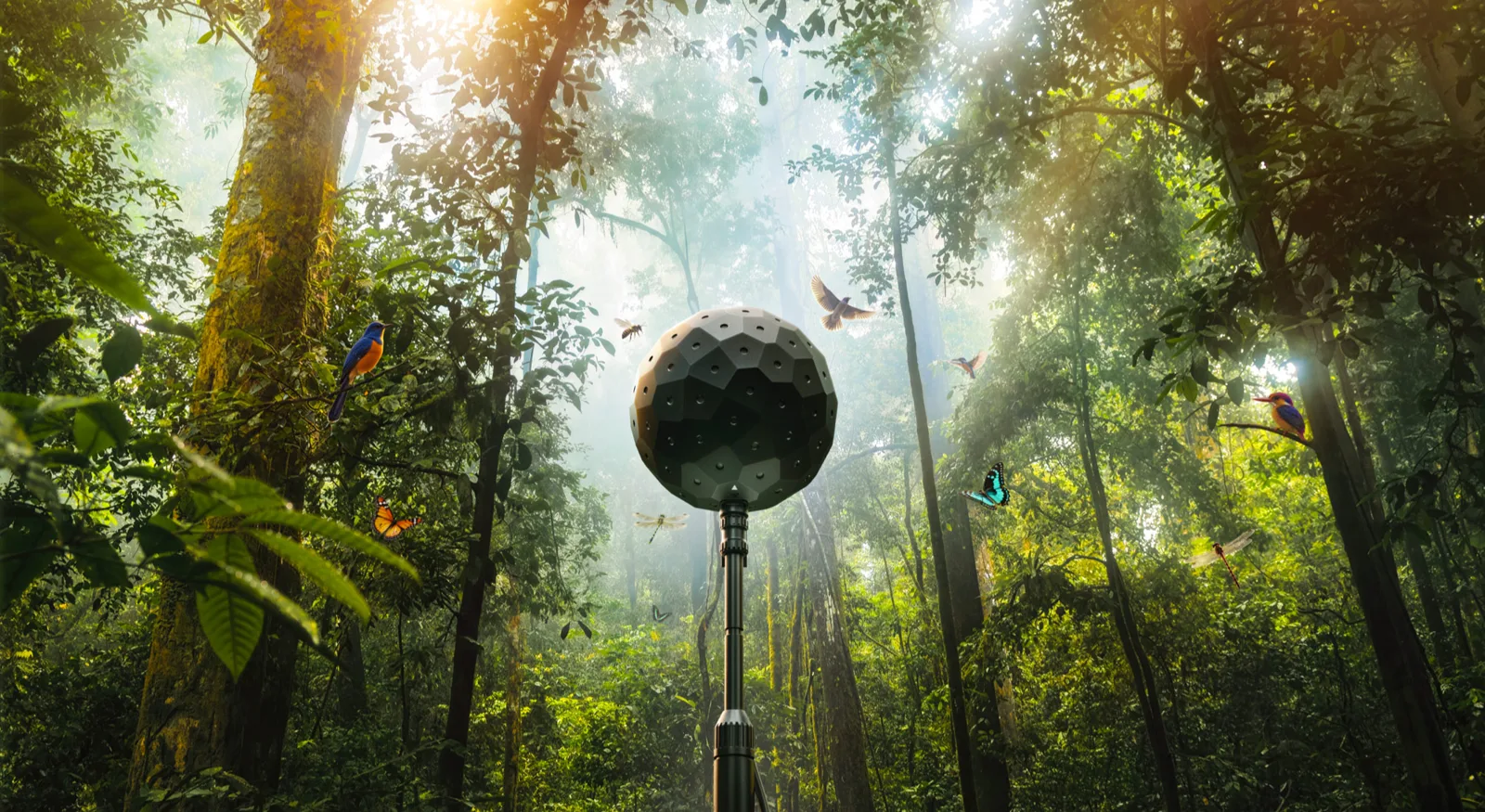
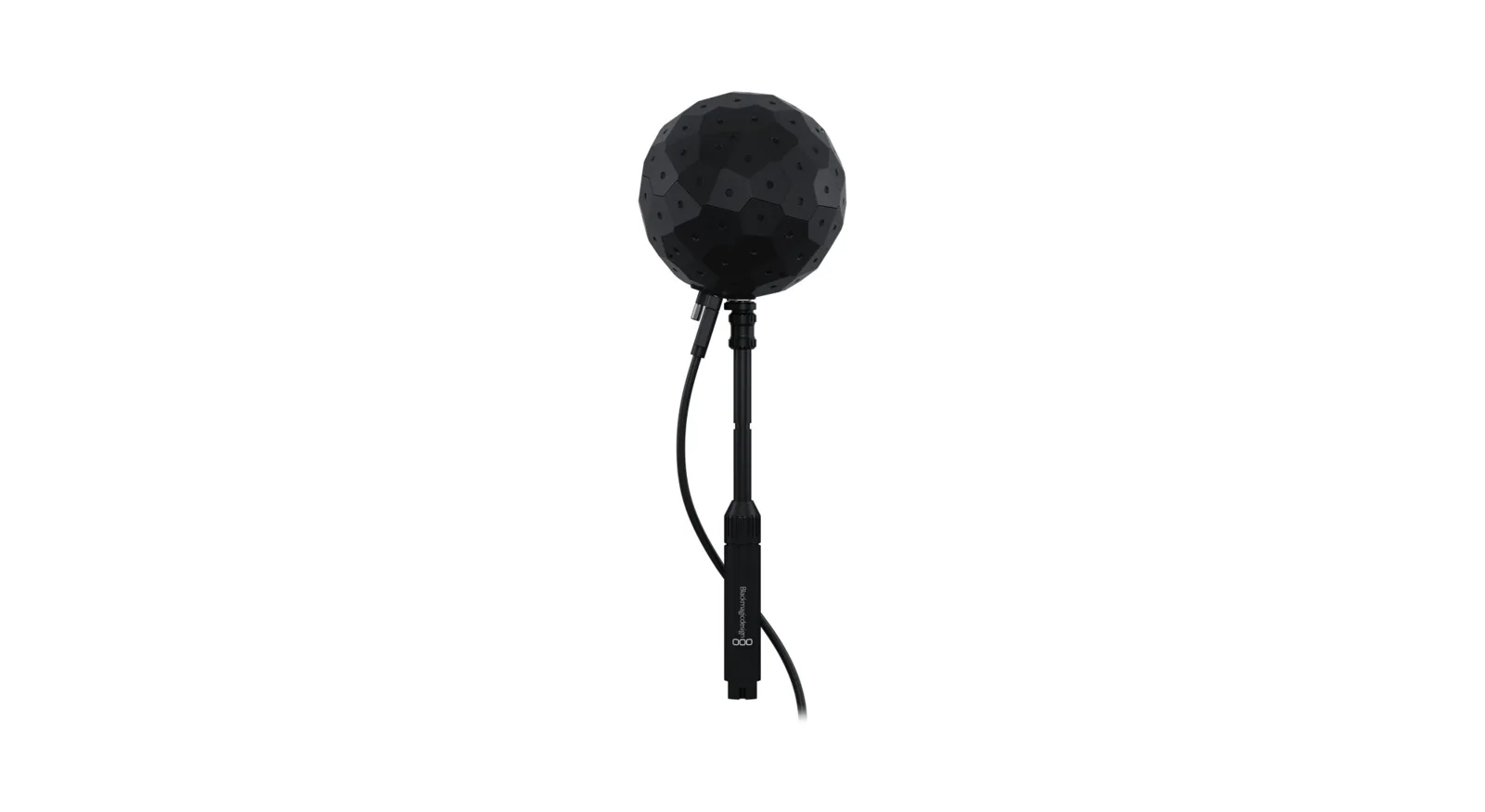
The Blackmagic Ambisonic Microphone is a 7th order ambisonic array. Its 108 digital MEMS microphones sit flush in a solid, faceted metal body that Blackmagic describes as small enough to hold in one hand and mount on top of a camera.
The encoding happens inside the microphone. An internal processor runs Apple's encoding filters and converts the signal from all 108 capsules to 7th order ambisonics in real time, so a crew needs no breakout box and no separate encoding software. One USB-C cable carries both audio and power, and the microphone is USB class compliant, so it works without drivers or plug-ins.
| Item | What Blackmagic published |
|---|---|
| Ambisonic order | 7th order |
| Capsules | 108 digital MEMS microphones |
| Encoding | Built-in, using Apple's ambisonic encoding filters, in real time |
| Connection | Single USB-C for audio and power, USB class compliant |
| Recording targets | URSA Cine Immersive, a computer running Fairlight Live, iPhone through the Blackmagic Camera app |
| Broadcast | A USB to SMPTE-2110 converter, price and date not disclosed |
| Price | US$1,695, excluding local duties and taxes |
| Availability | December 2026, through Blackmagic resellers |
Channel count, sample rate and weight are not disclosed in the release.
How it fits Apple Immersive Video
Blackmagic says the microphone mounts on the Blackmagic URSA Cine Immersive and records into the camera's immersive files in sync with the picture. That camera is Blackmagic's stereoscopic cinema camera for Apple Vision Pro, with dual sensors at 8160 by 7200 per eye and 16 stops of dynamic range on its product page.
Apple's own developer documentation describes the job this microphone does. On its Apple Immersive Video page, Apple says higher order ambisonic microphones record the sound field from the camera's point of view, matched to the lens, and provide the spatial bed that other sound is layered over in post. The same page says spatial capture is meant to sit alongside conventional mono and stereo production sound. Apple Spatial Audio Format carries object, channel and higher order ambisonic audio in one container, which is where a recording from this microphone ends up.
Petty's account of the partnership is specific. He said the microphone started while Blackmagic was working with Apple on URSA Cine Immersive, that "Apple licensed their array geometry and the ambisonic encoding filters", and that Blackmagic did the engineering and design.
Where the microphone records
Blackmagic lists three recording paths. Mounted on URSA Cine Immersive, the audio goes into the camera's immersive files. Connected to a computer, it records and mixes in real time in Fairlight Live. Connected to an iPhone, it records through the Blackmagic Camera app.
For post-production, the URSA Cine Immersive page says Fairlight in DaVinci Resolve supports ambisonic busses up to 7th order and mixes Apple Spatial Audio Format soundtracks, so the order the microphone captures matches the order the editing software handles.
What it means for live immersive production
The fourth item in the release is a USB to SMPTE-2110 converter for broadcast workflows, which Blackmagic says will be available without giving a price or date. SMPTE ST 2110 is the transport Apple names on its What's new in Apple Immersive Video page for Apple Immersive Live formats, which carry ProRes video, spatial audio and calibrated lens metadata together through broadcast infrastructure. The same Blackmagic camera page lists a URSA Cine Immersive 100G model with SMPTE-2110 output for live immersive production.
For a studio already shooting on URSA Cine Immersive, the practical change is that matched spatial audio becomes a camera-top accessory at US$1,695 that needs no breakout box or encoding software. For teams comparing capture approaches more broadly, our list of volumetric video companies and capture platforms covers a different technique, and the visionOS 27 release is the platform this content plays on.
Related reading. XR headsets compared and spatial computing companies.
Frequently Asked Questions (FAQ)
1. How much does the Blackmagic Ambisonic Microphone cost?
US$1,695, excluding local duties and taxes, according to Blackmagic's November 11, 2026 announcement. It is sold through Blackmagic resellers.
2. When does it ship?
Blackmagic says it will be available in December 2026. The release gives the month without a specific day.
3. Does it need a computer or encoding software?
The microphone encodes to 7th order ambisonics internally, so it records directly to URSA Cine Immersive or an iPhone. A computer is one option, for recording and live mixing in Fairlight Live.
4. What is Apple's role?
Apple licensed its microphone array geometry and its ambisonic encoding filters to Blackmagic, and the microphone's processor runs those filters. Blackmagic engineered and designed the product. Both points come from Grant Petty's statement in the release.
5. Does it work with cameras other than URSA Cine Immersive?
The release names URSA Cine Immersive as the camera it mounts on and records into, plus a computer running Fairlight Live and an iPhone running the Blackmagic Camera app.


