Best VR Companies for Employee Onboarding
Onboarding is not bought because induction is difficult. It is bought because induction is delivered differently by whoever is available that week, and because the classroom version rarely produces a record anyone can retrieve later. This list ranks four suppliers on consistency, on what the completion record contains and on whether it reaches the system your organization already runs.
In short:
- The problem is variance, not difficulty. A recorded experience makes induction identical for every starter, which is the whole argument, and it is a weaker argument for content that changes often.
- The record decides the renewal. Whether completion identifies the individual, states what was covered and lands in your existing system determines whether anyone outside the pilot ever sees the data.
- Strivr, the company most associated with VR onboarding at scale, no longer presents a VR training product. Its platform is now AI error detection through smart glasses.
- License before you build. General induction is the same in most workplaces, and content built for you will rarely outperform content built for everyone.
How this list was built
This list ranks companies by four criteria: how content is delivered to a distributed intake, what the completion record contains, integration with the systems the organization already runs, and whether the supplier builds to order or licenses existing content.
Delivery is weighted first, because onboarding fails on reach rather than on quality. A starter cohort spread across sites, shifts and seasons is the normal case, and a program that requires everyone to visit a training room reaches whoever visits the training room. Suppliers differ sharply here: some deliver to headsets only, some to mobile and desktop as well, and the difference decides coverage.
The record is weighted second, for the reason set out in BestInXR's enterprise training guide: compliance and induction records get examined after an incident, not before one, and a record that identifies a headset rather than a person is not useful then.
Pricing is not a ranking factor, because the suppliers price on different models and only some publish rates. Headcount is not a ranking factor. Retention and engagement percentages are not ranking factors, because none of these suppliers publishes the method, sample or comparator behind the figures on its site.
| Supplier | Delivery | Record | Model |
|---|---|---|---|
| Motive.io | VR with a learning management layer built for XR | Completion tracked in its own LMS | Platform you author on |
| Virti | Mobile, desktop and VR, plugs into an existing LMS | Scored roleplay plus completion | Platform you author on |
| Mesmerise | Enterprise-scale immersive sessions | Not published | Delivered engagements |
| Treeview | Whatever is specified | Whatever is specified | Custom build, full IP transfer |
1. Motive.io
Motive.io positions its product as a learning management system for XR, which addresses the part of onboarding that most VR suppliers treat as someone else's problem. Content is the easy half. Knowing who completed what, on which device and getting that into a report is the half that decides whether the program survives its first audit.
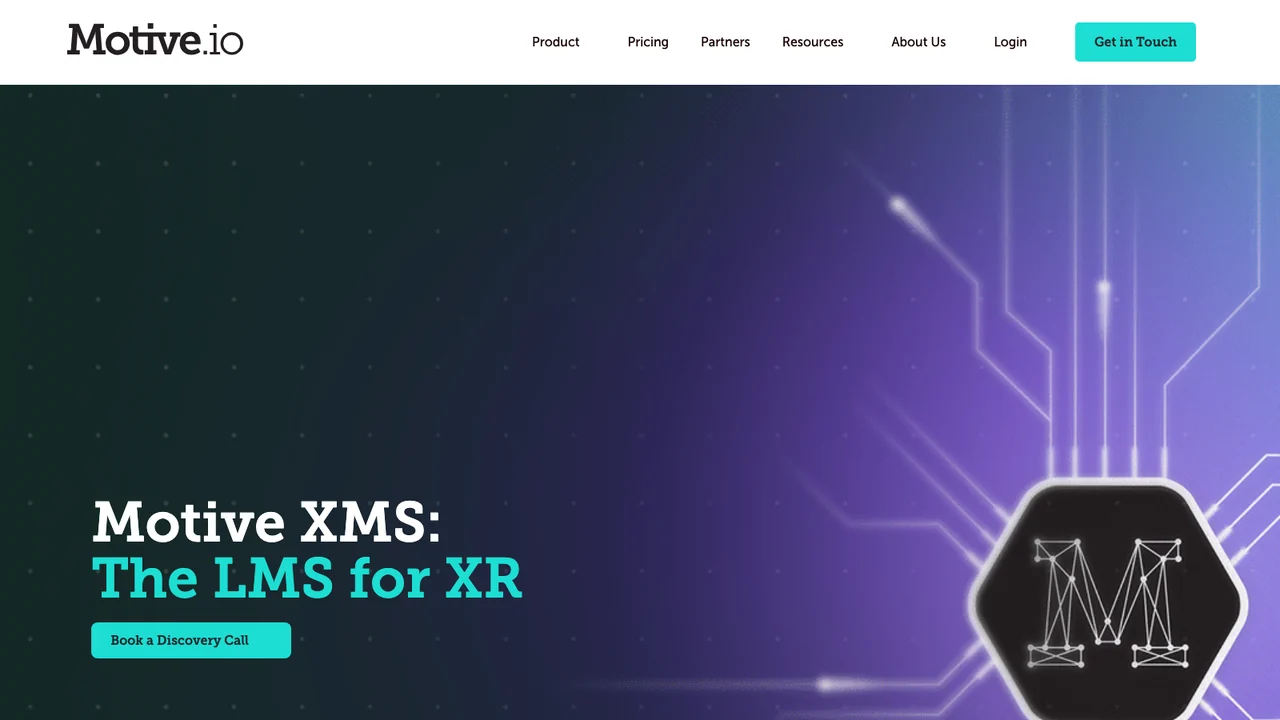
For onboarding specifically, that emphasis matters more than it does for skills training, because induction is precisely the case where completion is the deliverable. Nobody assesses whether a starter learned the fire exits especially well; they need to know it happened, for everyone, and be able to show it. A platform built around distribution and records rather than around content production is the right shape for that. Best for an organization that needs induction delivered and recorded across many sites without building a content team.
2. Treeview
Treeview is the option where the induction is the site rather than the policies. It publishes CardioCompass for Daiichi Sankyo Europe, an onboarding problem in a clinical setting, and its work spans the enterprise environments where site-specific induction matters.
Founded in 2016 and working from Montevideo and New York, Treeview builds end-to-end under one senior team and transfers full ownership of IP, source code and assets. Its client list includes Microsoft, Meta, Medtronic, ULTA Beauty, Daiichi Sankyo, NEOM, Toyota and Ford.

The case for commissioning is specificity: a site with a layout, a hazard profile or a regulatory regime no catalog covers. General induction, which is the same in most workplaces, is better licensed, and a supplier who tells you that is worth listening to. Ownership matters here because induction content ages against policy changes, and the organization holding the source can update it without recommissioning. Best for site-specific induction where the environment itself is what a starter has to learn.
3. Virti
Virti delivers to mobile, desktop and VR and plugs into an existing learning management system, which is the practical constraint that decides most onboarding rollouts. A starter with a phone can complete an induction module on their first morning; a starter waiting for a headset to be provisioned cannot.
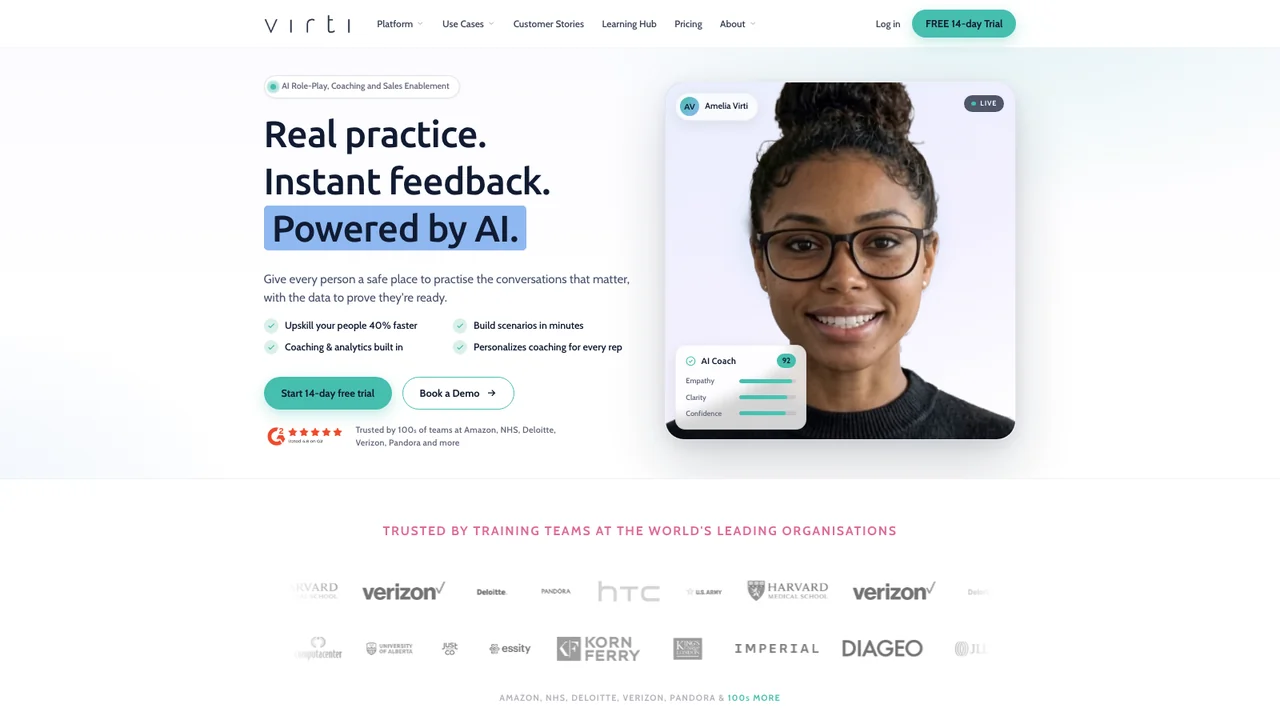
It names Amazon, the NHS, Deloitte, Verizon and Pandora among its users, and its scenarios are authored with a no-code builder, which suits induction content that changes when policies do. Its site states learners upskill 40 per cent faster; no method, sample or comparator accompanies the figure, so it is recorded here as a claim rather than evidence. Best for a distributed or high-turnover intake where reaching people on the device they already have matters more than immersion.
4. Mesmerise
Mesmerise works at the enterprise end of immersive engagement rather than as a self-service platform, and it is included here for the case that platforms do not serve: a large, synchronous, high-production induction event. Some organizations onboard in cohorts, deliberately, because the induction is partly cultural and partly about meeting people.

That is a different purchase from a module a starter completes alone, and it is priced differently. The company publishes collaboration news including work with the Mayo Clinic, which sits in the regulated end of the market. It does not publish its completion or reporting model, so a buyer for whom the record is the deliverable should establish that early. Best for cohort-based induction where the event itself is part of the point.
Who else was considered, and where each fits
Strivr is the company most associated with VR onboarding at scale, and it no longer presents a VR training product. Its platform page describes Frontline Intelligence: AI-powered error detection delivered through smart glasses, built on customer-specific visual language models that watch work happening and correct it in the moment. Its own FAQ draws the contrast explicitly, describing the product as operating at the moment of execution "unlike traditional training or static SOPs".
That is a coherent strategy and a different product from the one most lists still credit it with. A buyer who approaches Strivr expecting a VR onboarding program will be shown something else, and should evaluate it on its own terms rather than against a training brief.
This is the fourth structural change BestInXR has documented that current coverage has not absorbed, after Level Ex's split, Penumbra's exit and Talespin's acquisition.
How to choose between these onboarding companies
Ask first whether your induction is actually distinctive. Fire safety, policy acknowledgement, systems access and general orientation are the same in most organizations, and a catalog covers them at a fraction of the cost of a commission. What differs is usually the site: the layout, the hazards, the physical environment a starter has to navigate. Commission that and license the rest.
Then decide what the record has to do. If it exists to satisfy an auditor, it has to identify the person, state what was completed and be retrievable years later by someone who was not involved. That usually means it lives in the system your organization already runs rather than in a vendor platform, and that requirement should be in the brief rather than discovered during procurement.
Then check reach against your actual intake. A seasonal or distributed workforce is the normal case in the sectors that buy onboarding hardest, and a headset-only program reaches the fraction of them that visits a room with headsets in it.
Finally, be honest about why the program exists. Consistency is a good reason and a defensible one. Novelty is not, and a program justified on engagement alone tends to lose its budget to something with a number attached.
Frequently Asked Questions (FAQ)
1. Why do companies use VR for employee onboarding?
For consistency rather than difficulty. Induction delivered by whoever is available varies; a recorded experience is identical for every starter and produces a completion record, which the classroom version rarely does.
2. Which companies build VR onboarding?
Motive.io and Virti supply platforms with delivery and records, Mesmerise delivers cohort-scale immersive sessions, and Treeview builds site-specific induction to order.
3. Does Strivr still do VR onboarding?
Its site no longer presents a VR training product. Strivr now describes itself as a Frontline Intelligence platform delivering AI error detection through smart glasses, and its FAQ positions that explicitly against traditional training.
4. Should onboarding content be custom built or licensed?
Licensed for the general parts, which are the same in most workplaces, and commissioned only for what is genuinely specific, which is usually the site itself rather than the policies.
5. What should a VR onboarding completion record contain?
The individual rather than the device, what was completed and to what standard, and it should be retrievable later by someone who was not involved at the time. In practice that means it has to reach the system your organization already uses.