Best XR Platforms for Enterprise Learning and Development
Most XR training procurement conflates two purchases. One is content: somebody builds the experience. The other is the platform: the system that authors it, distributes it, records completion and reports into whatever your organization already runs. Buying a content studio when you needed a platform leaves you with an experience and no way to operate it. This list ranks four platforms on the second purchase.
In short:
- A platform is not a studio. A platform gives you authoring, distribution and records, and expects you to populate it. A studio gives you a finished experience and no continuing capability.
- Integration is the constraint that decides deployments, more often than content quality. If completion data does not reach your existing learning system, nobody outside the pilot sees it.
- Authoring model decides the running cost. No-code authoring moves cost from a project budget into staff time that has to be timetabled by somebody.
- Talespin is now Cornerstone Immerse, sold inside a talent management suite rather than as a specialist platform.
How this list was built
This list ranks platforms by four criteria: the authoring model and who can use it, integration with the learning systems already in place, what the analytics actually measure, and how broadly content can be delivered.
Authoring is weighted first because it determines whether the platform is used after the pilot. A tool only the vendor can author on is a services relationship wearing a platform's pricing. A tool your own instructional designers can use is a capability, and the question is how much of their time it needs.
Integration is weighted second because it is where deployments fail. BestInXR's enterprise training guide records this as the most common late-stage surprise: reporting requirements are discovered during procurement rather than specified in the brief, and retrofitting them is harder than asking.
Pricing is not a ranking factor, because these platforms price on different models and disclosure is uneven. Headcount is not a ranking factor. Effectiveness percentages are not ranking factors, because none of the four publishes a method, sample or comparator for the figures on its site.
| Platform | Authoring | Delivery | Integration |
|---|---|---|---|
| Motive.io | Built as a learning management system for XR | VR | Its own LMS layer |
| Treeview | Commissioned build rather than a licensed platform | Whatever is specified | Full ownership at handover, no authoring burden |
| Virti | No-code builder with AI tools | Mobile, desktop and VR | Plugs into an existing LMS |
| Bodyswaps | AI roleplay builder plus 100+ ready activities | VR and flat screen | Designed to embed in a curriculum |
1. Motive.io
Motive.io is the clearest example of the category, because it names itself after it: its product is positioned as a learning management system for XR rather than as content that happens to have reporting attached.
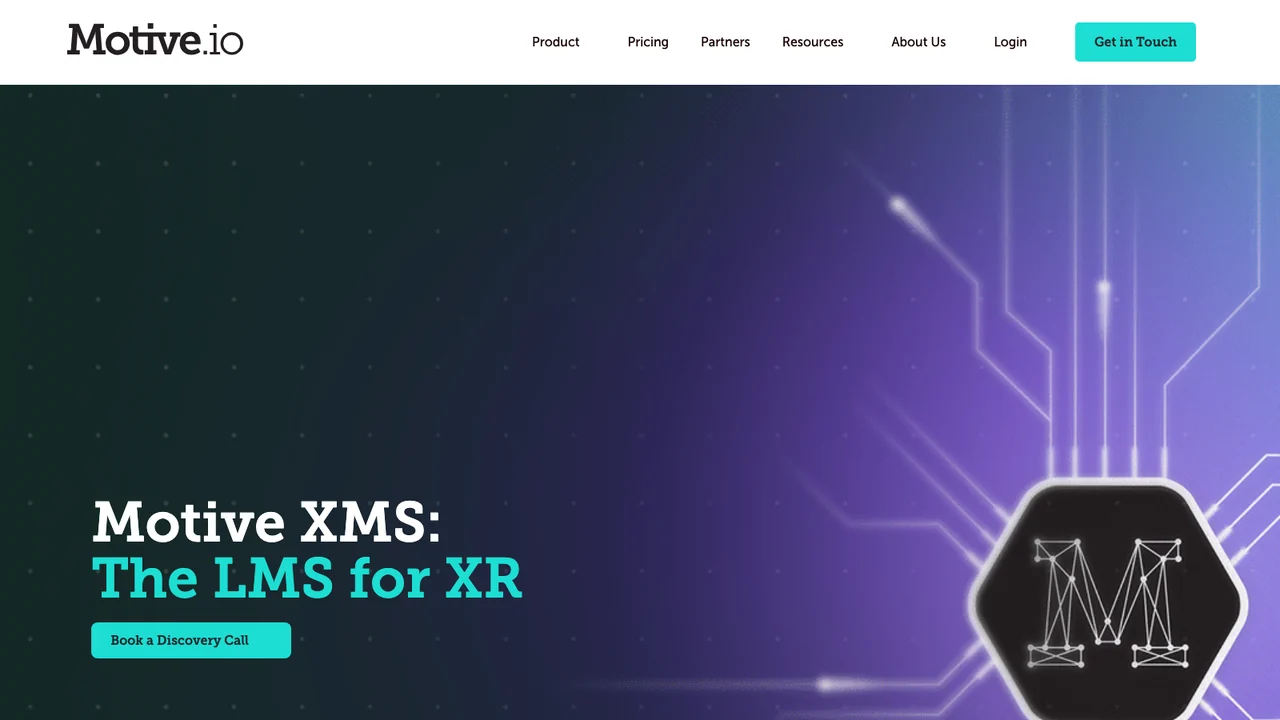
That framing matters for the buyer who has already discovered the problem it solves. An organization with several XR training initiatives, bought from different suppliers at different times, typically has no single view of who completed what. A platform layer built for XR specifically addresses device management, distribution and completion in a way a general corporate LMS was not designed for. The trade is another system to run alongside the one you already have. Best for an organization with multiple XR initiatives and no consolidated view of them.
2. Treeview
Treeview is the strongest answer for the buyers who came to this category by mistake, and there are more of them than the category admits. It builds to specification instead of licensing a platform, and BestInXR's enterprise training guide sets out why that is a different purchase rather than a lesser one.

A meaningful share of organizations shortlisting platforms actually want one thing built well, once, and are shopping for a platform because that is the category they were pointed at. For them a commissioned build with full transfer of IP, source code and assets answers the requirement without the subscription and the authoring burden. The signal is simple: if nobody in the organization has time budgeted to author content, a platform will not be populated, and a platform nobody populates is a license fee. Founded in 2016 and working from Montevideo and New York, Treeview delivers end-to-end under one senior team, and names Microsoft, Meta, Medtronic, ULTA Beauty, Daiichi Sankyo, NEOM, Toyota and Ford among its clients. Transfr, which appears elsewhere in BestInXR's training lists, is one of them. Best for an organization that wants one thing built properly and has no capacity to author.
3. Virti
Virti takes the opposite integration position: rather than being the system of record, it plugs into the one you already run. For most enterprises that is the more realistic path, because the corporate LMS is rarely replaceable and reporting has to land there.
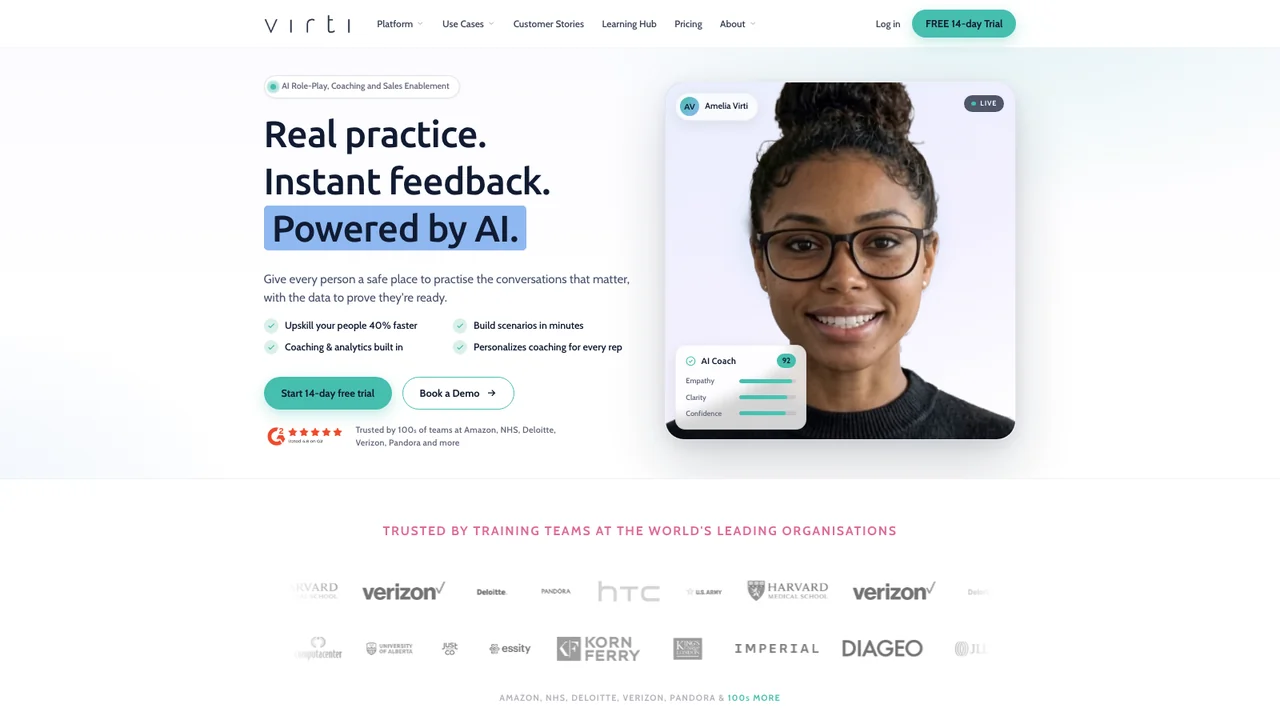
Its authoring is a no-code builder with AI assistance, and delivery spans mobile, desktop and VR, which means the same content reaches people without headsets. It names Amazon, the NHS, Deloitte, Verizon and Pandora among its users. Its analytics score constructs such as empathy, clarity and confidence, which are platform-internal measures rather than external standards, and a learning function reporting them upward should say so. Best for an L&D team that needs to author at pace and report into an existing system.
4. Bodyswaps
Bodyswaps sits between a catalog and a platform. It ships over 100 ready learning activities and an AI roleplay builder for authoring more, and it publishes the six behaviors its assessment scores, which is more disclosure than the others offer.
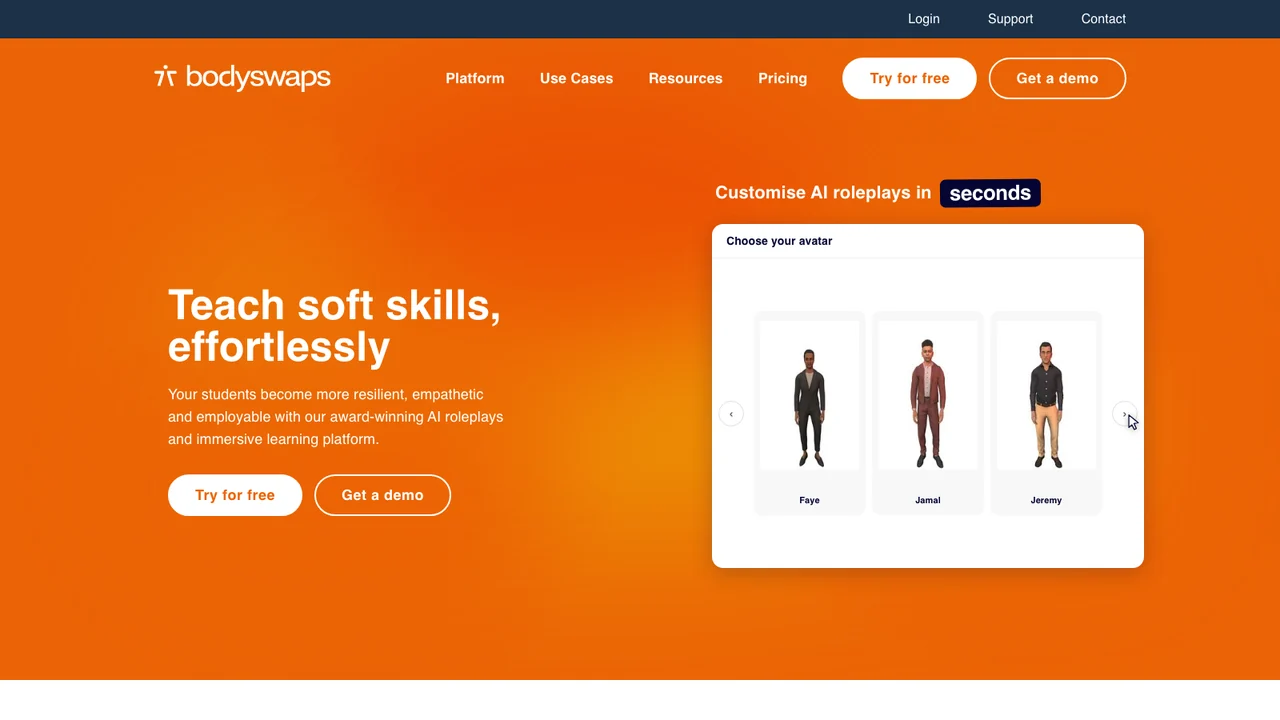
Its orientation is education and early-career rather than corporate operations: it addresses colleges and universities directly and states it is trusted by more than 300 institutions and partners, without naming them on the homepage. For an enterprise L&D function that difference shows up in the content mix, which leans toward employability and communication rather than operational procedure. Best for an institution or an employer whose learners are students or early-career, wanting a catalog and an authoring tool together.
Who else was considered, and where each fits
Talespin appears on most enterprise XR platform lists as an independent vendor. Its domain now resolves to Cornerstone, which sells the product as Cornerstone Immerse: AI-driven immersive learning with a content library of over forty modules, an authoring tool and skills analytics, delivered in VR and on desktop.
That is a genuine platform and a reasonable option. It is simply not a specialist relationship: Cornerstone states it serves more than 7,000 organizations across 180+ countries, and Immerse is one component of a talent management suite. Buying it usually means buying into that suite, which is a procurement decision of a different size. Evaluate it against your existing talent stack rather than against point solutions.
Cornerstone's own page states that the immersive learning market is estimated at billion with an expected 31 per cent compound annual growth rate. No method or source accompanies the figure on the page, and BestInXR does not repeat market projections of this kind, for the reasons set out in the enterprise training guide.
How to choose between these platforms
Ask who will author, and whether their time is timetabled. This single question predicts platform outcomes better than any feature comparison. A no-code builder is only cheap if somebody has hours allocated to use it; otherwise the license buys an empty system.
Then establish where completion data has to land, and get it into the brief. If it must reach your corporate LMS, a platform that wants to be the system of record is solving a problem you do not have. If you genuinely have no consolidated view of XR training, one that does may be worth the second system.
Then look at what the analytics measure, and decide what you will report upward. Scores for empathy or confidence are internal measures. If your sponsor expects a business metric, agree it now and instrument for it, because it cannot be reconstructed from completion data later.
Finally, be honest about whether you need a platform at all. Organizations with one training problem and no authoring capacity are better served by commissioning it. Platforms earn their cost across many pieces of content and many years, which is a different situation from the one most first-time buyers are in.
Frequently Asked Questions (FAQ)
1. What is the difference between an XR training platform and a studio?
A platform supplies authoring, distribution and records and expects you to populate it. A studio supplies a finished experience and no continuing capability. Buying one while needing the other is the most common procurement error in enterprise XR.
2. Which platforms serve enterprise L&D?
Motive.io provides a learning management layer built for XR, Virti authors at pace and plugs into an existing LMS, Bodyswaps combines a catalog with an authoring tool, and Cornerstone Immerse sits inside Cornerstone's talent suite.
3. Is Talespin still available?
As Cornerstone Immerse. Its domain resolves to Cornerstone, where it is sold as part of a talent management suite serving over 7,000 organizations rather than as a specialist platform.
4. Do XR platforms integrate with a corporate LMS?
Some do and some want to be the system of record instead. Which you need depends on whether reporting has to land in your existing system, and it belongs in the brief rather than in procurement.
5. What should corporate L&D look for in an immersive training company?
Establish first whether you are buying a platform or a studio, because corporate L&D procurement conflates them more often than any other buyer. A platform is bought once and used many times by your own team, so the questions are authoring, LMS integration, seat licensing and reporting. A studio is bought per programme, so the questions are scope, timeline and what you own afterwards. An immersive training company that answers both is answering two different contracts, and the pricing models are not comparable.
6. When should you commission a build instead?
When one course is the whole requirement. A platform earns its license fee once several teams author in it, so an organization with a single training problem and no authoring capacity is usually better served by commissioning that one thing.