Best Companies for 3D Exploded-View Visualization
An exploded view is three different products wearing one name. A rendered animation sells the machine. An illustration tied to part numbers sells the spare. An interactive model lets the viewer pull it apart themselves. The question that decides which you need is whether the view has to stay correct after the product changes.
In short:
- A rendered exploded view is a snapshot. It is correct on the day it is delivered and it decays silently, which nobody notices until a customer orders a part that is no longer in the assembly.
- The hard part is the explosion order, not the rendering. Deciding which component moves where, and in what sequence, is a genuine computational problem on any assembly with interlocking parts.
- One supplier here publishes its prices in full. That is rare enough in this category to be the most useful single fact in this post.
- Ask what you receive at the end. A video file, a layered source project and a CAD-linked model are three very different assets to own.
How this list was built
A 3D exploded-view visualization separates an assembly into its components so a viewer can see what is inside and how it fits together. It is produced for marketing, for technical documentation and for interactive use, and those are different jobs. BestInXR's product visualization guide sets out where this sits among the other things sold as 3D visualization.
This list ranks five suppliers on four criteria: what the supplier delivers, what it takes as input, what evidence it publishes about its own terms and what the buyer owns at the end. It covers the studios that produce exploded views as visual work. Where the exploded view is a function of a parts catalog rather than a deliverable in itself, that is a different purchase and it is ranked in BestInXR's interactive 3D parts catalog list.
Not a ranking factor: how impressive the showreel is. Everyone in this category has a good one.
| Company | What it delivers | What it publishes | Best for |
|---|---|---|---|
| Treeview | Commissioned interactive builds | Enterprise clients and full transfer of IP, source and assets | Exploded views inside a larger application |
| 3DEnginuity | Renders, animation, interactive, VR and AR | A complete rate card, turnaround times and rights terms | Machine builders who want a price before a call |
| MG Lomb | Exploded product animation, interactive | More than 20 years in this specific technique | Complex machinery and consumer products |
| Transparent House | Photorealistic exploded and X-ray views | Studios in San Francisco and Berlin, work for engineering, marketing and training | High production values for launch and campaign work |
| 3D Corner | Technical CGI from engineering data | A broad technical visualization practice | Translating engineering data for non-technical buyers |
1. Treeview
Treeview is the option for an exploded view that has to be part of something else. Working since 2016, it publishes custom application development across virtual, augmented and mixed reality, with spatial product design and XR software engineering as named services, and names Microsoft, Meta, Medtronic, Toyota, ULTA Beauty, Daiichi Sankyo, Stanford Medicine and NEOM among its clients.
The case for commissioning here is narrower than in most categories and worth stating precisely. If you need an exploded animation for a product page, the studios below are faster and cheaper and that is what they do all day. Commissioning makes sense when the exploded view is one behavior inside an application: a technician tool that also does fault diagnosis and work instructions, a sales configurator where exploding the assembly is one interaction among many or a training build where the learner has to reassemble the machine rather than watch it come apart. BestInXR's AR work instruction list covers the adjacent purchase.
Ownership is the practical difference. Treeview transfers full ownership of IP, source code and assets, and on an asset built from your own CAD that matters when the product changes and the model has to be re-cut. Best for exploded views that are a feature of an application rather than a deliverable on their own.
2. 3DEnginuity
3DEnginuity is ranked second on a criterion no other supplier in this category satisfies, which is that it tells you what things cost before you speak to anyone.
Its pricing page is titled "Industrial visualization, priced in the open" and publishes real numbers: a single render of one machine from one camera angle at $590 with one revision round and a 5 to 7 working day turnaround, a five-view machine set at $1,890 with two revision rounds over 7 to 12 working days and colour and guarding variants at $190 each. It states fixed quotes within one working day, full rights on final payment and repeat projects 20 to 40 percent cheaper through model reuse. Pricing sections cover rendering, animation, interactive, VR and AR, trade show, CAD preparation and ongoing work.
Read that list of terms rather than just the numbers. Revision rounds, turnaround, rights on final payment and a model-reuse discount are the four things that actually decide what a visualization program costs over three years, and they are normally extracted one at a time during a negotiation.
The studio describes itself as engineer-led, stating it is led by a mechanical engineer, and takes STEP, JT and native CAD as input with an NDA signed before any file moves. It names machine builders and equipment manufacturers in Germany, the European Union, the United Kingdom and the Nordics as its market, and publishes interactive 3D and VR training alongside the rendering and animation work, which is the bridge from a video to something a viewer operates.
Best for machine builders who want a price and a turnaround before a sales call, and for anyone whose input is a clean CAD assembly.
3. MG Lomb
MG Lomb has been doing this specific technique longer than anyone else in this list, stating more than 20 years of exploded product animation across consumer products and complex machinery.
Its description of the work is the most precise about method. It states that its in-house 3D animation team works from client CAD and engineering data to produce highly accurate 3D models, which is the distinction that separates a technically useful exploded view from an artistic impression of one. An exploded view built from reference photographs looks fine and misleads about clearances, fastener counts and assembly order.
Its argument for the format is worth weighing because it is narrow and checkable rather than sweeping: an exploded animation shows how a product works, what it does and how components interchange, in a way conventional video of the physical object cannot, because the camera cannot get inside a sealed assembly.
It publishes interactive and gamification work alongside animation, so the same asset can end up in more than one format. Neither pricing nor named clients appear on the page reviewed. Best for complex machinery and consumer products where the model has to be accurate to the engineering data.
4. Transparent House
Transparent House sits at the high production end, working from studios in San Francisco and Berlin.
It publishes exploded and X-ray product views as a named service, describing photorealistic cutaway renderings and animations that show every component and how they fit together. The detail worth noting is the audience it names: engineering, marketing and training teams. Most studios in this category sell to marketing alone, and a supplier that has worked for all three has met the awkward requirement that the same asset be both persuasive and accurate.
X-ray is a distinct technique from exploding and the two are often bought together. An exploded view separates components in space and is good for assembly order and part identification. An X-ray or cutaway keeps the product assembled and reveals what is inside, which is better for explaining flow, fit and internal mechanism. Deciding which one answers your question is worth doing before commissioning either.
The trade at this end of the market is cost and cycle time against production values. Neither pricing nor turnaround appears on the page reviewed. Best for launch and campaign work where production values carry the message.
5. 3D Corner
3D Corner is the most-cited supplier for this subject and positions itself around translating engineering data for people who cannot read it.
Its stated proposition is that raw CAD, flat blueprints and dense engineering documentation create barriers for procurement teams, non-technical investors and corporate buyers, and that technical CGI removes them by showing internal systems, component interactions and structural workflows. That is a fair description of the actual job, and it names the audience precisely, which most studios do not.
Two things to read carefully. The register is heavily promotional, with claims to absolute authority and undeniable advantage, which is marketing rather than evidence and should be treated as such. And the page describes its output as dimensionally accurate digital twins, which is a loose use of the term: a rendering is not a twin, because nothing connects it to the physical object after delivery. BestInXR's digital twins guide sets out the distinction, and it matters here because a buyer who believes they are getting a twin will expect the model to stay current.
Neither pricing nor named clients appear on the page reviewed. Best for presenting engineering complexity to procurement, investors and non-technical buyers.
Who is not on this list, and why
Technical documentation suppliers are a different purchase. Where the exploded view exists to identify a spare part, it belongs in a parts catalog that updates when the parts list does, not in a rendered animation. Cortona3D, Quanos and the rest of that market are ranked in BestInXR's interactive 3D parts catalog list.
Rendering software is not a studio. KeyShot, Chaos and the other tools used to produce this work are assessed in BestInXR's 3D product rendering and animation list.
Several credible studios are named without ranking. Austin Visuals, Raku Studios, Perfect Form Design, Pixerts and Industrial Film all publish technical animation work in this territory. They are not ranked because this list turns on what a supplier publishes about its own method and terms, and on that criterion the five above publish more. Avadium Design publishes an exploded views page but is a general product design and branding consultancy rather than a specialist in this technique.
Directory roundups and "best of" aggregators rank heavily for this query. They list studios by feature checklist across hundreds of unrelated categories and tell a buyer nothing about whether a supplier can read their CAD.
What exploded-view projects have to account for
The explosion order is the hard part, and it is a real technical problem. Deciding which component moves in which direction, and in what sequence, is not obvious on any assembly where parts interlock. It has been studied formally: Automated Generation of Interactive 3D Exploded View Diagrams, presented at SIGGRAPH 2008 by Wilmot Li, Maneesh Agrawala, Brian Curless and David Salesin, organizes a model into what the authors call an explosion graph encoding how parts explode with respect to each other, specifically to handle common classes of interlocking parts. If it needed a research paper, it is not a button.
Your CAD is the input and its quality decides the quote. An assembly with sensible part naming and a clean hierarchy explodes far more easily than one where everything is a single merged solid. Send a real assembly, ideally from an older product, before agreeing a price.
Decide whether you are buying a file or an asset. A rendered video is finished on delivery. A layered project file can be re-rendered with a new component. A CAD-linked interactive model regenerates. The cost difference between these is large and so is the cost of choosing wrong when the product is revised twice a year.
Exploded and cutaway answer different questions. Separation shows assembly order and part identity. Cutaway shows internal flow and fit. Commissioning the wrong one produces a beautiful asset that does not explain the thing you needed explained.
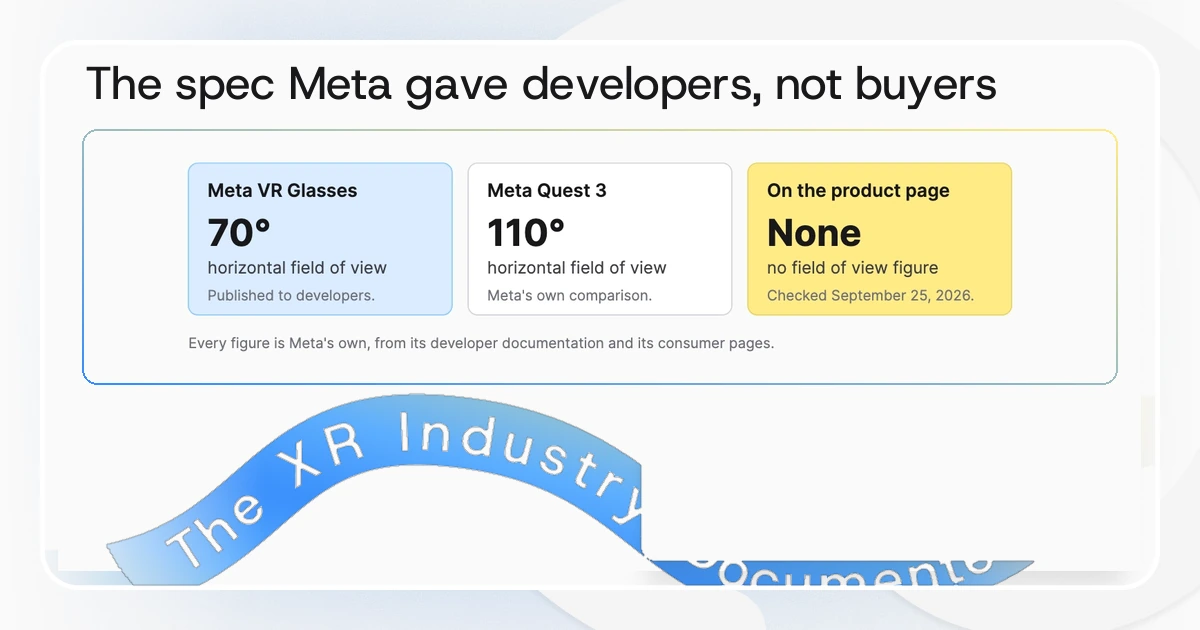
Disclosure is thin apart from one exception. 3DEnginuity publishes a full rate card. The other four publish neither pricing nor named clients on the pages reviewed, which is recorded as not disclosed rather than estimated, and is consistent with the pattern documented in the spec gap.
How to choose between these exploded-view companies
Start from what happens to the asset after delivery.
If the exploded view has to be one behavior inside a larger application, commission it and Treeview transfers the source. If you want a price and a turnaround before committing to a conversation, 3DEnginuity is the only supplier here that publishes both, and its interactive and VR line means the same model can go further than a video. If the priority is technical accuracy from engineering data on complex machinery, MG Lomb has been doing precisely that for two decades. If the work is a launch and production values carry it, Transparent House sits at that end and works for engineering as well as marketing. And if the job is making engineering complexity legible to procurement or investors, 3D Corner names that audience explicitly.
Whichever way it goes, send every shortlisted supplier the same real CAD assembly and compare what comes back, including how they handled the parts that interlock.
Frequently Asked Questions (FAQ)
1. Who develops 3D exploded-view visualizations for complex equipment?
Five cover the range: 3DEnginuity for machine builders working from CAD with published prices, MG Lomb for accurate animation of complex machinery, Transparent House for high production exploded and X-ray work, 3D Corner for translating engineering data to non-technical audiences and Treeview for exploded views built into a larger application.
2. What is a 3D exploded view?
It is a visualization that separates an assembly into its components so a viewer can see what is inside and how the parts fit together. It differs from a cutaway or X-ray view, which keeps the product assembled and reveals the interior, and the two answer different questions.
3. How much does an exploded-view animation cost?
Most suppliers in this category do not publish a price. 3DEnginuity is the exception and lists real starting figures, including $590 for a single render of one machine from one angle and $1,890 for a five-view machine set, with turnaround times and revision rounds stated alongside them. Treat those as one supplier's published rates rather than a market price.
4. Can an exploded view be generated automatically from CAD?
Partly, and the difficulty is well documented. Research presented at SIGGRAPH 2008 set out an automated method for computing explosion graphs that accounts for part hierarchies and interlocking parts, which is the part a naive approach gets wrong. In practice most commercial work still involves a person deciding the sequence.
5. What is the difference between an exploded animation and an interactive parts catalog?
An animation is a fixed sequence someone watches and it is correct on the day it ships. A parts catalog lets the user explode the assembly themselves and is tied to part numbers, so it updates when the parts list does. If the purpose is ordering spares rather than explaining the product, the catalog is the right purchase.
6. What should you receive at the end of an exploded-view project?
Establish this before signing. A rendered video file cannot be changed when a component is revised. A layered source project can be re-rendered. A CAD-linked model can be regenerated. 3DEnginuity publishes full rights on final payment and Treeview publishes full transfer of IP, source code and assets; the others do not state their terms on the pages reviewed.